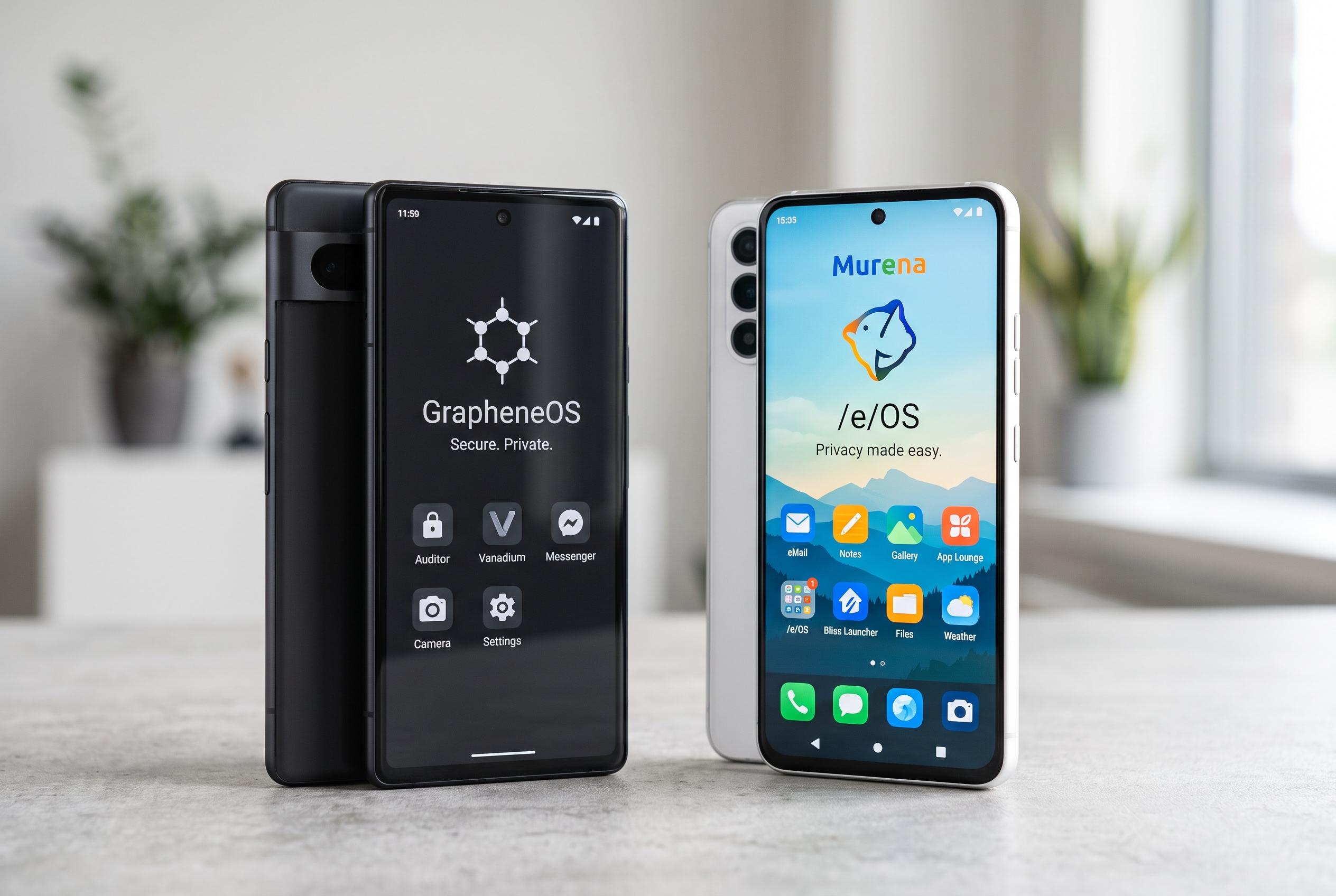

A detailed comparison reveals how GrapheneOS and /e/OS cater to different priorities , from robust security to user-friendly design , as more users seek de-Googled alternatives for their smartphones.
Choosing between GrapheneOS and /e/OS is less about which system is “better” in the abstract than which one fits the way a phone is actually used. Both are built on Android Open Source Project code, both aim to reduce dependence on Google services, and both preserve broad compatibility with mainstream Android apps. But they diverge sharply in purpose: /e/OS, developed by Murena, is designed to be easy to adopt and to offer a ready-made alternative ecosystem, while GrapheneOS is built first and foremost as a hardened security platform.
Installation is one of the clearest distinctions. Both projects now provide web-based installers that do much of the heavy lifting, which makes the process far less intimidating than the old command-line era. Even so, the switch still requires a full wipe of the phone, and the Frandroid review notes that unexpected problems can still arise during setup. Murena has an advantage here because it also sells phones with /e/OS pre-installed, lowering the barrier for users who want a de-Googled device without the technical overhead.
The difference in day-to-day use is just as marked. Frandroid found /e/OS more approachable at first glance, with an interface that deliberately simplifies the experience and leans towards a more Apple-like feel. GrapheneOS, by contrast, stays closer to stock Android and offers a more detailed set of controls for power users. That includes finer permissions management, such as restricting a single app’s internet access or limiting which files and contacts it can reach. In practice, /e/OS is easier to understand quickly; GrapheneOS gives more precise control.
Software support also splits the audience. GrapheneOS ships with very little extra software because it follows a minimalist security-first philosophy. /e/OS goes the other way, bundling tools such as mail, password management, office apps and video conferencing, all linked to a Murena account and cloud services. The result is a more complete out-of-the-box replacement for Google’s ecosystem, even if the integration is not always perfectly polished. Compatibility with third-party apps is broadly similar on both systems, although GrapheneOS is generally regarded as having a stronger implementation of Play Services. Banking apps remain a weak point on both platforms, and users are advised to check support before switching.
Security is where GrapheneOS clearly leads. The Frandroid review says it is stronger than /e/OS on data protection and patching, with some fixes arriving even before Google’s own releases. Updates also tend to arrive only a few days after Google’s versions, which helps keep the system current. /e/OS is less aggressive on this front, partly because it aims to support a wider range of phones and prioritises accessibility over technical strictness. That trade-off may matter more to users who value convenience, but it does mean GrapheneOS remains the more robust choice for those treating the phone itself as a security boundary.
The practical conclusion is straightforward. For users who want a simple, preconfigured route away from Google and prefer a device that feels familiar from the start, /e/OS is the easier recommendation. For users who want the most control, the strongest security posture and do not mind spending time tuning settings, GrapheneOS is the better fit. The two systems pursue the same goal, but they take very different routes to get there.
Disclaimer: This content is intended for informational purposes only. Readers are advised to exercise their own judgement, conduct due diligence, or consult a qualified expert before acting on any information provided.