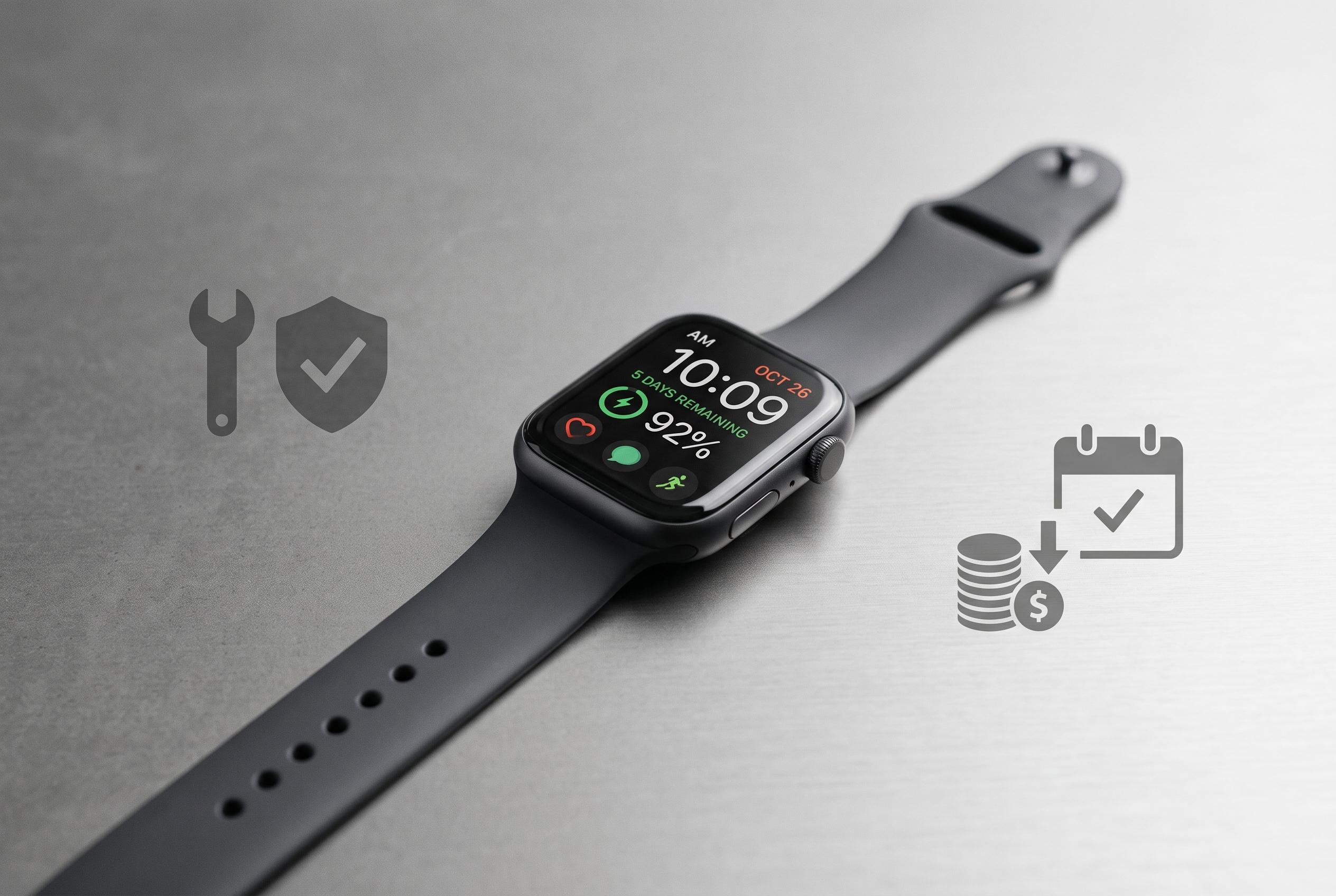

A new analysis suggests that when evaluating smartwatches, factors like durability, battery life, and usage frequency are more indicative of true value than the purchase price alone, with longer-lasting devices offering better practical benefits and cost-effectiveness.
A smartwatch should not be judged only by its upfront price. As VIVA argues, the more useful measure is how much the device costs over the years it is actually worn. That means factoring in frequency of use, battery wear, accessories and the likelihood of repairs or replacement, rather than focusing solely on the sticker price.
The publication contrasts a budget smartwatch costing about Rp1.5 million with a premium model priced at roughly Rp6 million to Rp7 million. In its example, a cheaper device may need replacing more than once within four and a half years if the battery degrades or the hardware fails, pushing the effective cost well above the original purchase price. By comparison, a better-built watch may last five to eight years with less performance loss, which can make the higher initial outlay easier to justify.
This is broadly consistent with wider guidance on the second-hand market. Swappa says used smartwatches usually lose value quickly, often selling for 30 to 60 per cent below retail, while ValueSnap notes that smartwatches typically depreciate far faster than traditional mechanical watches. Alibaba’s product analysis makes a similar point, saying battery degradation and software obsolescence usually limit a smartwatch’s practical lifespan to around three to five years.
The true value, however, is not only financial. VIVA points out that a smartwatch can reduce the need to check a phone, track steps, log exercise, monitor sleep, deliver reminders and show important alerts. For users who rely on those functions daily, the device may deliver more practical value than a cheaper alternative that is replaced sooner. Battery life remains central to that calculation, because it is often the component that determines whether a smartwatch feels like a long-term purchase or a short-lived gadget.
Disclaimer: This content is intended for informational purposes only. Readers are advised to exercise their own judgement, conduct due diligence, or consult a qualified expert before acting on any information provided.