
As household and outdoor power needs evolve, 2026’s best portable power stations are prioritising portability, simple controls, and versatility to support families during outages and on the go.
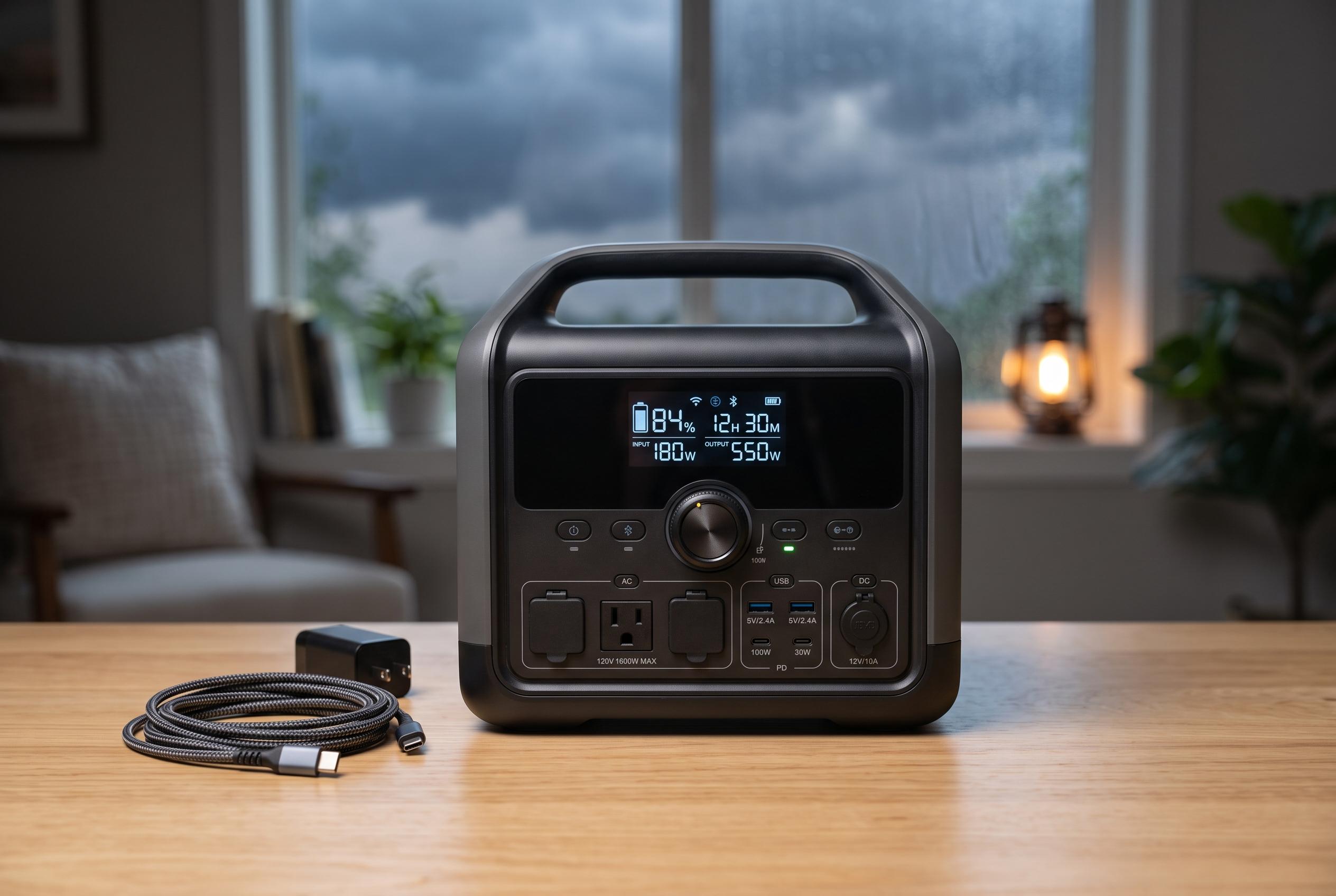
When the mains fails, a compact power station can keep the basics running: phones, lights, broadband routers and small appliances. The strongest buys in this category are the ones that combine sensible capacity with easy carrying, clear ports and quick recharging, rather than the largest battery on paper. That is the common thread running through this selection of family-friendly units, which leans towards portability, simple controls and everyday usefulness.
At the very small end, several models are designed for grab-and-go backup rather than heavy loads. Units such as the HOWEASY 88Wh and MARBERO 88Wh are positioned for short outages, travel and emergency kits, with light weights, multiple low-power outputs and built-in lighting. The R101 Lite follows the same logic but adds a TSA-friendly form factor and LiFePO4 chemistry, while the DaranEner 192Wh and GO10Y 192Wh move a step up in capacity without becoming difficult to store. According to the product details, these are best suited to phones, tablets, laptops and other modest electronics, not kettles, heaters or kitchen appliances.
For households that want more headroom, the mid-range options are more versatile. The Jackery Explorer 300 offers a balanced mix of portability and battery life, with enough output for several devices at once. The VTOMAN Jump 600X goes further by adding jump-start capability and expandable capacity, which makes it more useful for drivers and families who want one device for both roadside and home emergencies. The EnginStar 300W and Apowking 220Wh units sit in the same practical middle ground, offering multiple ports, pure sine wave AC output and enough flexibility for routine backup without moving into bulky territory.
That emphasis on balance is consistent with broader 2026 buying guides. TechRadar’s latest portable power station round-up says the most important factors are capacity, recharge speed, output variety, UPS behaviour and portability, with the EcoFlow Delta 3 Plus its overall favourite, the Bluetti Elite 30 V2 its budget recommendation and the Anker Solix F3800 reserved for whole-home use. TechRadar also notes that the Bluetti Elite 30 V2 pairs a 288Wh LiFePO4 battery with a 600W inverter and a compact 9.5lb design, while the Anker Solix C1000 offers 1,056Wh, 1,800W output and a rapid full recharge in 58 minutes. Those products are more powerful than most of the models in this round-up, but they help define the wider market standard.
The practical lesson is straightforward. Buyers who mainly want emergency lighting and phone charging should choose the smallest unit they can comfortably keep charged and close to hand. Those who need to support several devices, laptops or occasional higher draw loads should move up to a mid-size station with USB-C and AC output. LiFePO4 batteries are worth prioritising for longer service life, and fast wall charging matters if the unit must be ready again after a short outage. For most families, the best portable power station is the one that will actually be used: light enough to carry, simple enough to understand and strong enough to cover the devices that matter most.
Disclaimer: This content is intended for informational purposes only. Readers are advised to exercise their own judgement, conduct due diligence, or consult a qualified expert before acting on any information provided.