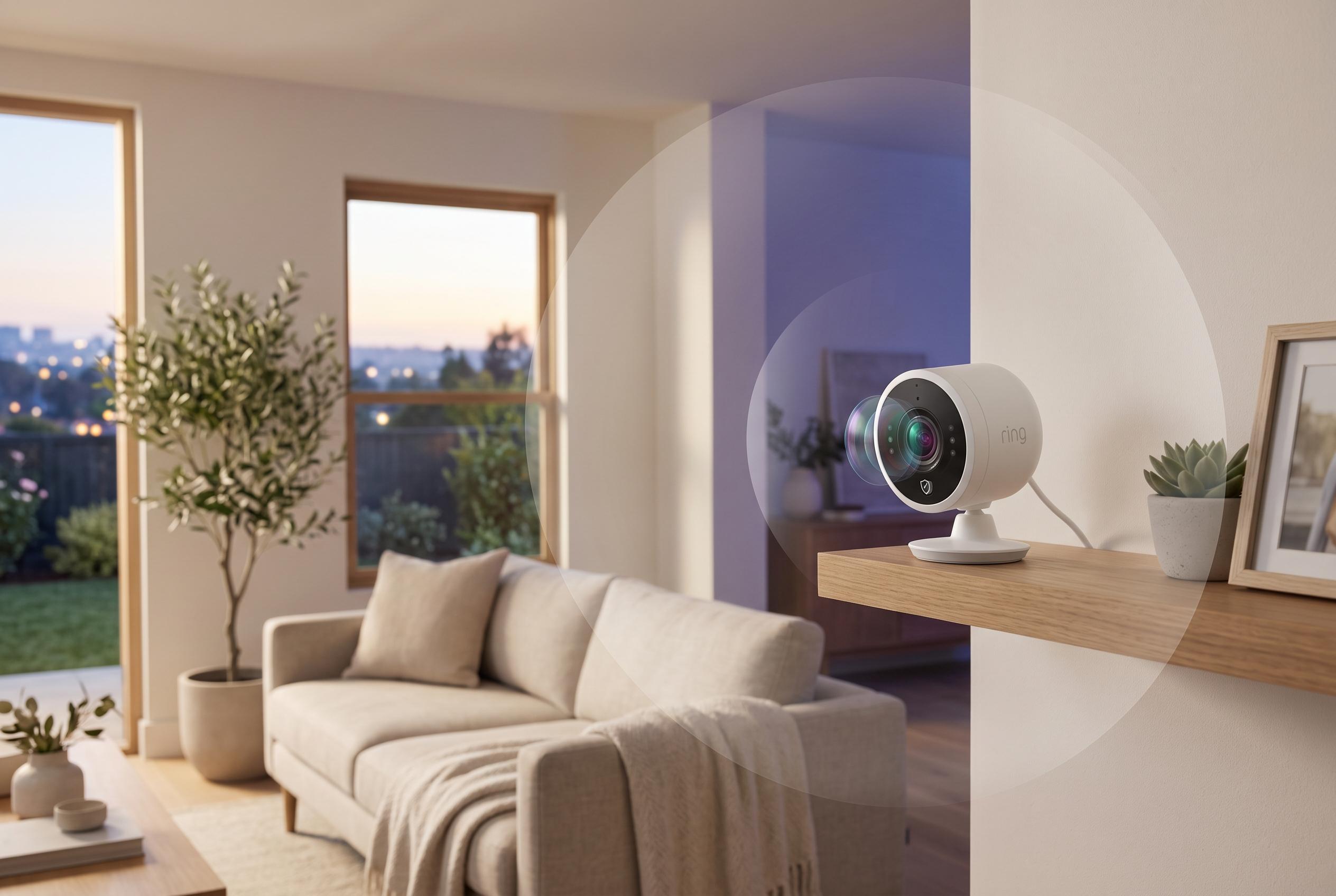

Ring’s latest indoor wireless cameras introduce 2K video, 360-degree coverage, and improved night vision, transforming DIY home security with easy setup and modular privacy controls.
Ring’s indoor wireless cameras have become a straightforward entry point into connected home security, mainly because they combine compact hardware with app-based control. According to Ring’s product information, the standard Indoor Cam offers 1080p HD video, motion detection, two-way talk, night vision and live viewing through the Ring app, while also working with Alexa for voice control and automation. That makes the devices less of a standalone camera and more of a small part of a wider smart-home setup.
Their appeal begins with installation. Ring says setup is designed to be quick, and third-party reviews have highlighted the ease of getting the camera online through the app. A wireless form factor also gives homeowners more freedom over placement, although coverage still depends on where the camera is positioned and what it can actually see. Tom’s Guide notes that even models with wider fields of view can leave blind spots if they are mounted poorly or pointed at the wrong angle.
The newer versions of the product line have also pushed further on image quality and indoor monitoring. Tom’s Guide says the Ring Indoor Cam Plus adds 2K video, improved low-light performance and a remote siren, while Security.org says the second-generation Indoor Cam delivers 1080p video with colour night vision and can support optional person detection. Ring’s Pan-Tilt Indoor Cam goes further still, offering 360-degree coverage, two-way audio with noise cancellation and a remote-activated siren. These additions matter for users who want broader room coverage without installing multiple fixed cameras.
There are still trade-offs. Android Central reported that Ring’s indoor camera is wired rather than battery-powered, which avoids charging concerns but limits placement to areas near power. The same review also noted that access to recorded video requires a Ring Protect subscription, which can add to the total cost of ownership. Tom’s Guide likewise observed that Ring remains tightly tied to its own ecosystem, with limited compatibility beyond Alexa.
Privacy controls remain a central part of the pitch. Ring’s own product pages describe custom motion zones, privacy zones and a manual privacy cover on some bundled systems, allowing users to disable recording when needed. That is important in domestic settings, where cameras can easily capture private areas or shared spaces. In practice, the strongest case for Ring’s indoor wireless cameras is not that they replace every other security measure, but that they offer a relatively simple way to monitor entry points, living areas and valuables with less setup than a traditional alarm system.
Disclaimer: This content is intended for informational purposes only. Readers are advised to exercise their own judgement, conduct due diligence, or consult a qualified expert before acting on any information provided.