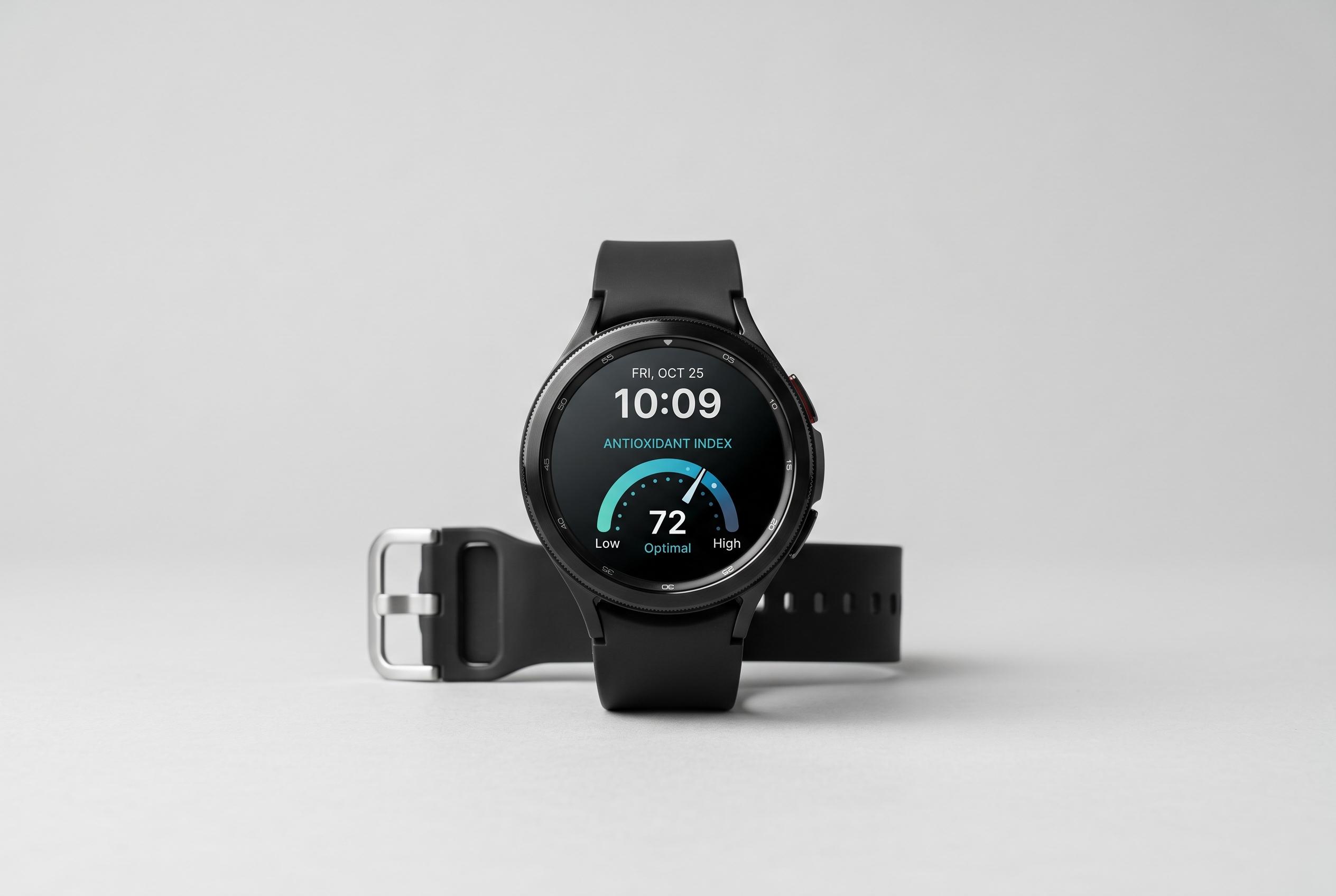

Samsung has launched a new antioxidant metric on the Galaxy Watch 8 series, offering users a quick estimate of skin carotenoid levels to monitor diet and lifestyle impacts on health, amidst mixed reviews on its reliability.
Samsung has added a new health metric to the Galaxy Watch 8 series that is designed to estimate antioxidant status through the skin. The feature, called Antioxidant Index, gives users a score from 0 to 100 after a roughly five-second thumb reading and is presented as a guide to carotenoid levels rather than a full measure of all antioxidants in the body. Samsung says the reading is meant to reflect how diet and lifestyle may be affecting health, with yellow, orange and green fruit and vegetables forming the main nutritional basis for the signal.
The company’s own description says the watch uses multiple LED wavelengths and a thumb placement on the rear sensor to analyse how much light is absorbed and reflected by the skin. According to Samsung, carotenoids absorb blue light more strongly, allowing the BioActive sensor to estimate their concentration and translate that into the index. Samsung’s explanation also makes clear that the result can be influenced by factors beyond diet, including alcohol intake, stress and ultraviolet exposure.
Samsung says the underlying method was developed and checked against Raman spectroscopy, a laboratory technique used to measure skin compounds, alongside blood tests, food diaries and data from hundreds of participants. The company has also said the feature is intended for trend tracking rather than diagnosis. In practical use, the reading appears to change slowly: one tester reported that a sharp diet change only nudged the score by two points at first, with values then settling in a narrow band for several days, which is consistent with the time carotenoids need to build up in the skin.
The feature is not available on the Galaxy Watch 7, but Samsung’s comparison material lists it on the Galaxy Watch 8, Galaxy Watch 8 Classic and Galaxy Watch Ultra, as well as on later models in the same range. That makes the Antioxidant Index part of a broader health push in the latest Watch generation, alongside other additions such as improved coaching and monitoring tools. Independent hands-on reports have been mixed, however, with some reviewers questioning how reliable the new reading is in everyday use.
Disclaimer: This content is intended for informational purposes only. Readers are advised to exercise their own judgement, conduct due diligence, or consult a qualified expert before acting on any information provided.