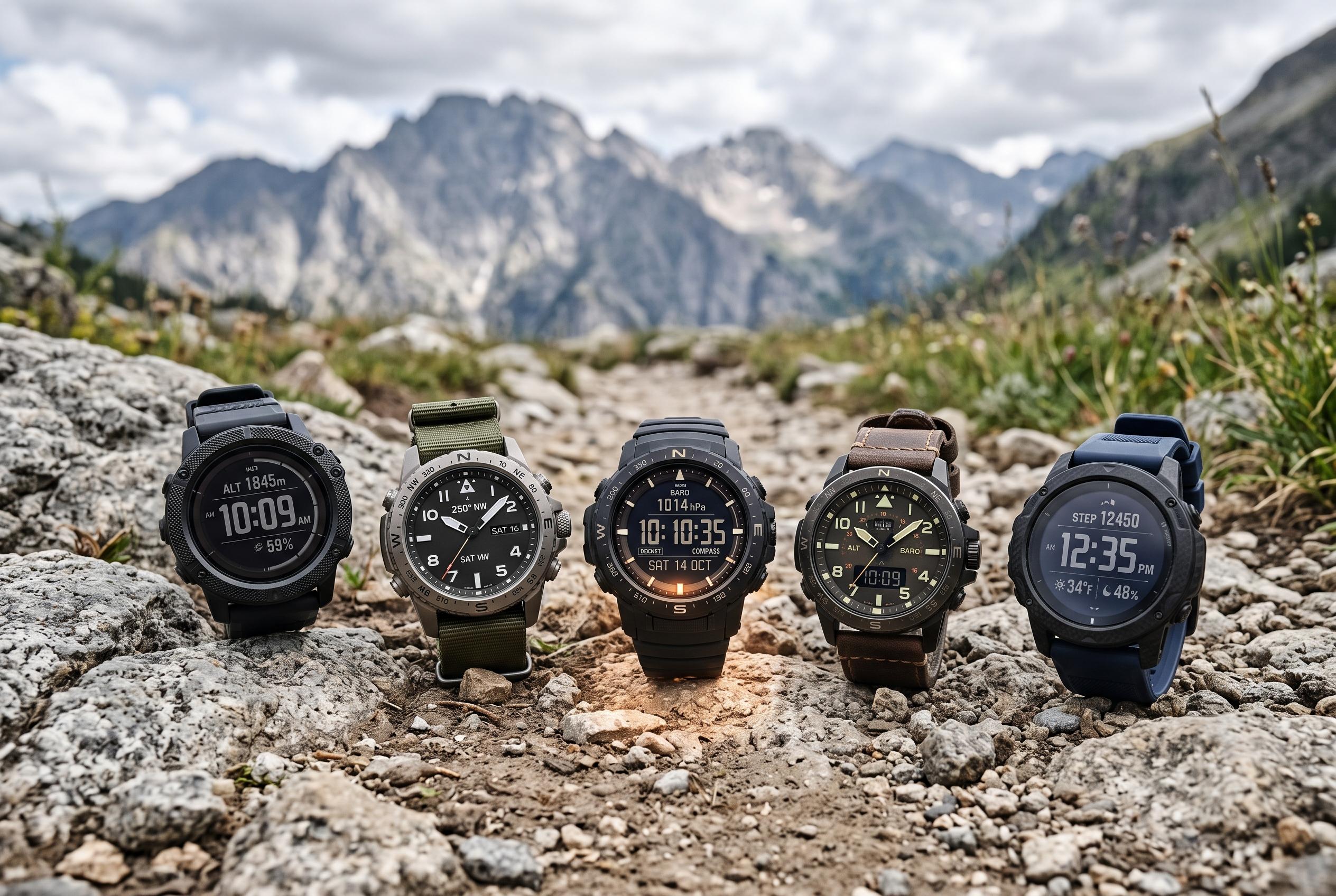

From Everest Base Camp to Scottish Munros, the latest hiking watches combine offline mapping, long battery life, and rugged design, with new features like built-in torches and training analytics shaping their evolution.
Hiking watches have become far more than digital step counters. For many walkers, they now replace paper maps, reduce the need to stop at junctions and add a layer of safety when weather closes in or daylight fades. TechRadar’s field-tested guide argues that the most useful models are the ones that combine offline mapping, long battery life, a readable screen, rugged construction and, increasingly, a built-in torch.
At the top of that list is the Garmin Fenix 8, which the reviewer took all the way to Everest Base Camp and back. According to TechRadar, the watch handled altitude readings well on that trek, while its Rucking mode allowed the wearer to factor in pack weight for more accurate calorie estimates. The integrated LED torch also proved useful in Nepalese teahouses and on a pre-dawn climb to Kala Patthar. Garmin’s newer Fenix 8 Pro microLED adds a 4,500-nit display for even stronger sunlight visibility, but TechRadar notes that the premium screen comes at a steep price and that battery life is better on the non-microLED models.
For longer expeditions, TechRadar gives the nod to the Suunto Vertical 2. The watch was tested on a five-day solo walk along St Cuthbert’s Way, where the reviewer found the downloaded maps clear, quick to load and easy to read on the large AMOLED screen. OutdoorGearLab reported similar strengths, measuring 66 hours of continuous GPS use and praising the built-in flashlight and offline topographic maps. TechRadar’s own testing also highlights the watch’s exceptional battery endurance, with more than half charge remaining after repeated daily use, although the trade-off is a heavier body and a simpler interface than Garmin’s.
The mid-range Amazfit T-Rex Ultra 2 aims to offer a broad feature set without the highest-end price tag. TechRadar’s reviewer used it across nine Munros in the Scottish Highlands and islands, and praised the detailed mapping, large internal storage and strong points-of-interest database. But the watch was not flawless: route guidance could feel slow to update, and rerouting did not always work as expected. Even so, its green torch mode, voice memo function and full smartwatch features make it a capable choice for hikers who want more than the basics and are prepared to accept a few rough edges.
The Coros Nomad is positioned as the best value option, especially for walkers who prefer a simpler, less distracting watch. TechRadar says its MIP display may look old-fashioned next to AMOLED rivals, but it helps battery life and remains easy to read in varied light. On a week in Eryri National Park, the reviewer found the colour maps detailed and quick to render, with accurate GPS and useful tools such as Mountain Climb mode and the Adventure Journal. There are compromises, including the absence of a torch and automatic rerouting, but the battery life and route capacity make it a strong budget pick.
TechRadar’s fitness-focused recommendation is the Polar Grit X2 Pro. The watch is aimed less at casual trail use and more at endurance hikers who want deeper training data. Its tools include FuelWise carb and drink reminders, Vertical Speed, 3D Speed and Hill Splitter, all designed to break down performance on steep terrain. The watch’s mapping is solid, but the lack of WiFi means routes and updates must be transferred by cable, and navigation is less convenient than on some rivals. Still, for data-driven walkers who care about recovery, sleep and cold-weather reliability, it offers a more analytical approach than most hiking watches.
Disclaimer: This content is intended for informational purposes only. Readers are advised to exercise their own judgement, conduct due diligence, or consult a qualified expert before acting on any information provided.