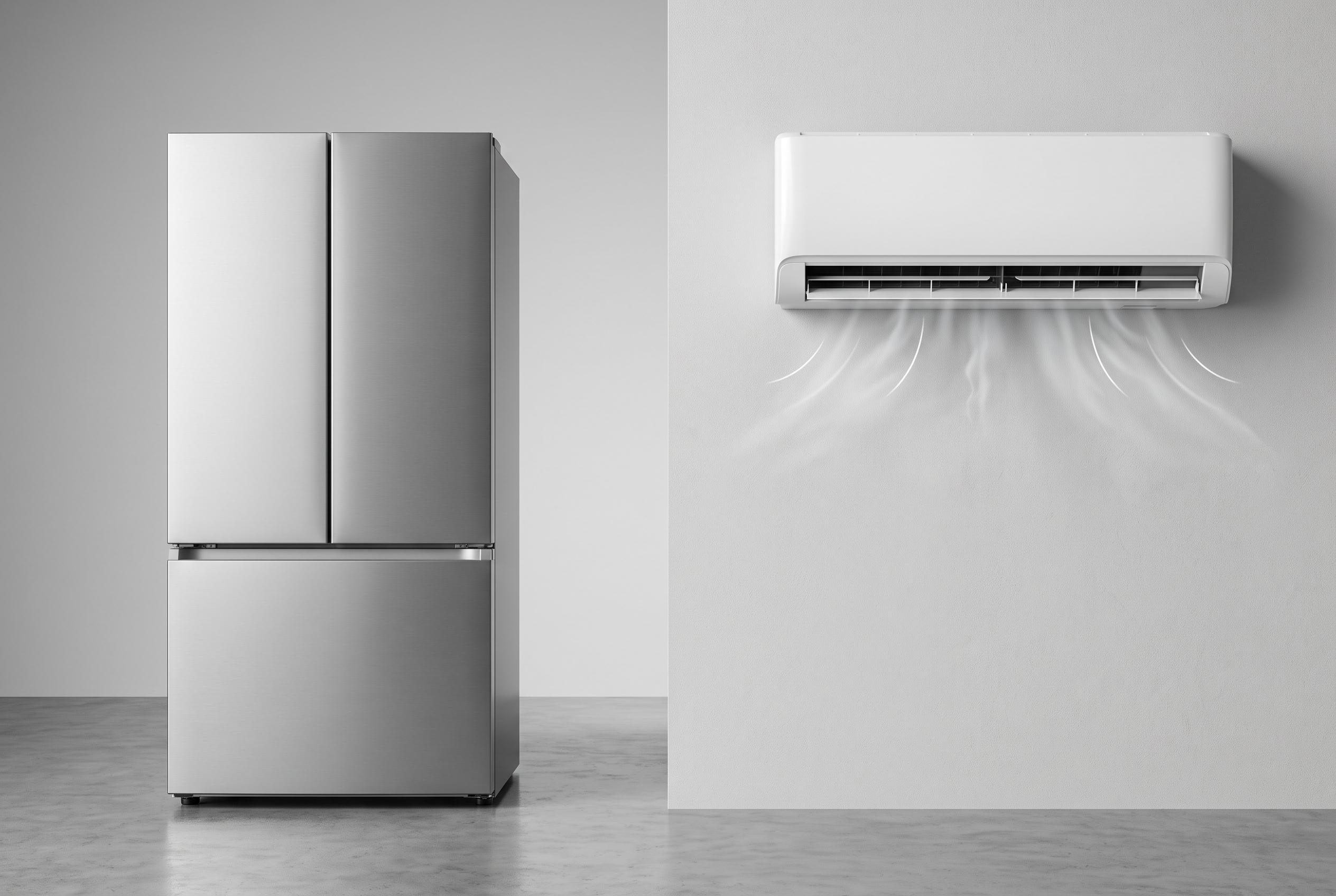

Experts clarify that unlike refrigerators which stay on constantly, air conditioners can operate continuously if properly maintained and correctly sized, but factors like environment and maintenance significantly affect their energy use.
The viral comparison between a refrigerator that stays on all day and an air conditioner that is often switched off after a few hours has a simple answer: an air conditioner can also run continuously if it is in good condition, correctly installed and properly sized for the room. According to Canaltech, the key distinction is not whether the unit remains plugged in, but whether its compressor is being forced to work at full power without pause.
That matters because both appliances regulate temperature in cycles. In standard models, the compressor switches on and off as needed; in inverter units, it slows once the target temperature is reached. In practice, this means neither machine is designed to labour at maximum output all the time. The difference is that a refrigerator serves a small, insulated enclosure, while an air conditioner must cool a much larger and less stable space.
Shan Lianyu, general manager of Xiaomi’s large home-appliance division, told Canaltech that there is no general rule preventing prolonged air conditioner use. He noted that in places with persistently high temperatures, long operating periods are common. The important point is that an air conditioner works in a more demanding environment, where sunlight, open doors, occupant numbers and electronic devices can all increase the cooling load.
Zhu Lei, marketing director at Gree, told Canaltech that the reason refrigerators stay on continuously is tied to their purpose: food needs constant refrigeration, while homes are not occupied in the same way throughout the day. He also pointed to cases where uninterrupted cooling is essential, including data centres, large cold-storage rooms, telecommunications sites in mountainous areas and offshore installations. In those settings, continuous operation is not unusual; it is required.
What most affects an air conditioner is not the number of hours alone, but the conditions under which it is running. A unit that is too small for the room may stay on for long periods without ever reaching the set temperature. That creates strain through poor sizing, not simply through extended use. Maintenance problems can have the same effect. Repair guides from appliance specialists say dirty condenser coils, worn door seals, fan faults, thermostat failures, low refrigerant and blocked airflow can all force compressors to work harder and raise electricity use.
Energy consumption also depends on the temperature difference between the room and the setting chosen, as well as insulation, outside heat and the efficiency of the appliance. Once a room has cooled, especially with an inverter model, power draw usually falls as the compressor reduces speed to maintain the target temperature. Even so, leaving a unit running in an empty room still wastes electricity. Canaltech also points out that cooling is not the same as ventilation: most split systems recirculate indoor air rather than bringing in fresh air from outside.
Disclaimer: This content is intended for informational purposes only. Readers are advised to exercise their own judgement, conduct due diligence, or consult a qualified expert before acting on any information provided.