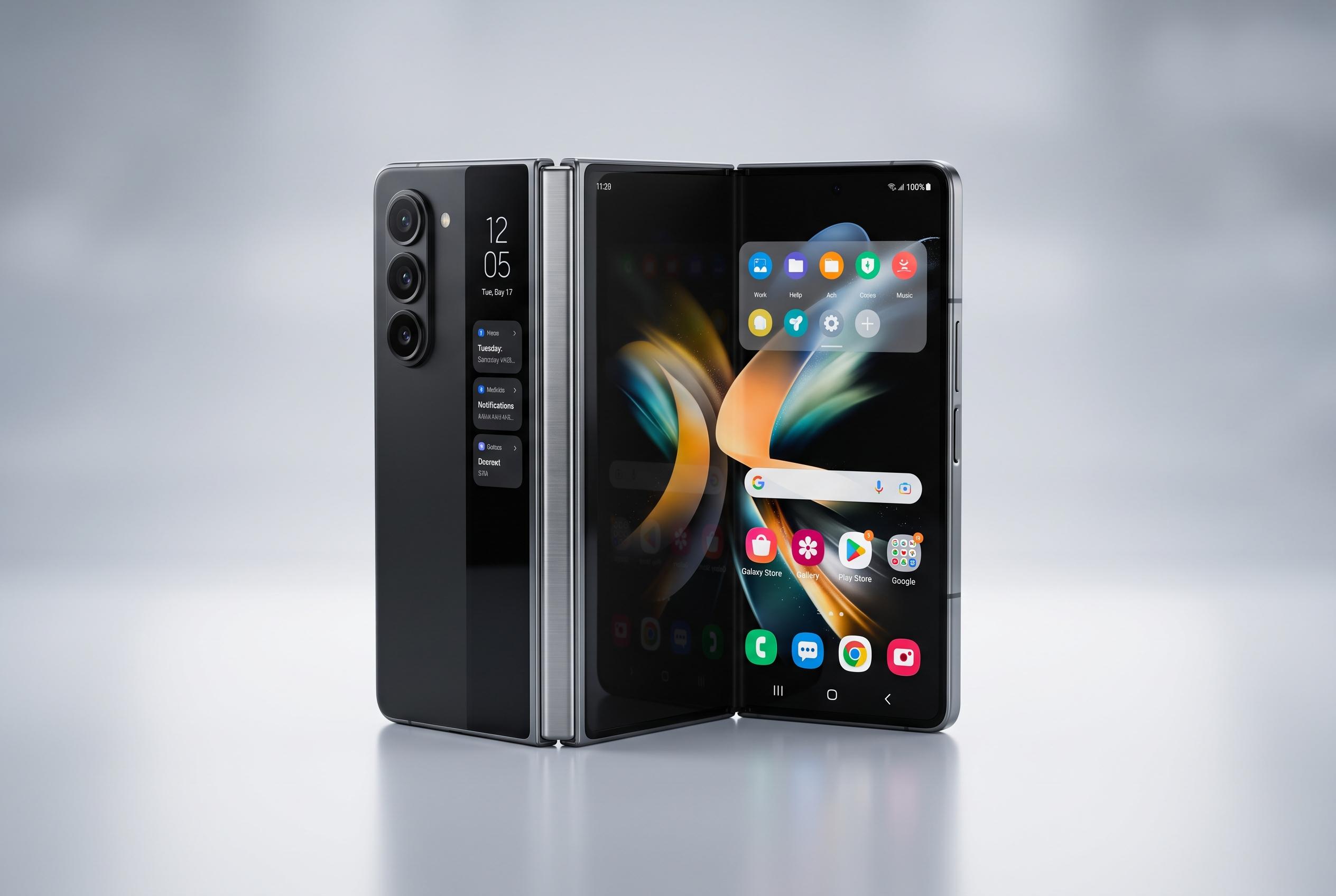

Samsung’s latest Galaxy Z Fold8 brings a more polished foldable experience with a nearly crease-free display, enhanced hinge, and balanced performance, though camera capabilities remain a key consideration for buyers.
Samsung’s latest foldables are shaping up as a more refined generation rather than a radical reinvention. Reviewers say the crease in the inner display is far less noticeable than on earlier models, and the screen feels smoother under a finger when swiping across it. SamMobile says the new hinge helps the panel lie flatter and reduces crease visibility, although it also offers fewer fixed open positions than before. Samsung Display had already shown a near crease-free foldable OLED panel at CES 2026, underlining how quickly the category is advancing.
The broader design still has one familiar flaw: the rear camera hump. Wired said the protruding module makes the phones rock on flat surfaces, and a case does little to solve it. That complaint sits alongside a more positive verdict on usability. Wired found the standard Fold8 easier to live with than the Ultra in split-screen use, largely because the wider panel leaves more room for multiple apps without making them feel cramped.
The performance story is more straightforward. Both models use Qualcomm’s Snapdragon 8 Elite Gen 5, and Wired reported a consistently smooth experience across apps and games. The more expensive Ultra has the larger 5,000mAh battery, while the Fold8 uses a 4,800mAh cell and Samsung’s first silicon-carbon battery technology. Wired said battery life was stronger on the Ultra, but both phones were still comfortably usable through a full day.
The main trade-off is camera hardware. Wired said the Fold8 pairs a 50-megapixel main camera with a 50-megapixel ultrawide lens and two 10-megapixel selfie cameras, while the Ultra adds a 200-megapixel primary sensor and a 10-megapixel 3x optical zoom. PhoneArena noted that the Fold8’s main sensor is materially smaller than the Ultra’s, which helps explain the gap in image quality. For buyers weighing thinness against photographic flexibility, the decision appears to be less about power than about whether the cheaper model gives up too much camera capability for the price.
Disclaimer: This content is intended for informational purposes only. Readers are advised to exercise their own judgement, conduct due diligence, or consult a qualified expert before acting on any information provided.