
Samsung has gained FDA clearance for a hearing-aid function on its Galaxy Buds, positioning consumer earbuds as potential medical devices and signalling a shift in self-managed hearing support technology, with a rollout expected in late 2026.
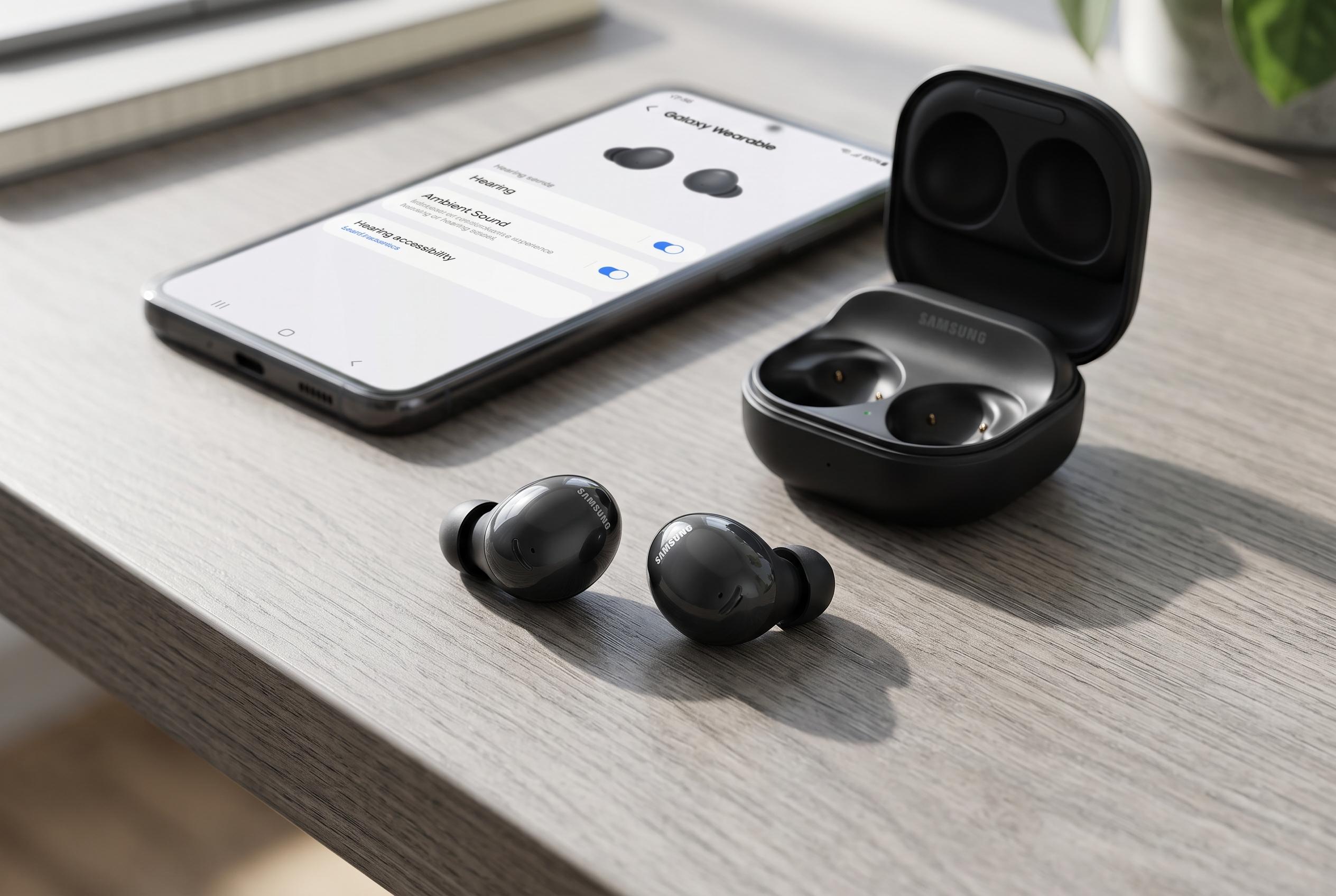
Samsung has said it has received US Food and Drug Administration clearance for a hearing-aid function on its Galaxy Buds, a move that pushes consumer earbuds further into medical territory. The feature is due to arrive in the fourth quarter of 2026 and will be available on the Galaxy Buds3 Pro and Galaxy Buds4 Pro in the United States and other approved markets. According to Samsung’s announcement, the system is designed to help adults with perceived mild to moderate hearing loss, a category the FDA created for over-the-counter hearing aids in 2022.
The process is intended to be simple. Users take a hearing test of about five minutes, after which the earbuds create a personalised sound profile from an audiogram and raise only the frequencies that are harder to hear. Samsung says the software also uses noise reduction and beamforming to focus on voices in front of the listener and reduce background noise. The fitting method uses the NAL-NL2 prescription formula, which is widely used in traditional hearing-aid practice.
The FDA’s OTC framework is central to Samsung’s move. The agency says these devices can be bought without a prescription or a professional fitting, with users able to adjust them through tests or software. That change opened the door for consumer electronics companies to treat hearables as basic hearing support products rather than only as audio devices. Apple was first to secure FDA clearance for AirPods Pro 2 hearing-aid software in 2024, a development that Samsung’s entry now appears designed to answer.
There are limits, however. Samsung’s current Buds3 Pro and Buds4 Pro models are rated for up to seven hours with active noise cancellation switched off, which makes them less suitable than dedicated hearing aids for all-day wear. In Japan, the issue is also regulatory: the company’s statement refers only to the United States and approved markets, and hearing-related products there can fall under tighter medical-device rules. That matters because conventional hearing aids remain expensive in Japan, while newer alternatives such as Sony’s Mirai Speaker ear-cuff style sound amplifier have attracted strong consumer interest as lower-cost options for people who are not ready for a full hearing-aid purchase.
Disclaimer: This content is intended for informational purposes only. Readers are advised to exercise their own judgement, conduct due diligence, or consult a qualified expert before acting on any information provided.