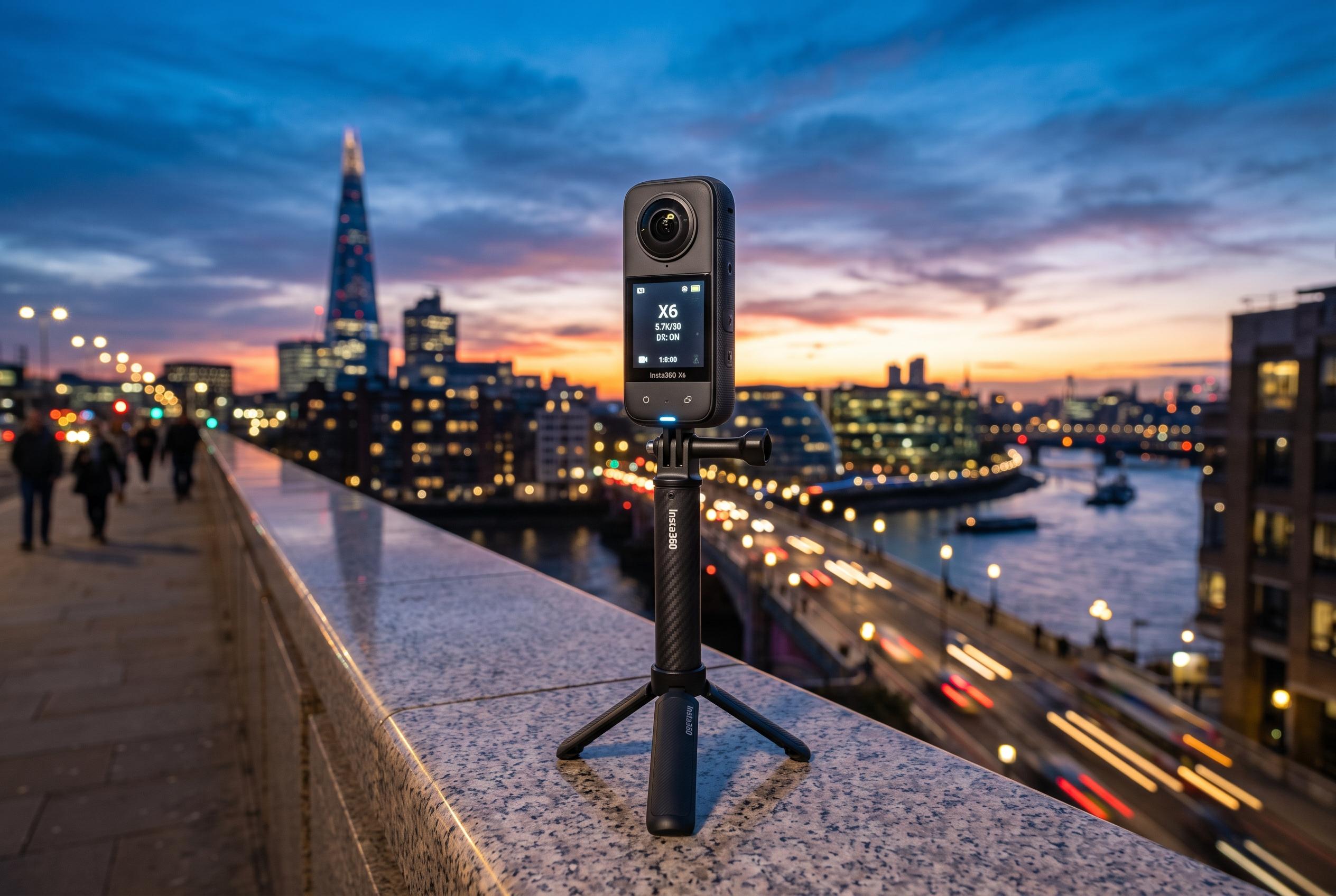

Insta360’s X6 advances the genre with superior colour handling, dynamic range and low-light performance, positioning it as a versatile tool for serious creators seeking high-quality footage across challenging environments.
Insta360’s X6 is a clear step up from the previous generation, but its most meaningful gain is not simply more speed, higher resolution or smarter software. The camera’s strongest advantage, according to Jake Sloan’s field review on DroneXL, is its colour handling, which helps the X6 produce more usable footage in difficult light. That matters because the company is aiming the device at users who need one camera that can handle action work, travel footage and demanding aerial-style perspectives without constant compromise.
Sloan tested the camera in Alaska over a five-hour drive to Valdez, mounting it to a car and later using long selfie-stick setups for unusual angles. Those scenes underline a core strength of 360 cameras: they can be placed almost anywhere, then reframed later in editing. TechRadar and Tom’s Guide both note that the X6 uses dual 1/1.1-inch sensors, records up to 8K at 50fps and offers 10-bit colour, which helps explain why it is being positioned above more conventional action cameras. Reviewers also point to the camera’s 20-metre waterproof rating and replaceable lenses as practical advantages for outdoor use.
The most striking test came inside a glacier ice cave reached by helicopter. Sloan described a substantial improvement in dynamic range compared with earlier Insta360 models, especially in scenes that combine bright snow and deep shadow. That aligns with wider reviews from TechRadar, T3 and Digital Camera World, which all say the X6’s new processor and sensor package improve highlight control, low-light performance and overall image quality. In practice, that should make the camera more useful in places where older 360 models struggled to hold detail.
Low-light performance appears to be one of the X6’s defining upgrades. In Sloan’s account, the camera remained usable deep inside the ice cave, where he said he would not previously have trusted a 360 camera to deliver worthwhile results. Tom’s Guide also highlights stronger stabilisation and better audio support, including Bluetooth microphone compatibility and wind reduction. For creators filming in motion, that is important because the camera can record first and decide framing later, which reduces the need to monitor composition while skiing, biking or kayaking.
The stills performance is equally notable. Sloan said the X6’s 120-megapixel photos were better than he expected from a 360 camera, particularly in scenes with bright openings in the ice and darker surroundings below. Gadgets 360 reported that the camera’s dual 42-megapixel sensors can produce 120-megapixel 360-degree images, which explains the flexibility available in post-production. For users, that means a single capture can be reframed without immediately sacrificing detail.
Insta360 has also backed the hardware with a broader workflow. Sloan praised the Studio software for reframing, tracking subjects and handling stitching, while the mobile app’s new AI editing tool can assemble clips into near-ready social posts. Digital Camera World says the X6 also adds InstaFrame 2.0, which is designed to make output look more like footage from a gimbal or standard camera. Add Dolby Vision, I-Log support, 47GB of internal storage and optional ND filters, and the X6 starts to look less like a niche 360 device and more like a high-end hybrid for serious creators, albeit one that remains expensive.
Disclaimer: This content is intended for informational purposes only. Readers are advised to exercise their own judgement, conduct due diligence, or consult a qualified expert before acting on any information provided.