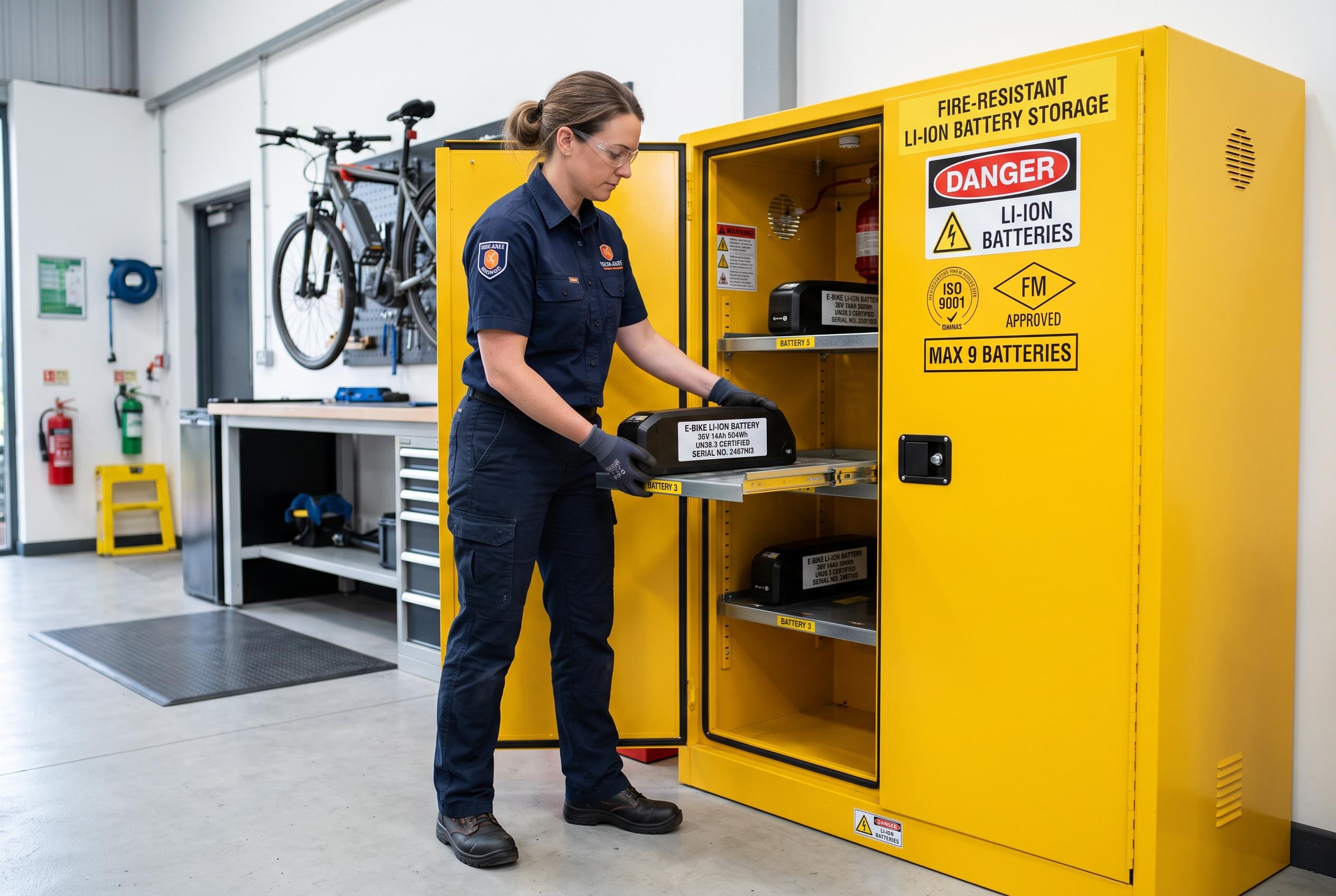

As e-bike adoption rises, experts emphasise comprehensive safety measures, including certified hardware, cautious charging, and proper storage, to prevent fires and battery failures, even when batteries appear idle.
E-bike battery safety is not just a charging issue. A lithium-ion pack can fail while parked, in storage or during a ride, which is why manufacturers and safety guides now stress a full set of precautions rather than a single rule. Himiway’s guidance, echoed by other e-bike safety advisers, points to the same core principle: certified hardware, careful charging, and disciplined storage reduce the risk of thermal runaway and the fire hazards that can follow. The company also warns that even a battery that appears idle can still be unstable if it has been damaged, overheated or exposed to moisture.
The most basic charging rules remain the most important. Use only the charger supplied or approved by the manufacturer, and place the battery on a hard, non-combustible surface such as concrete, tile or stone. Do not charge on a bed, sofa or carpet, and do not leave the pack unattended overnight. Several safety guides also advise waiting for a battery to return to room temperature before charging, particularly after a ride in cold weather, because charging below freezing can permanently damage cells and increase the risk of internal failure.
Storage matters just as much as charging. Industry guidance commonly recommends keeping an e-bike battery at a partial charge, usually somewhere around 40% to 60% or 40% to 70%, rather than storing it full or empty for long periods. A cool, dry indoor location is preferable, ideally around 50°F to 68°F, and the battery should be kept away from direct sunlight, hot cars and damp garages. The aim is to slow chemical degradation, avoid deep discharge and prevent corrosion or water ingress, all of which can shorten battery life and raise safety risks.
Warning signs should never be ignored. Swelling, bulging, unusual heat, hissing, crackling, a sweet or burning smell, visible soot and rapid self-discharge are all signs that the pack may be failing internally. If those symptoms appear, the advice across the sources is consistent: stop using the battery immediately and treat it as a potential fire hazard. A damaged pack should not be charged normally, moved casually or opened for repair by an unqualified user, because impact, internal short circuits and hidden defects can all trigger a delayed failure.
Certification and product quality are central to the wider safety picture. Several guides say buyers should look for UL 2849 for the full e-bike electrical system or UL 2271 for the battery pack itself, rather than relying on vague claims or cheap aftermarket replacements. That distinction matters because low-cost, uncertified batteries are often linked to poor cell quality, weak battery management systems and unstable wiring. Proper disposal also matters: dead or damaged batteries should go to a certified recycler or hazardous waste facility, not household rubbish. In practice, the safest e-bike battery is one that is properly certified, correctly matched to the bike and handled with consistent caution.
Disclaimer: This content is intended for informational purposes only. Readers are advised to exercise their own judgement, conduct due diligence, or consult a qualified expert before acting on any information provided.