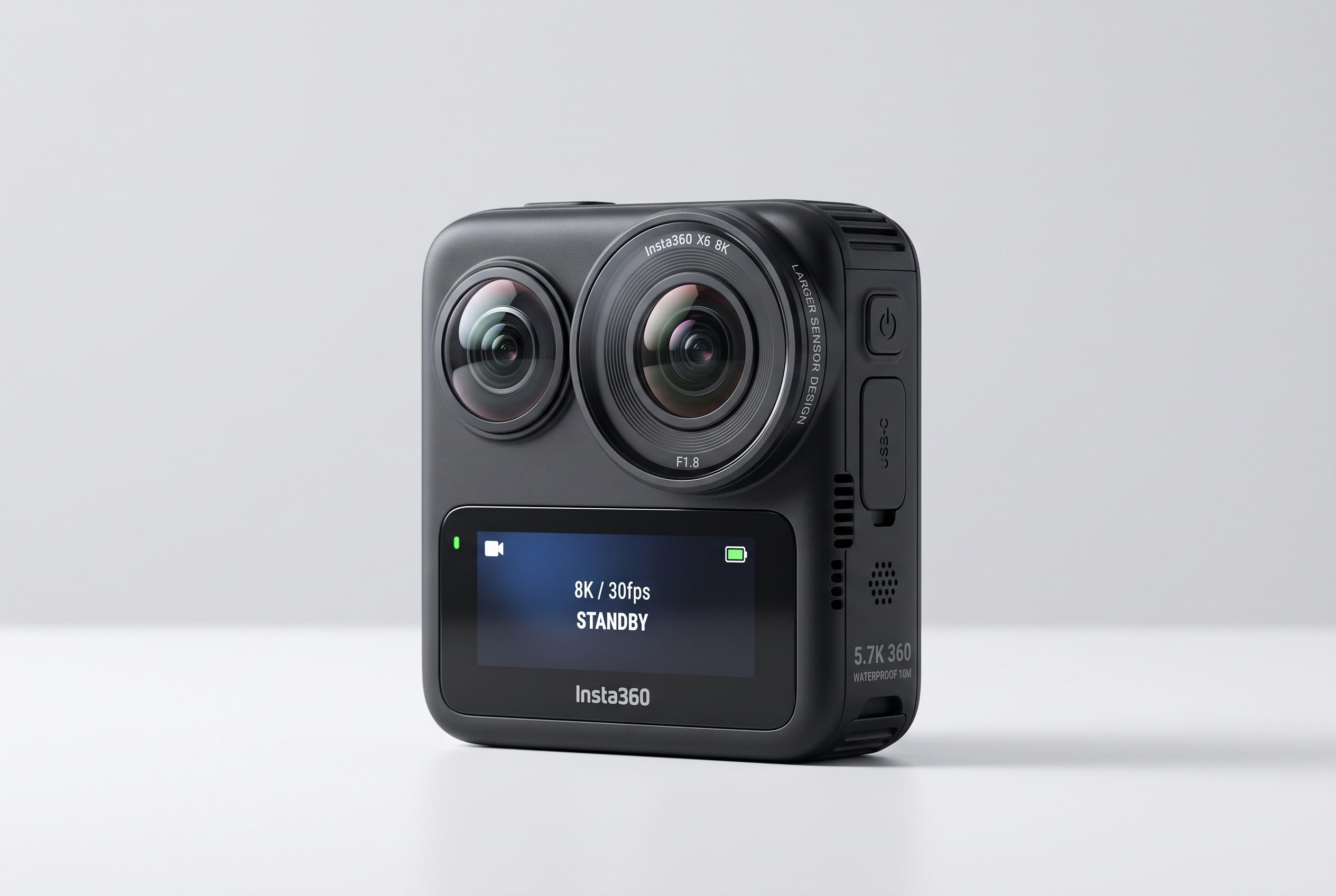

The Insta360 X6 introduces larger sensors and higher frame rates aimed at content creators focusing on post-production editing, while the X5 remains a practical, value-oriented option for quick uploads and daytime shooting.
Insta360’s new X6 is an incremental upgrade in name only. According to Tom’s Guide, the camera arrives with larger 1/1.1-inch sensors, a revised 4nm processor, internal storage and an OLED display, while the X5 remains the simpler, cheaper model in the line. For buyers, the real question is not which camera is “best” in the abstract, but whether the extra headroom in the X6 is worth paying for if footage will be graded and edited rather than posted almost immediately. (tomsguide.com)
The X6’s strongest case is low-light and fast-action work. Tom’s Guide says its larger sensors and new processing chain produce cleaner results in dim conditions, while the jump to 8K at 50fps gives editors more flexibility for reframing and motion work than the X5’s 8K at 30fps. That matters for action sports, night rides and indoor shooting, where the combination of more light capture and higher frame rates can reduce noise and preserve detail. (tomsguide.com)
By contrast, the X5 is still the more practical choice for creators who live inside the Insta360 app and publish quickly. Insta360’s own manuals list the X5’s 1/1.28-inch sensors, 2.5-inch touchscreen, 200g weight and microSD-based storage, which makes it a familiar, straightforward tool for travel, daily vlogging and social-first workflows. It also remains a strong-value camera for users who do not need 10-bit colour, Dolby Vision or the extra capture options of the X6. (onlinemanual.insta360.com)
The difference in workflow is more important than the raw specification gap. The X6 is better suited to creators who colour-grade in post, especially in software such as DaVinci Resolve, because higher bit depth and more recording latitude leave more room to recover shadows and smooth gradients. The X5’s 8-bit output is still adequate for YouTube and fast social exports, but it offers less flexibility if exposure is inconsistent or footage needs heavier correction later. (tomsguide.com)
Design also favours different users. Tom’s Guide reports that the X6 is shorter and slightly lighter than the X5, with a brighter OLED screen and improved lens design, while also increasing waterproofing to 20 metres. That makes it more appealing for helmet mounts, water use and rougher production environments. The X5, meanwhile, stays the cheaper route into Insta360’s 8K ecosystem and still covers most daylight shooting without much compromise. (tomsguide.com)
For most buyers, the decision comes down to editing time. If the camera is mainly a capture device for quick uploads, the X5 remains the sensible purchase. If the camera is part of a serious post-production workflow, the X6’s extra sensor size, higher frame rate ceiling and internal storage make it the more capable tool. In short, the X5 is for publishing fast, while the X6 is for extracting more from every clip. (tomsguide.com)
Disclaimer: This content is intended for informational purposes only. Readers are advised to exercise their own judgement, conduct due diligence, or consult a qualified expert before acting on any information provided.