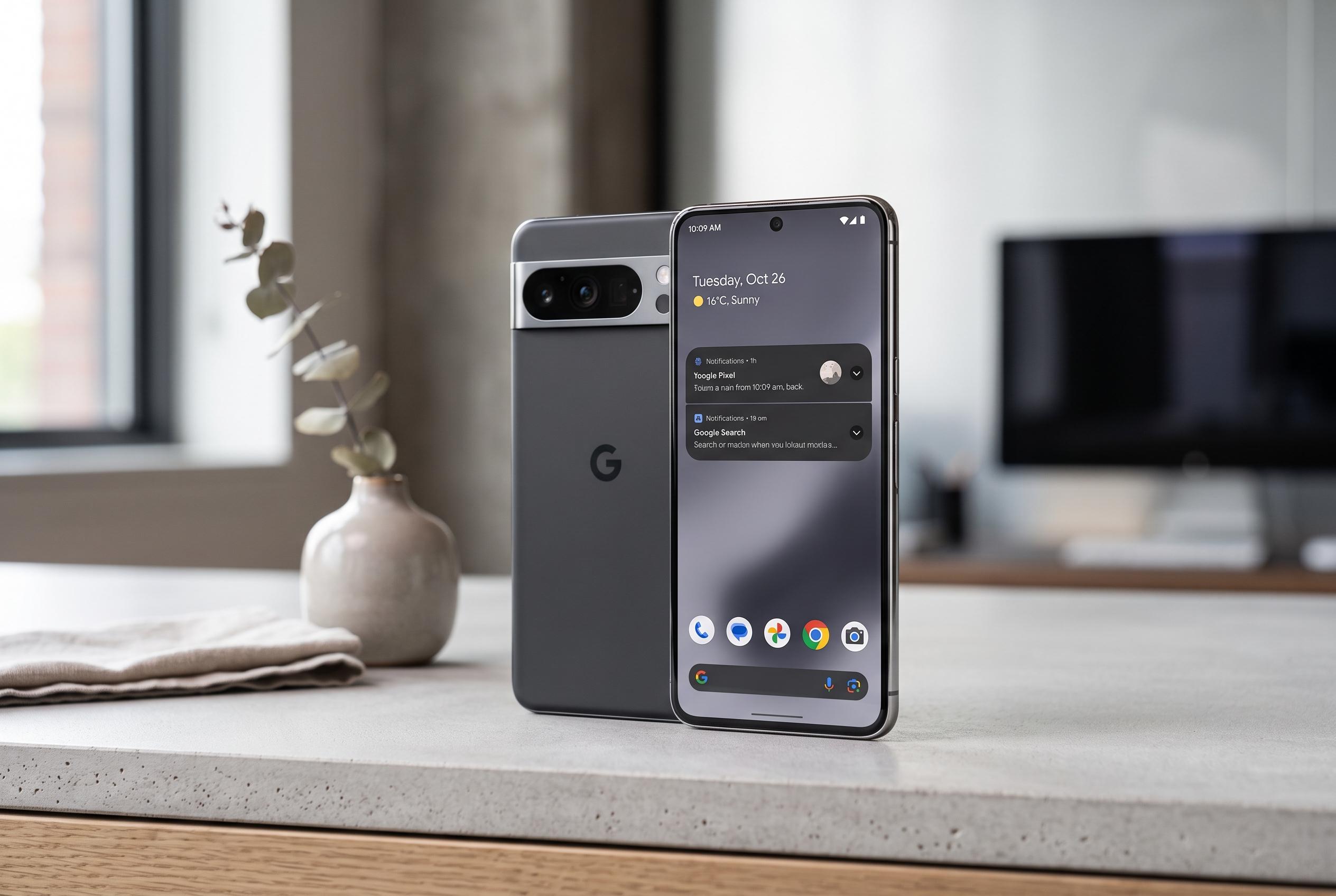

As Google introduces its Pixel 11 lineup with a starting price of $899, rivals like Samsung’s Galaxy S26 and foldable options such as the Galaxy Z Flip 8 and Motorola Edge 2026 challenge its performance and value propositions, highlighting a dynamic shift in the flagship smartphone market.
Google’s new flagship range is now official, and the standard Pixel 11 sits at the bottom of the family at $899. That still makes it the least expensive mainline Pixel, but it is no longer a cheap phone. For buyers who want to avoid the more expensive Pixel 11 Pro, Pixel 11 Pro XL or Pixel 11 Pro Fold, there are still several strong Android alternatives worth weighing first. According to Android Authority, the most obvious rival is Samsung’s Galaxy S26, which matches the Pixel’s 6.3-inch size and triple-camera layout but is built around Qualcomm’s Snapdragon 8 Elite Gen 5 in many markets, a chip that early benchmark testing has placed ahead of Samsung’s Exynos 2600 variant.
For buyers focused on performance, that difference matters. Android Authority notes that Google has been relatively guarded about the Tensor G6 inside the Pixel 11, saying only that it brings efficiency and speed gains, while Samsung’s flagship already has a stronger reputation for raw speed. Tom’s Guide and Notebookcheck both report that the Snapdragon 8 Elite Gen 5 version of the Galaxy S26 leads the Exynos model in CPU and graphics tests, and SamMobile says battery testing has also favoured the Snapdragon version. Samsung also offers a broader mix of Galaxy AI and Google AI features, plus more flexible customisation in One UI.
The Pixel 11 Pro is the easier Google-made alternative to recommend if the goal is simply a better Pixel. PhoneArena’s specification comparison shows that it keeps the same 6.3-inch footprint as the base phone but upgrades to a sharper 2,856×1,280 display, 16GB of RAM and a far stronger camera system. Android Authority says the Pro’s rear setup uses a 50MP main camera, a 48MP ultrawide and a 48MP telephoto lens with 5x optical zoom, while the front camera rises to 42MP. The base Pixel 11, by contrast, keeps lighter cameras and less storage headroom, even if it does save some weight and has the larger battery of the two.
Value-conscious buyers may be better served by the Pixel 10a. Android Authority puts the phone at $499, making the Pixel 11’s price premium hard to justify for some users. The two phones share a 6.3-inch, 120Hz panel with 3,000-nit peak brightness, while the Pixel 10a adds a 5,100mAh battery and a flat rear design. Its main compromises are older Tensor G4 hardware, 8GB of RAM and modest storage, plus the lack of built-in magnets for Qi2, MagSafe-style accessories and Google’s own Pixelsnap ecosystem. Even so, it remains a capable mid-range option.
Those who want a smaller-feeling handset may find the Galaxy Z Flip 8 more compelling than any slab phone. Android Authority says the foldable closes to a very compact form factor but opens to a 6.9-inch inner display, giving it a much more pocketable profile than the Pixel 11. It also uses the same Snapdragon 8 Elite Gen 5 family of chip as Samsung’s other top-tier phones, so performance should again be comfortably ahead of Google’s Tensor platform. The trade-off is price: at $1,199, it is not a value play. Another strong budget-to-premium compromise is Motorola’s Edge 2026, which Android Authority describes as thinner and lighter than the Pixel 11, yet fitted with a 6.3-inch 120Hz display, a 5,000mAh battery, 68W wired charging and a more ambitious camera array. Its weaker software support remains the main caveat.
Disclaimer: This content is intended for informational purposes only. Readers are advised to exercise their own judgement, conduct due diligence, or consult a qualified expert before acting on any information provided.