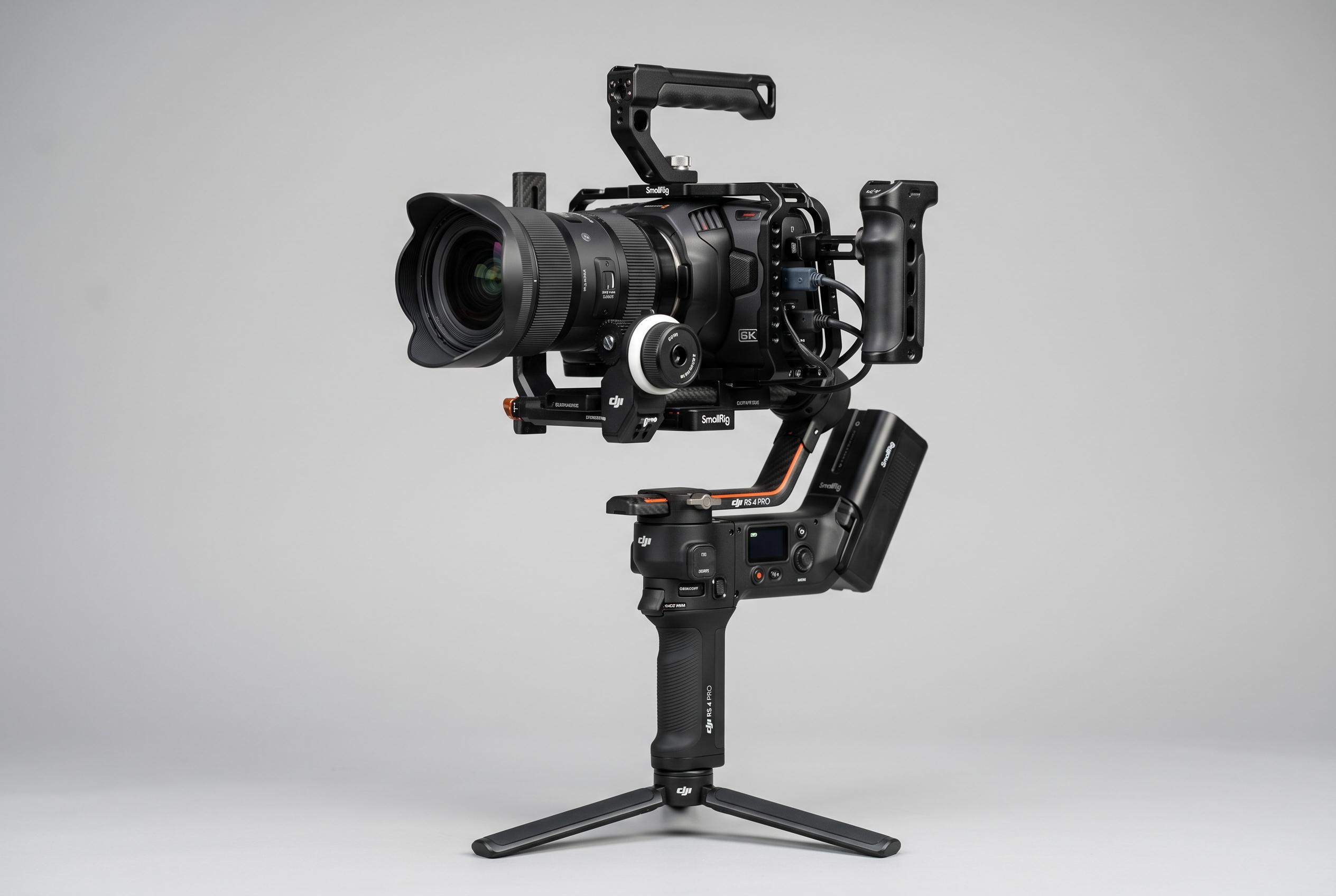

As Blackmagic Pocket Cinema Camera owners face evolving stability challenges, the 2026 gimbal scene spots the DJI RS 4 Pro as the top choice for heavy rigs, with lighter options catering to solo operators and travel filmmakers seeking a balance of performance and portability.
For Blackmagic Pocket Cinema Camera owners, the best gimbal in 2026 depends less on brand loyalty than on balance, payload headroom and workflow. The BMPCC range is compact, but its front-heavy shape makes stabilisation harder than it looks, especially once a speed booster, cinema lens or external monitor is added. In that context, the DJI RS 4 Pro stands out as the most capable all-round choice for heavier rigs, while lighter and cheaper options make more sense for solo operators and travel work.
The RS 4 Pro is the safest recommendation for full BMPCC builds because it is designed to carry up to 4.5kg and has improved auto-locking axes and balancing aids that make setup faster and more predictable. Digital Camera World also singled it out in its 2026 gimbal guide as the best option for heavy payloads, noting that it suits professional use and has been tested successfully with cameras including the Blackmagic Pocket 6K. For crews working with matte boxes, follow-focus motors and wireless accessories, that extra headroom matters.
For smaller productions, the DJI RS 4 Mini offers a better trade-off between portability and performance. Its quick setup and tracking features make it a strong fit for weddings, documentaries and run-and-gun shooting, particularly when the camera package stays well below heavy cinema-rig territory. The Zhiyun CINEPEER Weebill 3E also remains compelling for budget buyers, with a light body, solid payload rating and enough stability for BMPCC 4K-style setups without demanding much from the bag or the wrist.
Zhiyun’s Crane 4 and Crane 4E broaden the field for users who want comfort as much as raw lifting power. The Crane 4 is notable for its sling grip and built-in fill light, which is useful for interviews and low-light run-and-gun work, while the Crane 4E leans into ergonomics and long battery life. FeiyuTech’s SCORP-C2 is the most interesting alternative for solo shooters, thanks to built-in AI tracking and support for Arca-Swiss plates, though it remains a step behind DJI and Zhiyun in refinement.
The practical lesson is simple: match the gimbal to the rig you actually carry, not the one you hope to build later. A BMPCC 4K with a compact lens can live happily on a lightweight stabiliser, but a 6K body with a cinema zoom and accessories needs far more motor strength and arm travel. For most serious filmmakers, the RS 4 Pro is the clearest premium answer; for lighter work, the RS 4 Mini, Weebill 3E and Crane 4 range offer better value without forcing you to overbuy.
Disclaimer: This content is intended for informational purposes only. Readers are advised to exercise their own judgement, conduct due diligence, or consult a qualified expert before acting on any information provided.