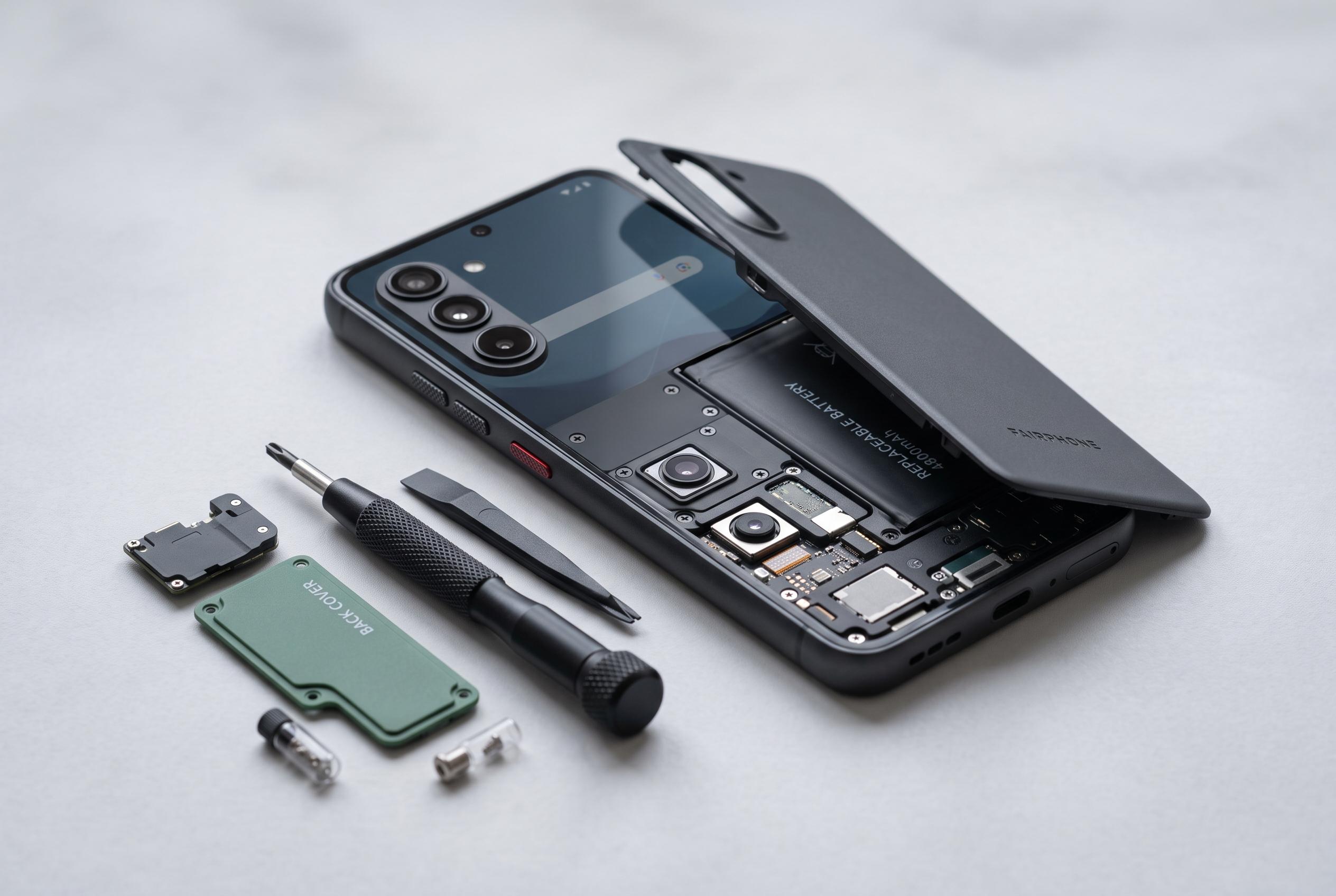

Fairphone’s sixth-generation handset shifts the focus from flagship specs to long-term durability and modular design, promising software support until at least 2033 and easy at-home repairs for a more sustainable future.
Fairphone’s sixth-generation handset is not trying to win the usual smartphone race. It does not chase the fastest chip, the brightest camera system or the slimmest profile. Instead, it is built around a more unusual promise: that the user should be able to keep the device in service for years, replace worn parts at home and still receive software support well into the next decade. Fairphone says the phone launched with Android 15, has already moved to Android 16, and is due to remain supported until at least 2033.
That long life is not a marketing flourish. Fairphone’s own support guidance shows how owners can replace key parts such as the battery, display, cameras, earpiece, loudspeaker and USB-C port with a Torx T5 screwdriver and step-by-step instructions. The company’s product pages also emphasise a removable 4,415mAh battery, modular construction and spare-part availability for the duration of the support window.
The hardware sits firmly in the upper mid-range. Fairphone lists a 6.31-inch LTPO OLED display, Qualcomm’s Snapdragon 7s Gen 3, 8GB of LPDDR5 RAM and 256GB of UFS 3.1 storage, alongside microSD expansion up to 2TB. The official specification sheet also points to a 50MP main camera with optical stabilisation, a 13MP ultrawide, a 32MP front camera and 30W wired charging, with no wireless charging included.
Where the phone really separates itself from rivals is in repairability. Fairphone’s replacement guide covers the battery, display, top unit, cameras, earpiece, loudspeaker and USB-C port, underscoring that this is not a device intended to be sealed shut for its entire life. Repairability review site RepairScore rates the Fairphone 6 highly for ease of repair and parts access, which is consistent with Fairphone’s broader claim that the handset is designed to remain usable rather than disposable.
Software support is part of the same strategy. Fairphone says the device launched on Android 15, reached Android 16 by March 2026 and is promised at least seven Android version upgrades plus an additional year of security support. In practical terms, that gives the phone an unusually long runway for a mainstream Android model.
Fairphone also continues to frame the Gen. 6 as a sustainability product as much as a consumer device. The company says more than half of the phone’s materials by weight are fair or recycled, and that the phone is 100% e-waste neutral by its accounting. It also says spare parts will remain available throughout the support period, which matters as much as the modular design itself.
That positioning creates the main trade-off. The Fairphone 6 is easy to understand as a long-term ownership proposition, but it is not the obvious choice for buyers who want the strongest camera output, premium water resistance or flagship-class performance. The appeal is instead in being able to replace the parts most likely to fail, while avoiding the cost and waste of replacing the entire phone when one component wears out.
In other words, the Fairphone 6 is best judged by a different metric from most of the market. It is less about raw specification and more about durability, serviceability and support. For buyers who value those qualities, Fairphone’s latest model remains one of the clearest examples of a smartphone built to last rather than to be replaced.
Disclaimer: This content is intended for informational purposes only. Readers are advised to exercise their own judgement, conduct due diligence, or consult a qualified expert before acting on any information provided.