
Samsung’s Galaxy S26 Ultra edges ahead in design, performance, and versatility, positioning itself as the leading high-end Android device, while Google’s Pixel 11 Pro XL appeals with its software and camera simplicity.
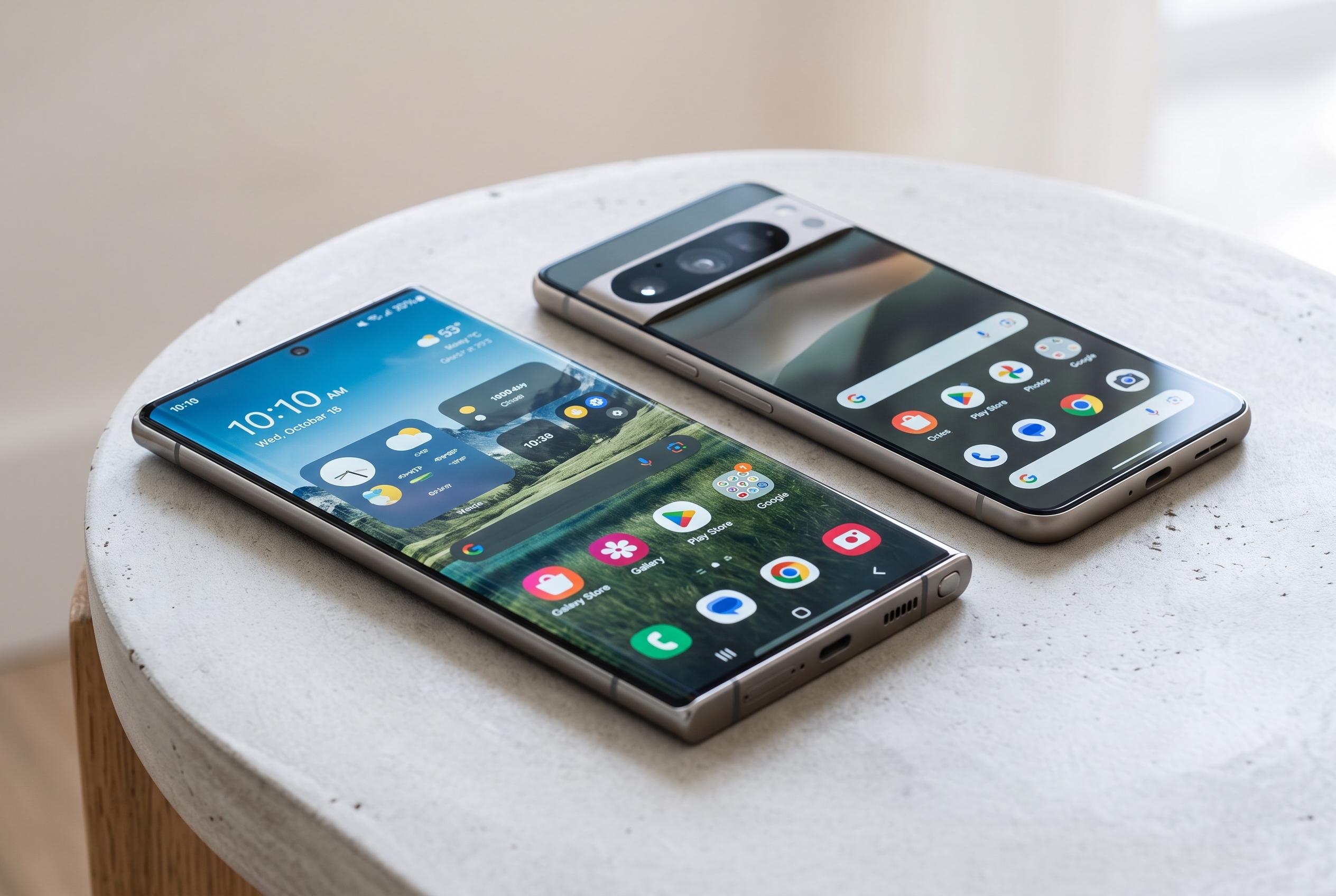
Samsung and Google are pursuing different ideas of what a premium Android phone should be. In a comparison highlighted by Focus and originally attributed to Gizmochina, the Pixel 11 Pro XL is framed as the software-first option, built around Google’s AI tools, computational photography and a cleaner Android experience. The Galaxy S26 Ultra, by contrast, is positioned as the more complete hardware package, with an S Pen, DeX support and a broader set of camera and display features.
On design and screen quality, Samsung appears to hold the advantage. The Pixel 11 Pro XL uses an aluminium frame, Gorilla Glass Victus 2 on both sides and an IP68 rating, while the Galaxy S26 Ultra combines Gorilla Armor 2, Victus 2 and Armour Aluminum 2. Reviews from Tom’s Guide, SamMobile, PhoneArena, Tech Advisor, TechRadar and Android Central all point to the S26 Ultra’s strong build quality and its Privacy Display as a notable differentiator. The display is also larger and sharper on Samsung’s side, with a 6.9-inch Dynamic LTPO AMOLED 2X panel, although Google counters with a brighter 6.8-inch LTPO OLED panel rated at up to 3,600 nits.
Performance follows the same split. Samsung’s Snapdragon 8 Elite Gen 5, paired with up to 16GB of RAM and 1TB of storage, is the more conventional high-end configuration for demanding games and heavy multitasking. The Pixel 11 Pro XL’s Tensor G6, with the same memory and storage ceiling, is described as being tuned more for AI tasks than raw speed. That difference is consistent with Google’s wider strategy, which leans on on-device intelligence rather than benchmark-leading silicon.
Battery and charging also tilt the comparison in Samsung’s favour, even if Google offers a slightly larger 5,115mAh cell. The Pixel supports 45W wired charging, 25W Qi2.2 wireless charging, reverse wired charging and bypass charging. The Galaxy S26 Ultra uses a 5,000mAh battery, but is said to charge at up to 60W wired, with 25W wireless and 4.5W reverse wireless. In camera terms, Samsung is the more flexible device, with a 200MP main sensor, 3x telephoto, 5x periscope and 50MP ultrawide, while Google relies on a simpler 50MP main camera, 48MP 5x telephoto and 48MP ultrawide. The Pixel’s 42MP front camera should be stronger for detail, but Samsung’s overall package remains broader. On that basis, the S26 Ultra looks like the more versatile flagship, while the Pixel 11 Pro XL is the better fit for buyers who value Google’s software and imaging approach over hardware breadth.
Disclaimer: This content is intended for informational purposes only. Readers are advised to exercise their own judgement, conduct due diligence, or consult a qualified expert before acting on any information provided.