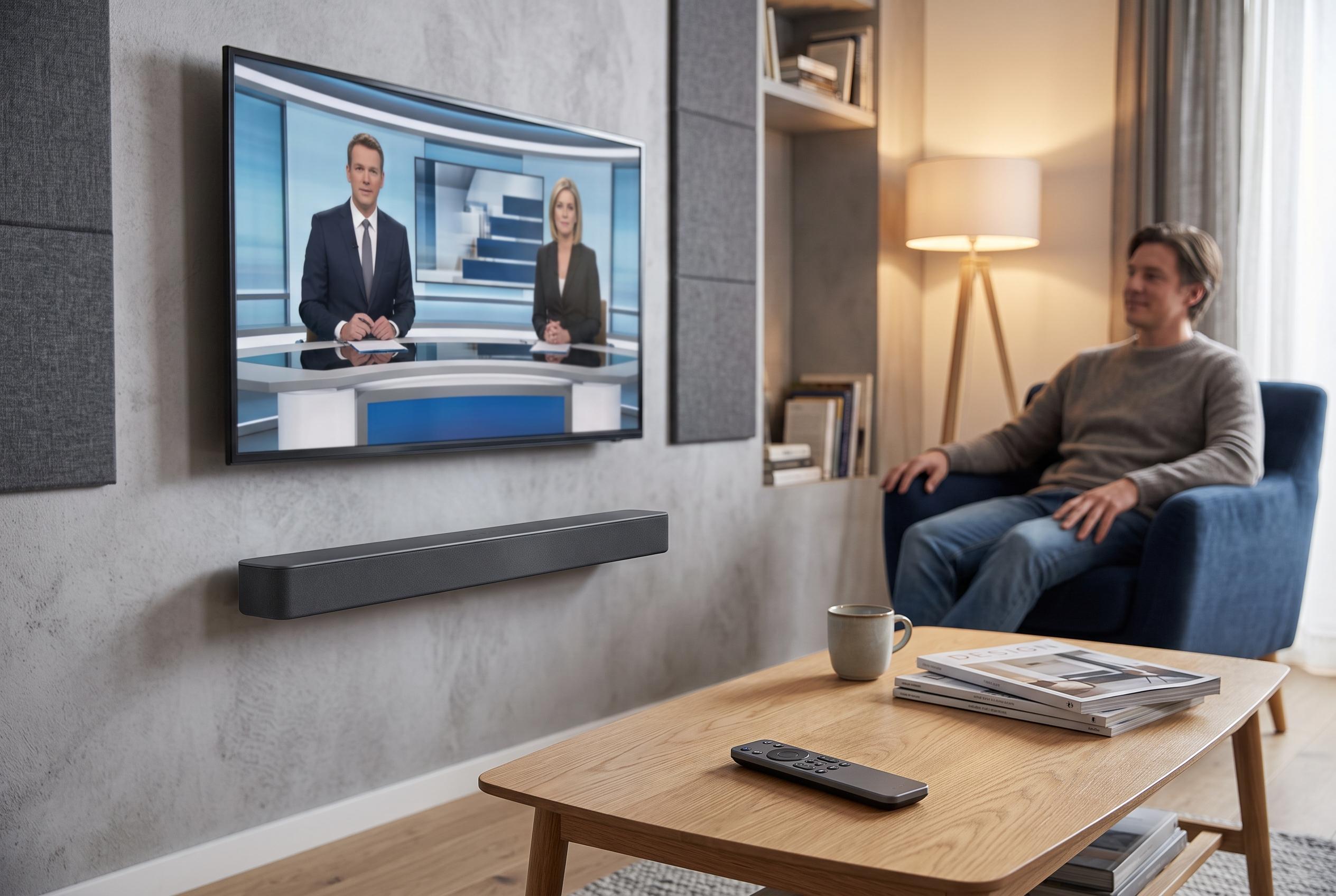

While image quality often draws focus, recent trends in home cinema upgrades reveal that simplified setups, better sound and reduced hassle significantly enhance everyday viewing experiences, with practical fixes outweighing expensive hardware enhancements.
The best home cinema upgrade is not always the one that improves the image. For many households, the real gain is a system that is easier to live with on an ordinary evening, when tiredness, clutter and too many menus matter more than peak contrast or perfect black levels.
That is why audio usually deserves priority. TechRadar’s August 2026 guides to the best soundbars, and the best cheap soundbars, both put dialogue clarity and ease of use at the centre of the buying decision, with models such as Samsung’s HW-Q800F and Sony’s HT-S2000 singled out for stronger speech reproduction and broad appeal. In practice, a sound upgrade often delivers a more immediate benefit than a new television panel, because it fixes the problem that begins as soon as playback starts.
The broader point is that most equipment is judged at the wrong moment. Reviews and showroom demos tend to assume a patient viewer with time to explore settings, but the more realistic test is the worst night: the end of a long shift, a short window after everyone else has gone to bed, or an evening when decision fatigue is already high. In that context, the value of a setup is measured by how few steps stand between turning the screen on and actually watching something.
That also explains why some of the most frustrating changes have little to do with picture quality. Roku’s recent startup video-ad test and Amazon’s earlier move to autoplay ads on Fire TV home screens show how streaming platforms are increasingly adding friction before content even appears. Roku also states in its support material that its devices check for updates at power-on and then at random intervals, with no option to disable automatic installation, which means the user does not control when maintenance interrupts viewing.
Small convenience fixes can matter more than larger hardware purchases. Setting one default input, ideally with HDMI-CEC handling the switching, removes one common point of failure and gives the household a single obvious way in. On Roku, the Voice Remote Pro, second edition, adds backlit buttons and a lost-remote finder for about $29.99, which is a modest price for a tool that reduces evening hassle. On Google TV Streamer devices, a wired Ethernet connection can also remove buffering uncertainty if the router is nearby.
Once the basics are stable, the next gains come from tuning rather than replacing. Dialogue enhancement, night mode and caption styling can all be adjusted once and then left alone, and the same is true of centre-channel levels and equaliser settings on more advanced systems. Practical audio advice from independent home cinema writers also points to speaker placement, room reflections and dynamic range compression as common reasons dialogue sounds unclear, even when the speakers themselves are decent. That means some of the cheapest improvements are often the least glamorous.
There is a caveat. Automation is not free, and HDMI-CEC is notorious for occasional misbehaviour. A simpler system can still be more reliable than a more elegant one if it fails less often and fails in predictable ways. But the wider lesson remains: if a home theatre upgrade does not make it easier to start watching, it may not be the best use of money, however good the picture looks on paper.
Disclaimer: This content is intended for informational purposes only. Readers are advised to exercise their own judgement, conduct due diligence, or consult a qualified expert before acting on any information provided.