
Many built-in wireless car chargers struggle with compatibility, efficiency, and reliability issues amid rapidly advancing smartphone charging standards, prompting drivers to prefer traditional wired solutions.
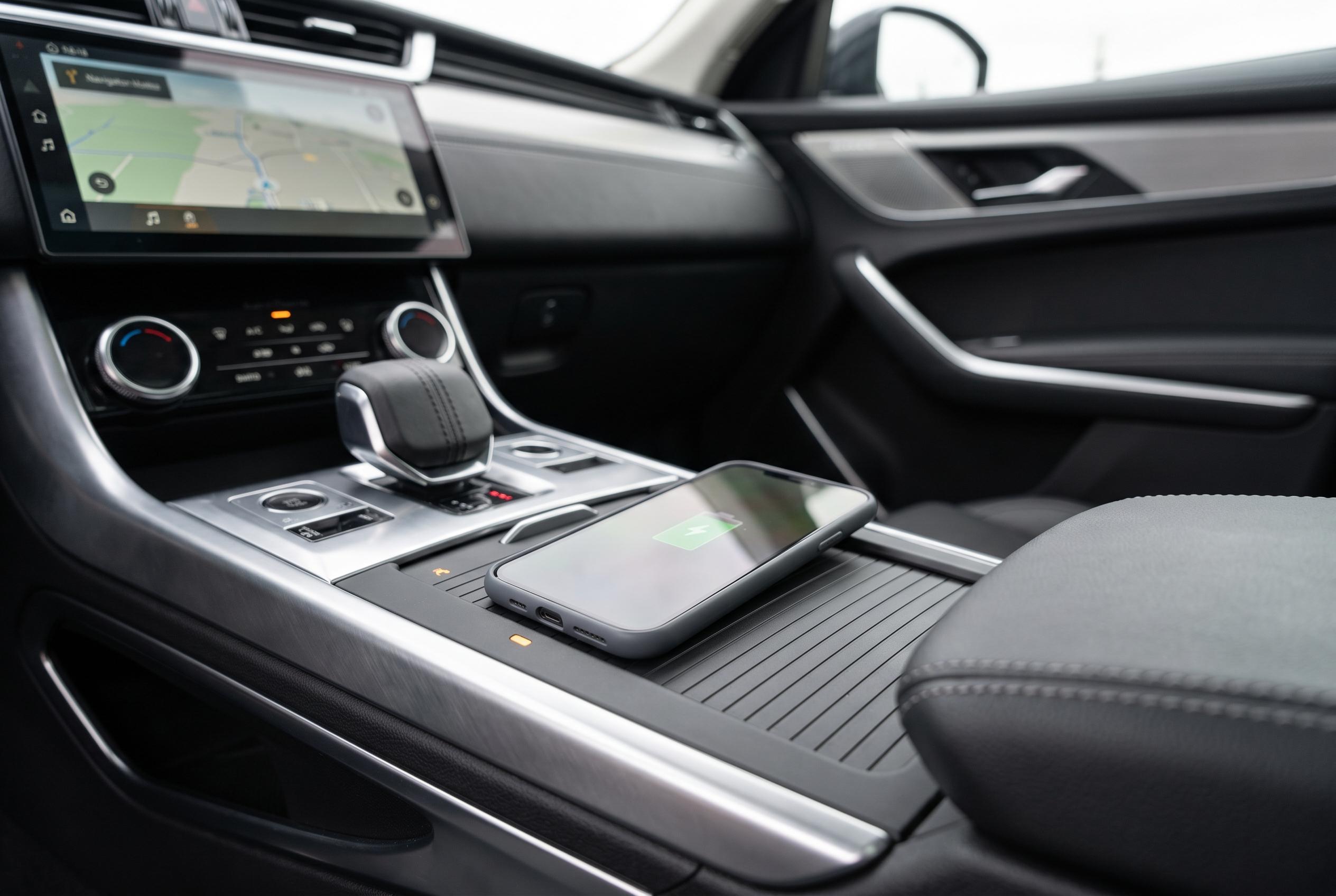
Built-in wireless charging in cars is often presented as a convenience feature, but in practice it is frequently slower, less efficient and less reliable than drivers expect. In one Tesla Model Y, the experience was so poor that a phone could lose charge during a journey rather than gain it. The problem is not unique to one vehicle. As smartphones and charging standards move on, many car makers appear to update their in-car pads far less often than consumers update their phones.
The biggest limitation is compatibility with newer charging standards. Google’s latest Pixel 11 range now supports Qi2.2 wireless charging at up to 25W, while older devices and many in-car systems remain tied to slower versions of Qi. Apple’s iPhones, meanwhile, are capped at 7.5W on standard Qi pads, which makes a long charge impractical on a short commute. In other words, even a new car may still be using wireless hardware that already feels dated.
Alignment is another weak point. Unlike magnetic Qi2 accessories, most factory-fitted car pads do little to keep a handset centred on the coil. As the car moves, the phone can slip, interrupt charging or reduce efficiency. That wasted energy becomes heat, which can trigger thermal throttling and slow charging further. The issue is especially visible in compact, sealed trays where ventilation is limited. Independent reports on some BMW models from 2016 onwards have also described overheating, slow charging and, in some cases, complete charger failure.
A third limitation is that built-in pads are not designed for the changing shapes of modern phones. Foldables and clamshell devices can place their charging coils in awkward positions, making many trays unreliable. By contrast, a third-party Qi2 mount can offer magnetic alignment, better cooling and a clearer sightline for navigation and calls. In testing, a Qi2 car mount and a Qi2 25W charger outperformed the Tesla’s integrated pads, not only in speed but also in everyday usability.
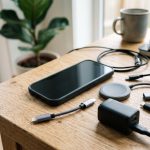
For pure charging, however, the simplest solution remains a cable. Wired charging is still faster than any in-car wireless option, and it is usually cheaper as well. A USB-C cable and a decent adapter can deliver far more power than a wireless pad, whether the aim is topping up quickly or avoiding the heat and inconsistency of inductive charging. For many drivers, that makes the factory wireless charger less of a premium feature than a compromise.
Disclaimer: This content is intended for informational purposes only. Readers are advised to exercise their own judgement, conduct due diligence, or consult a qualified expert before acting on any information provided.