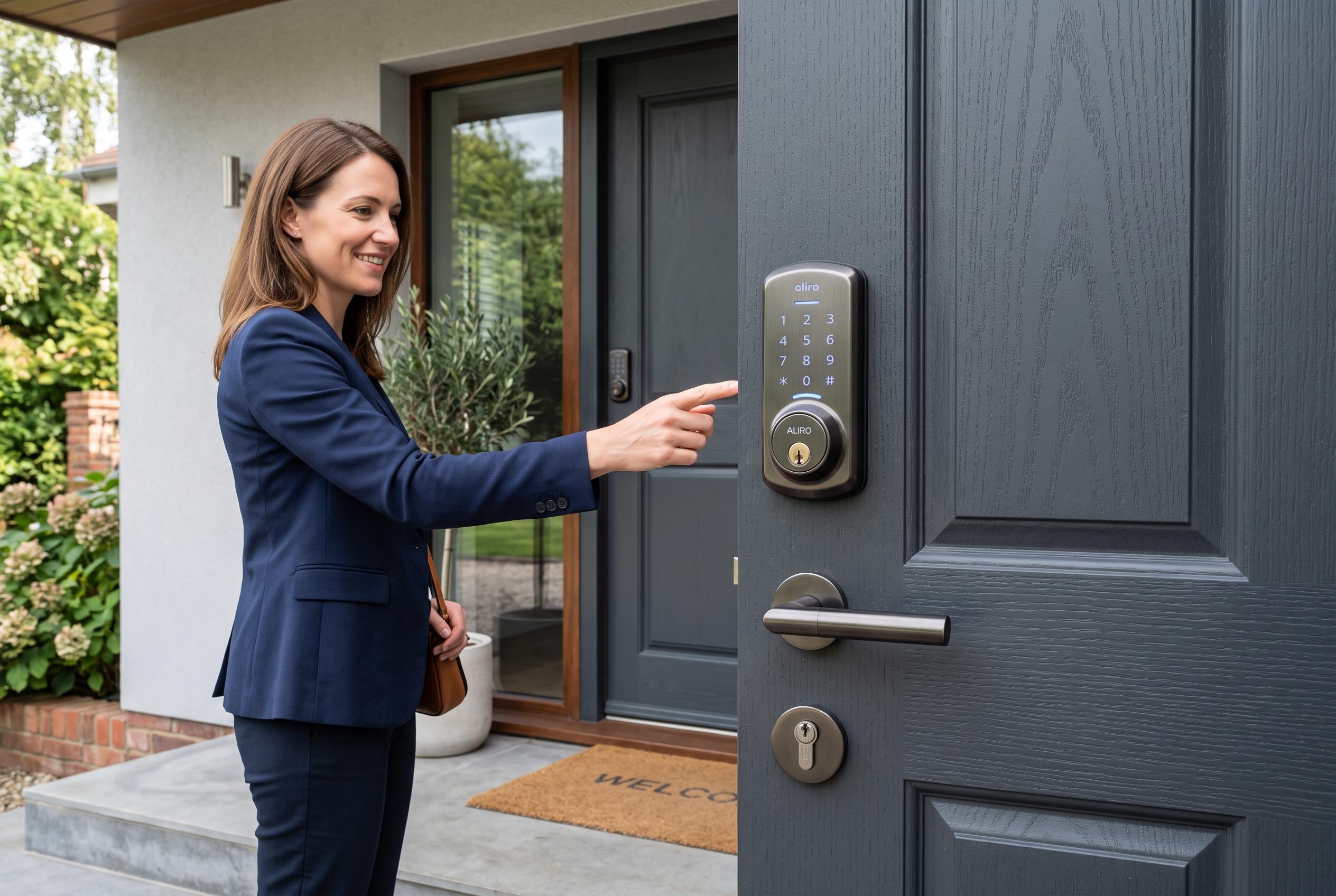

The new Aliro 1.0 protocol, backed by Apple, Google, and Samsung, promises to simplify and standardise smart lock access across devices and ecosystems, reducing reliance on proprietary solutions and enhancing flexibility for property management.
The humble front-door key is still difficult to replace, but a new standard may finally make digital access less awkward. In February 2026, the Connectivity Standards Alliance released Aliro 1.0, a specification intended to help smart locks work more consistently across major phone platforms and wearable devices. According to MacRumors, the standard has backing from Apple, Google and Samsung, and is designed to reduce the reliance on separate lock apps and brand-specific ecosystems.
At its core, Aliro is a common language for access control. It is meant to cover everything from single-family homes to apartments, hotels, offices, universities and car parks. The system supports NFC for tap-to-unlock use, Bluetooth Low Energy for longer-range communication and Bluetooth plus Ultra-Wideband for hands-free entry when a device is genuinely approaching the right door, rather than simply being nearby. Heise and iDownloadBlog both noted that the aim is to make opening a compatible lock feel more like presenting a digital credential than running a proprietary smart-home routine.
For developers, landlords and access-control specifiers, the shift is more significant than it first appears. A block of flats, a build-to-rent scheme or a student residence rarely needs only one permanent keyholder. Temporary residents, contractors, cleaners and guests all need controlled access, often to both private units and shared areas. A cross-platform standard changes the specification question from “which phone brand does this lock prefer?” to “will this system still work when residents change devices, ecosystems or operating systems?”
That is where Aliro’s appeal lies. MacRumors reported that the framework is intended to let compatible locks be added to wallet apps on iPhone and Android devices, while preserving secure communication between the reader and the user’s device. In practice, that could reduce the number of proprietary apps a resident must install, simplify handovers when a tenancy changes and make it easier to share or revoke access without reissuing physical keys for routine use.
Even so, the technology does not remove the need for sensible back-up planning. A property should not assume every occupant has a recent handset, UWB support or the same mobile wallet. Physical keys, PINs or managed fobs still matter if a battery fails, a phone is lost or a device is replaced. The most robust deployments are likely to be the least glamorous ones: those that combine phone-based entry with clear fallback procedures, tested compatibility across ecosystems and a straightforward process for revoking access when someone moves out or leaves a job. Aliro may not end the key overnight, but it gives the property sector a credible route towards making the phone in a resident’s pocket part of the building itself.
Disclaimer: This content is intended for informational purposes only. Readers are advised to exercise their own judgement, conduct due diligence, or consult a qualified expert before acting on any information provided.