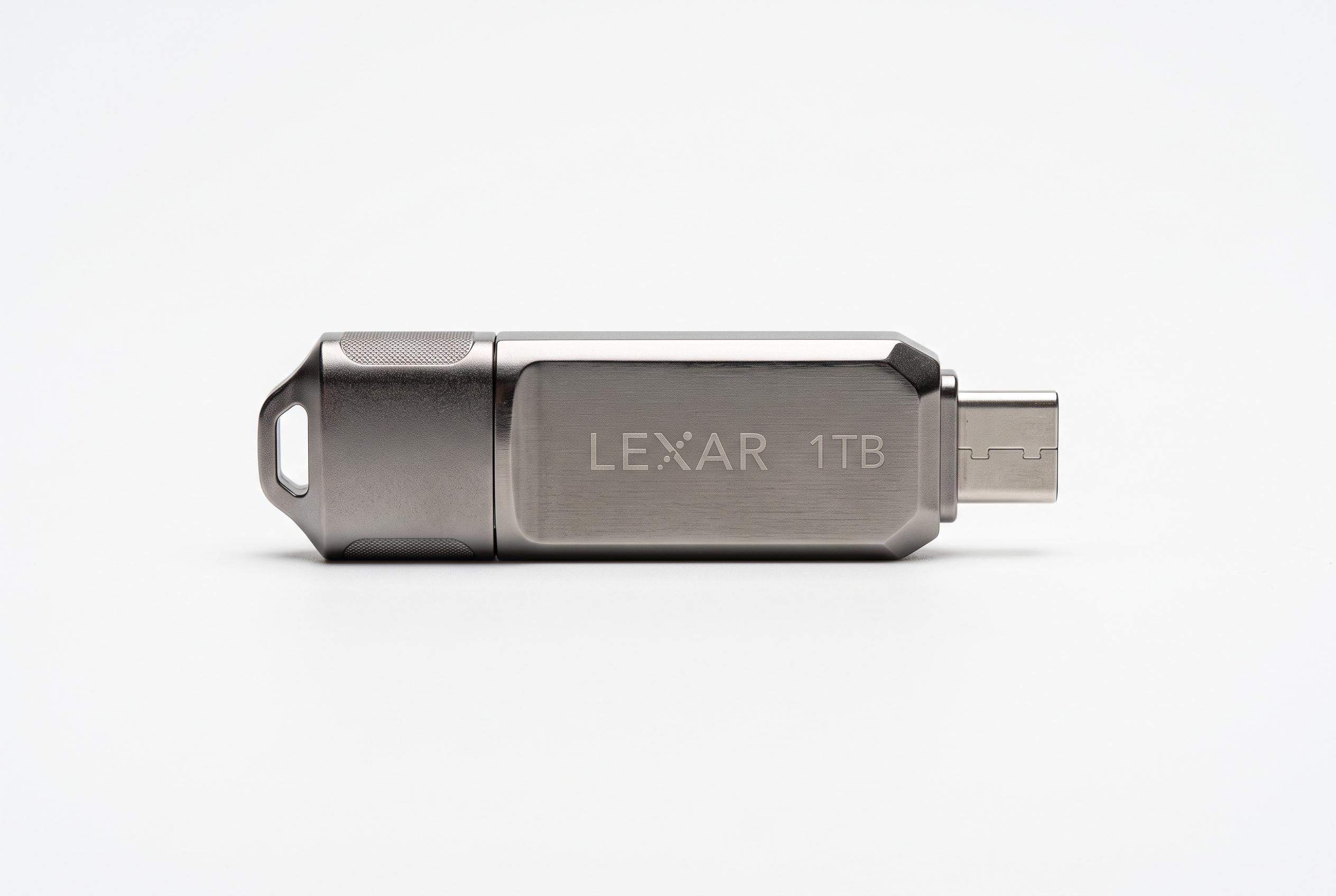

Advancements in NAND flash memory have driven the exponential growth of USB drive capacities over the years, enabling higher storage sizes without enlarging the physical size, although speed improvements remain dependent on multiple factors.
Flash drives have grown in capacity for years, but not because the plastic shell has to. The real change has happened inside the memory itself. NAND makers have steadily reduced cell size, stored more bits in each cell and, more recently, stacked those cells in three dimensions. That has allowed far higher capacities without making USB drives physically unwieldy.
A useful marker came in February 2005, when Toshiba and SanDisk announced an 8-gigabit NAND chip built on 70-nanometre process technology. The companies said it used multi-level cell design to place two bits in a single memory cell, effectively doubling capacity while keeping the chip only slightly larger than its predecessor. Toshiba said the part would become a production staple the following year and would cut costs across its flash storage range.
The commercial impact soon became visible in consumer products. A Verbatim Store ’n Go with 2.1GB of storage sold for $250 in 2004, according to the figures cited by Engadget. By January 2013, Kingston had moved into far larger capacities, unveiling a 512GB DataTraveler HyperX Predator 3.0 and a 1TB version of the same drive. Tom’s Hardware reported that the 1TB model carried a price of $1,750, underlining how expensive very large portable flash storage remained at the time.
Yet capacity is only part of the story. Larger drives are not automatically faster, because performance depends on the NAND type, the controller and the USB interface as well as raw size. Toshiba and SanDisk’s 2005 announcement already pointed to this trade-off, saying the new chip also improved read and write speeds, but later consumer products showed that higher capacity alone did not guarantee a better all-round drive.
Disclaimer: This content is intended for informational purposes only. Readers are advised to exercise their own judgement, conduct due diligence, or consult a qualified expert before acting on any information provided.