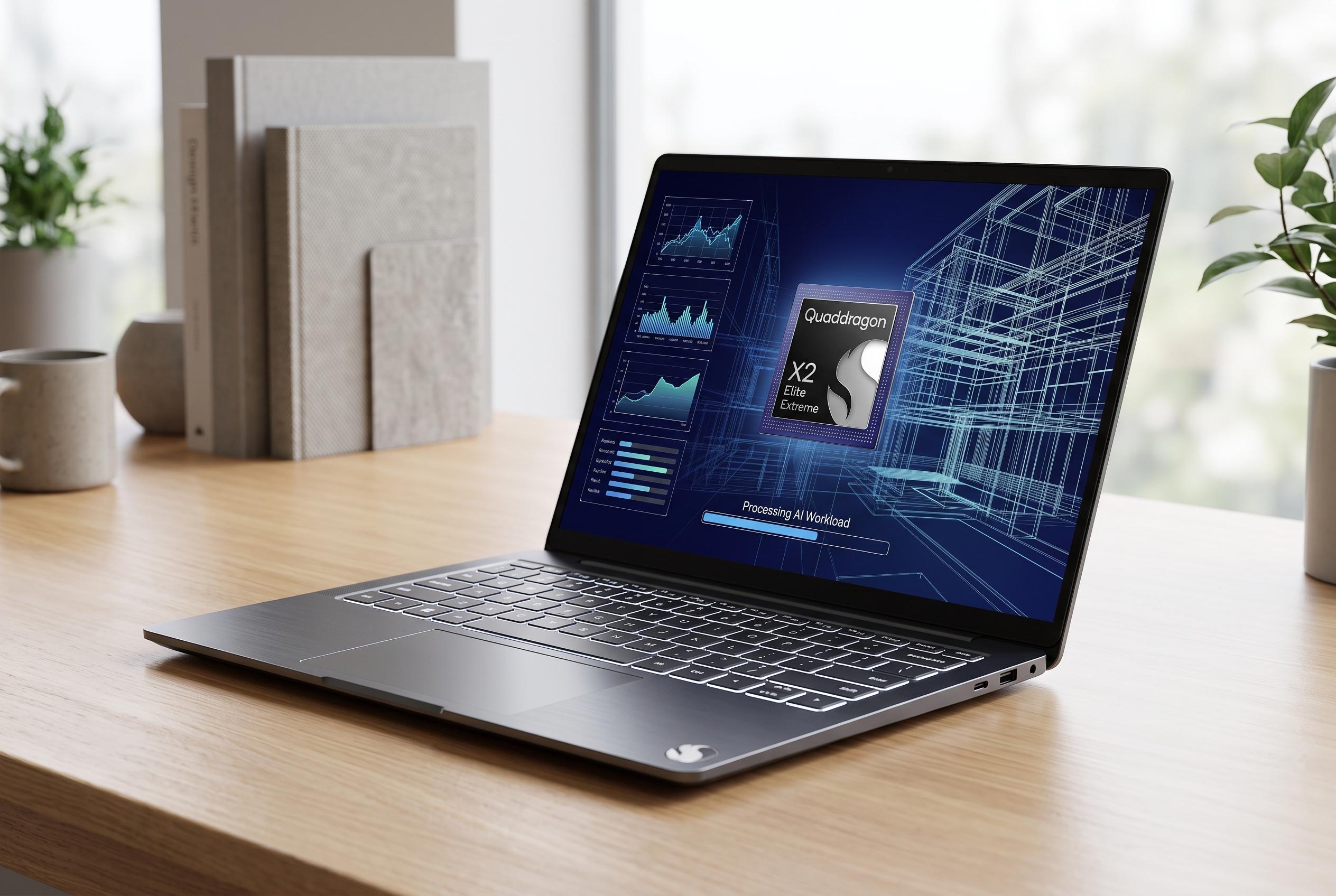

Early benchmarks reveal Qualcomm’s latest mobile chip surpasses Intel and AMD in speed, AI and rendering workloads, even on battery power, signalling a new class of portable computing power.
Signal65’s latest testing suggests Qualcomm’s Snapdragon X2 Elite Extreme is not just competitive with today’s high-end laptop chips, but in some cases plainly ahead. In a set of retail systems measured both on mains power and on battery, the chip outpaced Intel’s Core Ultra X9 388H and AMD’s Ryzen AI 9 465 across CPU, AI and rendering workloads, according to the benchmarking results reported by Wccftech and corroborated by other early benchmark round-ups.
The headline numbers are striking. Signal65 said the Snapdragon system was as much as 53 per cent faster than Intel’s part and up to 83 per cent faster than AMD’s in Geekbench 7, while the gap widened to as much as 87 per cent in Cinebench 2026 multi-threaded tests. On Procyon AI Computer Vision, Signal65 said Qualcomm’s NPU delivered “nearly 2x the AI performance of the Intel system and 2.4x the AMD system in AI Computer Vision”.
One detail stands out even more: the Qualcomm machine was tested on battery, in Balanced mode, and still beat an Intel system that was plugged in and set to Best Performance in every CPU and AI benchmark, according to Signal65. That matters because laptop buyers increasingly care about sustained performance away from the wall socket, not just peak scores in ideal conditions. Tom’s Hardware’s separate battery-versus-AC analysis has also shown that real-world unplugged performance can vary sharply between chips and vendors, reinforcing the importance of power tuning at both the silicon and system levels.
The broader picture is that Qualcomm appears to have moved the Snapdragon X2 Elite Extreme into a new class of mobile performance, at least on the evidence of these early results. Windows Central and Tom’s Hardware both reported that the chip’s 18-core design, 48GB memory configuration and 80 TOPS NPU put it ahead of Intel’s current high-end Windows silicon in several benchmark categories, while also improving AI throughput. For buyers weighing premium AI laptops, the practical implication is clear: advertised TOPS figures now matter less than measured efficiency, and Qualcomm is making a strong case that it can translate those specifications into real gains.
Disclaimer: This content is intended for informational purposes only. Readers are advised to exercise their own judgement, conduct due diligence, or consult a qualified expert before acting on any information provided.