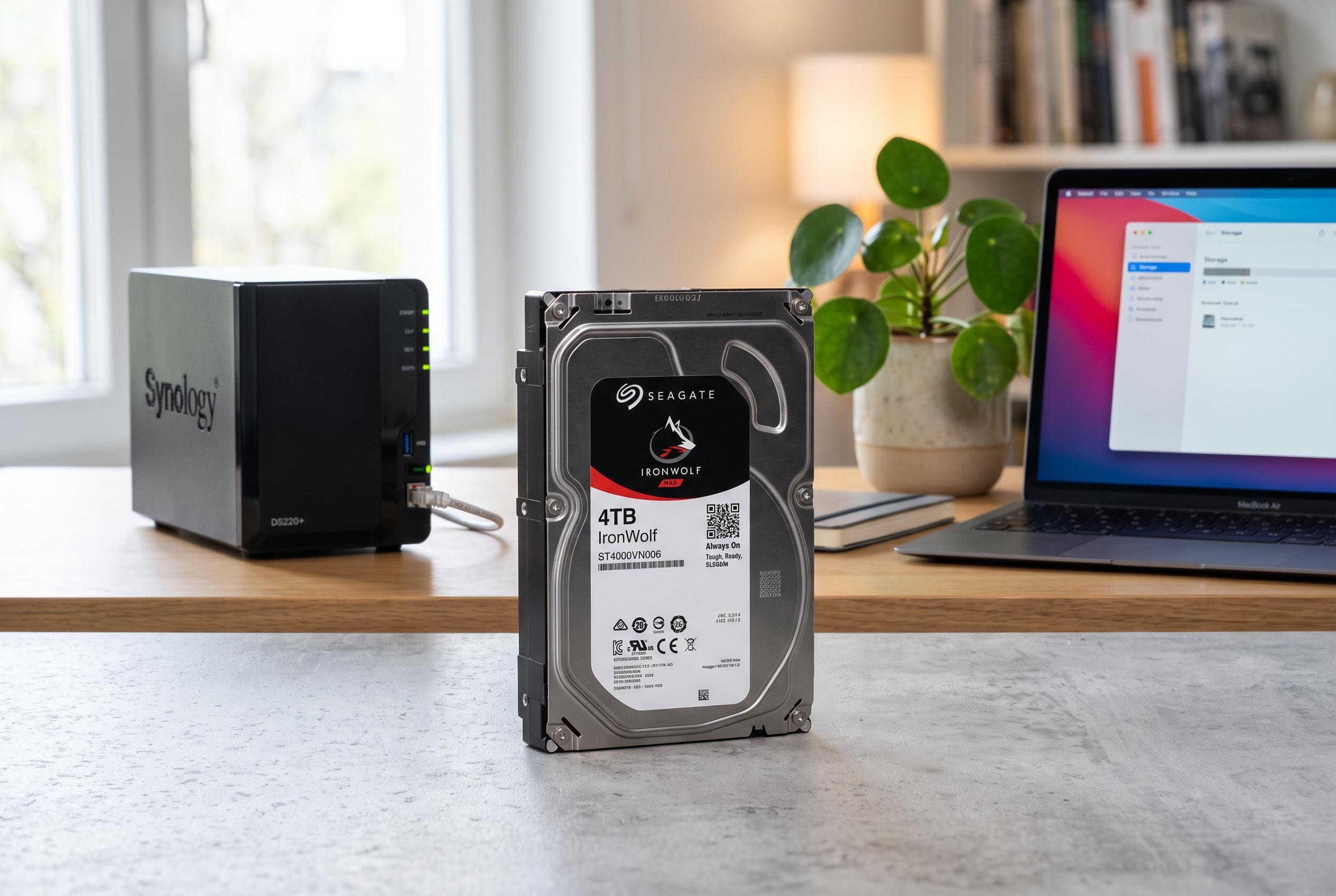

Seagate’s 4TB IronWolf hard drive, designed for NAS and always-on workloads, is currently discounted on Newegg, offering a reliable, cost-effective storage upgrade for home and small business users.
A 4TB Seagate IronWolf hard drive is being sold as a lower-cost way to add large amounts of storage to a PC, server or NAS, with Newegg listing the ST4000VN006 at $187, down from $280. The model sits in the traditional 3.5-inch SATA category, so it is aimed at systems that value capacity and reliability over SSD-like speed.
According to Seagate’s specifications, the drive is designed for one- to eight-bay NAS systems and uses CMR recording, a 5400rpm spindle speed, a 256MB cache and a SATA 6Gb/s interface. It is rated for 24/7 use and a workload of up to 180TB a year, while the company also lists rotational vibration sensors, dual-plane balance and error recovery controls to help it cope with multi-drive environments.
B&H Photo Video’s published specifications add that the drive is rated at a mean time between failures of 1 million hours and a maximum sustained transfer rate of 202MB/s. Seagate also includes a three-year limited warranty and Rescue Data Recovery Services, although the exact availability of those services can vary by country.
For buyers, the appeal is straightforward: this is a general-purpose hard drive with NAS-friendly features, not a high-performance system drive. TechRadar’s review of the larger 8TB IronWolf model noted that the line’s strength lies in its CMR design, AgileArray firmware, vibration management and long-running workload rating, while also pointing out that prices have fluctuated. The 4TB version has sold for less before, including a $169.99 sale earlier this year, so the current offer is better viewed as a solid discount than a record low.
That makes it most suitable for bulk storage, backups, media libraries and always-on duties in a NAS. It is less compelling for Windows, applications or other tasks that need quick access times, where an SSD remains the better choice. In a small NAS, 4TB per bay can also run out quickly once RAID overhead is taken into account, so larger capacities may offer better long-term value.
Disclaimer: This content is intended for informational purposes only. Readers are advised to exercise their own judgement, conduct due diligence, or consult a qualified expert before acting on any information provided.