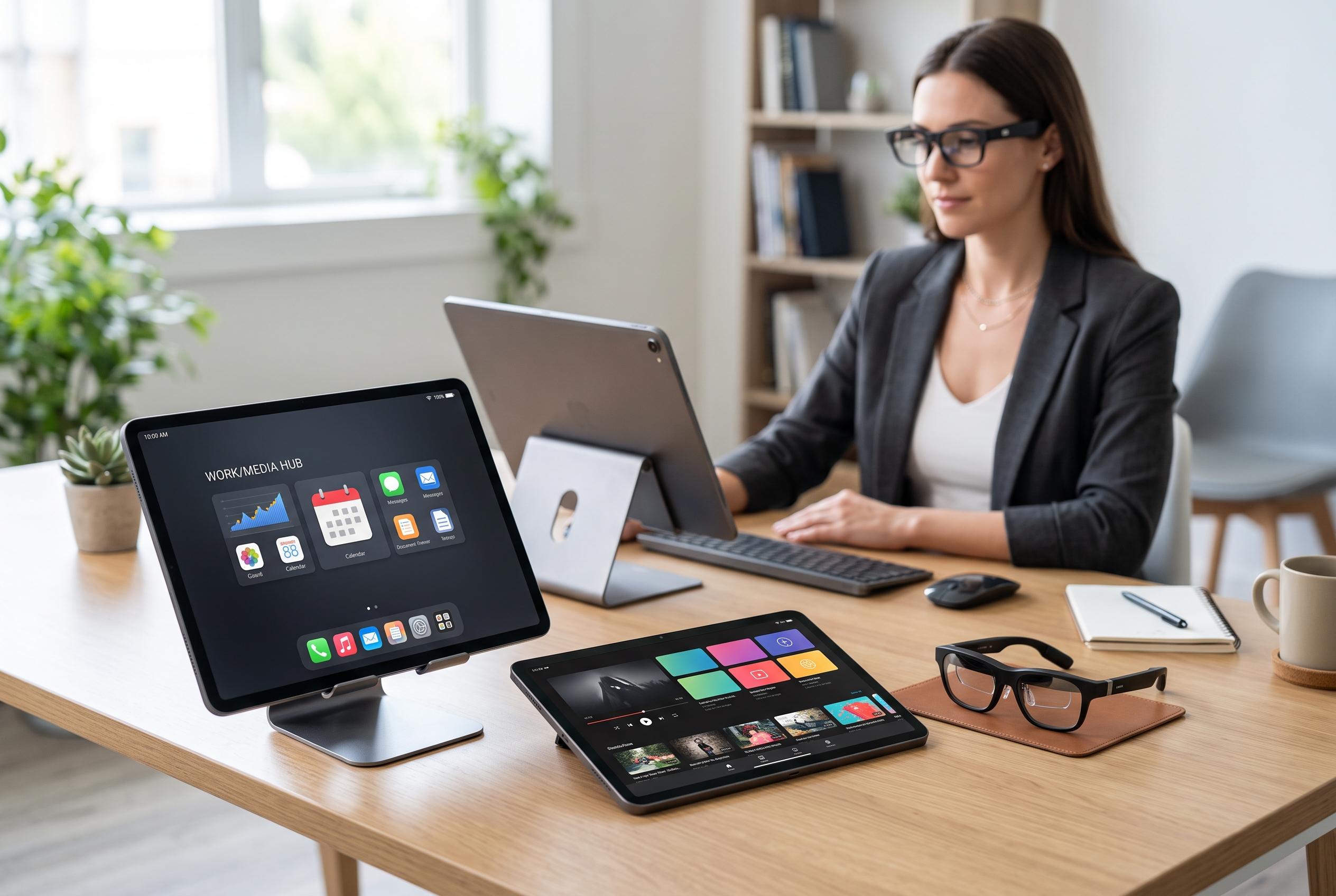

Acer expands its device portfolio with high-end Android tablets and AI-enabled smart glasses, signalling a push into portable productivity and wearable displays amid a shifting consumer hardware landscape.
Acer has expanded its mobile line-up with three Android tablets and two new sets of smart glasses, pushing further into devices aimed at portable work, media consumption and AI-assisted use. The move reflects a broader shift in consumer hardware, where larger-format tablets, detachable accessories and wearable displays are being positioned as alternatives to a laptop or phone for some tasks.
At the top end is the Iconia Duo S14, a 14.2-inch tablet built around a 3:2 OLED panel with a 2,880 x 1,840 resolution, 120Hz refresh rate and full DCI-P3 colour coverage. Acer says it runs Android 16 on MediaTek’s Dimensity 8300 platform and adds Wi-Fi 6E, four speakers and a fingerprint reader in the power button. The company has also emphasised connectivity: DisplayPort input and output, together with two USB-C ports, allow the device to act as an external screen or connect to a larger monitor. Acer says the tablet has a 13-megapixel main camera, a 5-megapixel macro lens and support for microSD cards of up to 1TB.
The Iconia Duo S12 follows the same 3:2 format but scales down to 12.2 inches, with a 2.8K OLED display, up to 600 nits of brightness and nano-texture glass intended to cut glare and fingerprints. Acer says it uses an aluminium-alloy chassis and the MediaTek Dimensity 7400. The entry-level Iconia Duo D12 also has a 12.2-inch screen, but with a 2,400 x 1,600 panel at 90Hz and a lower-tier MediaTek Helio G99 processor paired with 8GB of memory. Across the range, Acer quotes battery life of up to 10 hours, depending on configuration and use, while an active stylus, magnetic kickstand and keyboard will be sold separately.
The glasses are the more unusual part of the launch. Acer’s AR Vision GR0 uses a cable connection to compatible Android, iOS and Windows devices and relies on dual Full HD micro-OLED displays to create what the company describes as a virtual image equivalent to a 172-inch screen at six metres. Acer says the 69-gram glasses can show 2D and 3D content and include integrated speakers. The GI0 takes a different approach: it connects wirelessly to a phone through the AspireSync app and uses Google Gemini for voice-based assistance, image analysis, translation, recording and hands-free photo and video capture, with support for Android and iOS devices.
Acer has not disclosed pricing or release dates, leaving the commercial appeal of the range unclear for now. Still, the portfolio points to two crowded but growing categories: Android tablets designed to behave more like portable productivity machines, and smart glasses that try to move everyday AI tasks off the phone screen and into wearables.
Disclaimer: This content is intended for informational purposes only. Readers are advised to exercise their own judgement, conduct due diligence, or consult a qualified expert before acting on any information provided.