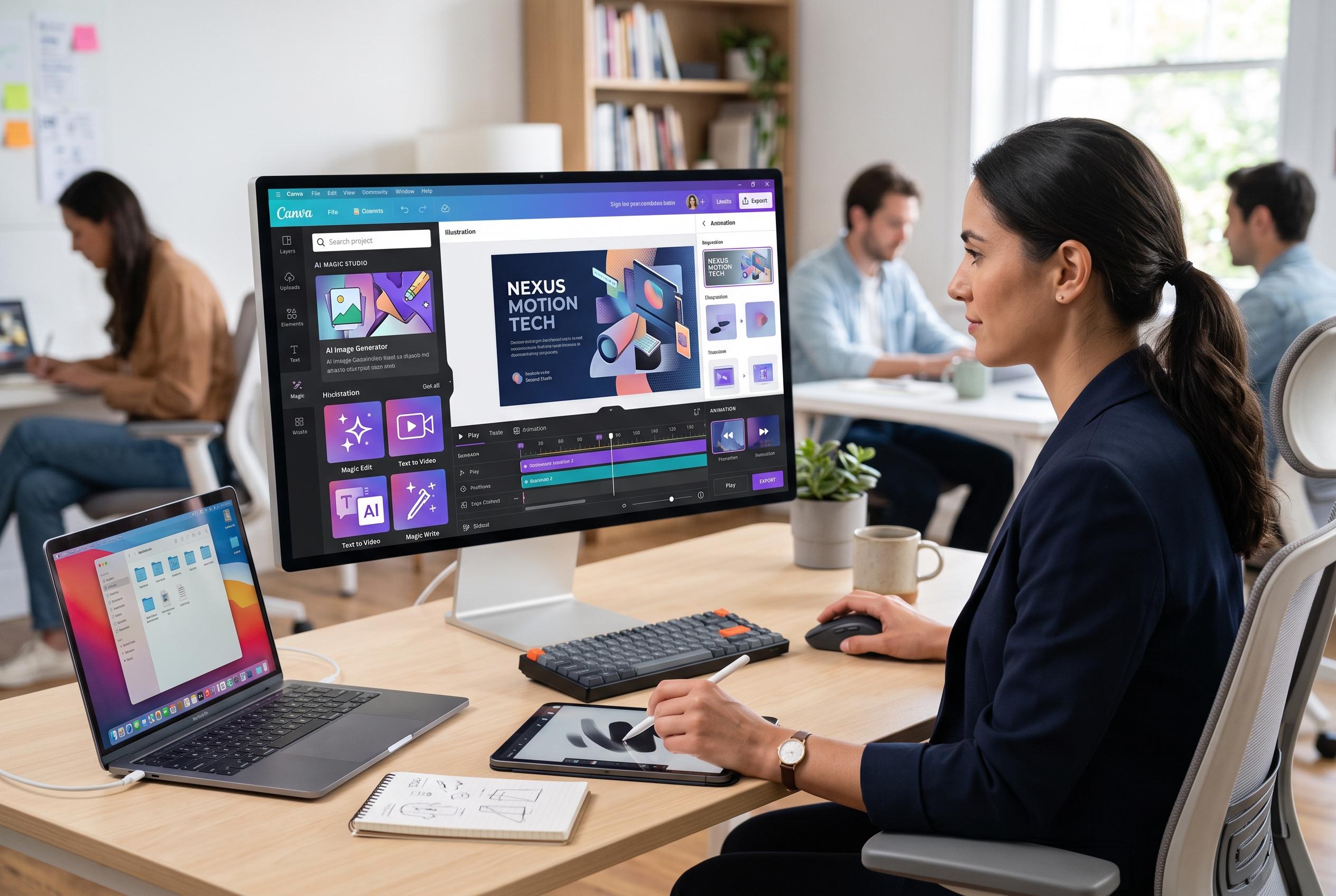

Canva, long viewed as a simple platform for non-designers, is evolving into a more serious competitor by integrating advanced illustration, motion design, and artificial intelligence, while facing the challenge of shifting its public identity from beginner-friendly to professional.
Canva’s long-running image as the easy option for non-designers is becoming harder to sustain. The software is still widely associated with quick templates and light-touch marketing work, but the company has spent the past two years assembling a broader professional stack that now reaches into advanced illustration, layout, motion and, increasingly, artificial intelligence. The result is a platform that is no longer easy to dismiss, even if many designers still feel uneasy about it.
That tension matters because Canva’s reputation was built in its early years as a tool for speed rather than craft. It became popular with people who needed polished-looking graphics without specialist training, and that simplicity made it useful but also easy to sneer at. In design circles, the complaint was not simply that Canva was accessible, but that accessibility seemed to come at the expense of nuance, flexibility and originality.
The company is now trying to rewrite that story through acquisition and product consolidation. TechRadar reported that Canva has folded Serif’s Affinity suite into a single free app, now branded as Affinity 3, bringing vector, pixel and layout work into one place. The move is significant because it gives Canva a credible professional toolset rather than just a template engine. But the review also noted practical limits, including incomplete support for some Adobe file features and conversion issues with InDesign documents, which underlines that Canva still has ground to cover before it can fully replace incumbent software.
Canva’s expansion into motion design suggests the same ambition. Creative Bloq reported that the company has added Cavalry, a motion design platform, to its portfolio as part of a wider push to build a professional creative ecosystem. That is a clear signal that Canva wants to compete beyond social posts and simple brand assets. According to the coverage, the attraction for many users is not only lower complexity, but a more unified workflow in a market where creative tasks are often split across expensive, fragmented tools.
The free Affinity model also sharpens the challenge to Adobe. Windows Central reported that the core app is now free on Windows and macOS, with AI features tied to an optional Canva Premium tier rather than the base product. That pricing shift could prove powerful for freelancers, students and small teams looking for serious tools without subscription fatigue. Yet the same reporting also shows why the debate around Canva persists: the platform is gaining professional credibility, but its public identity still carries the baggage of its beginner-friendly past. Until that perception changes, Canva may remain both more capable and more contested than its critics admit.
Disclaimer: This content is intended for informational purposes only. Readers are advised to exercise their own judgement, conduct due diligence, or consult a qualified expert before acting on any information provided.