
Hatch unveils its latest bedside Sleep Clock, shifting focus from biometric scores to building healthy sleep routines through contactless tracking and personalised guidance, marking a deliberate move away from traditional sleep data competition.
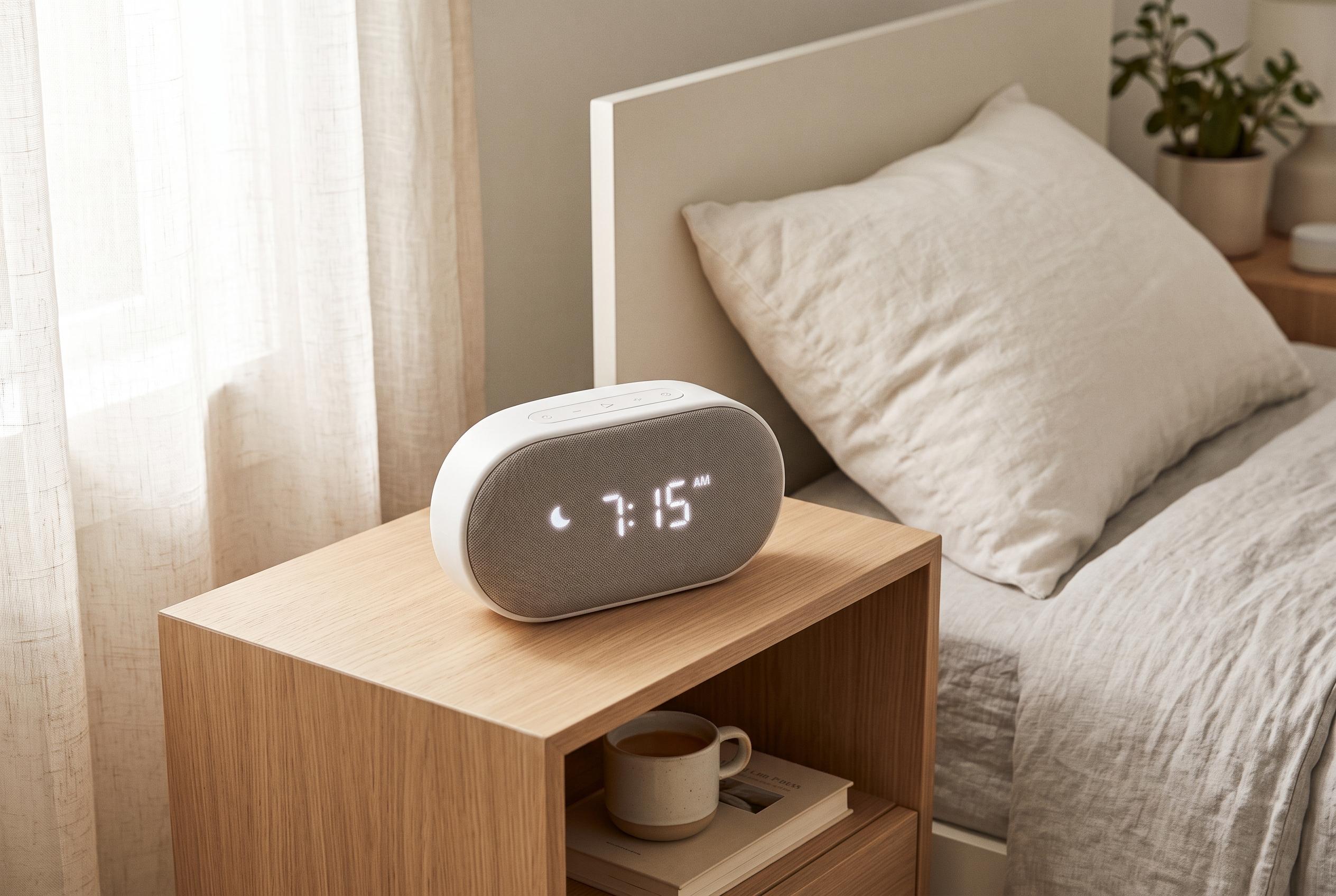
Hatch’s latest bedside sleep device is aimed less at producing a nightly score than at changing the habits that shape rest. The company says the Sleep Clock sits on a nightstand and uses contactless sensors to read breathing patterns and subtle movement, allowing it to track sleep without a ring, watch or other wearable. It is pitched as a phone-free tool for people who want guidance on sleep hygiene rather than a stream of biometric data.
That design marks a clear break from much of the sleep-tech market, where tracking often centres on a grade or score. Hatch’s approach is to put the emphasis on routine: keeping regular bedtimes, reducing screen use before sleep, and building repeatable wind-down rituals. The company says that is why it avoids turning sleep into a competition and instead frames the product as a coach, sound machine and sunrise alarm in one device. Hatch also says the Sleep Clock offers personalised insights to help users identify which habits improve their rest.
The new device sits alongside the company’s existing Restore line, which Hatch describes as a smart sleep clock built around light, sound and structured bedtime routines. Restore does not include the Sleep Clock’s contactless monitoring, but it does support custom light and sound settings and gives access to Hatch+. That subscription adds a larger audio library, including meditations, sleep stories and other guided content. Hatch says the Sleep Clock also includes Hatch+, with more than 2,500 sounds, meditations and sleep stories available after a 30-day trial.
For buyers weighing sleep gadgets, the distinction is practical. The Restore family is focused on shaping the bedroom environment, while the Sleep Clock combines that routine-building approach with monitoring from the bedside. Hatch’s own guidance on sleep routines reinforces the same philosophy, stressing consistent bed and wake times, a wind-down period before sleep and calming activities such as reading or journalling. In other words, the product is not built to chase data for its own sake, but to make healthier sleep habits easier to maintain.
Disclaimer: This content is intended for informational purposes only. Readers are advised to exercise their own judgement, conduct due diligence, or consult a qualified expert before acting on any information provided.