
Innovative ergonomic devices designed for sterile environments are improving workflow, reducing contamination risks, and lowering long-term costs in sectors like pharmaceuticals, food, and life sciences.
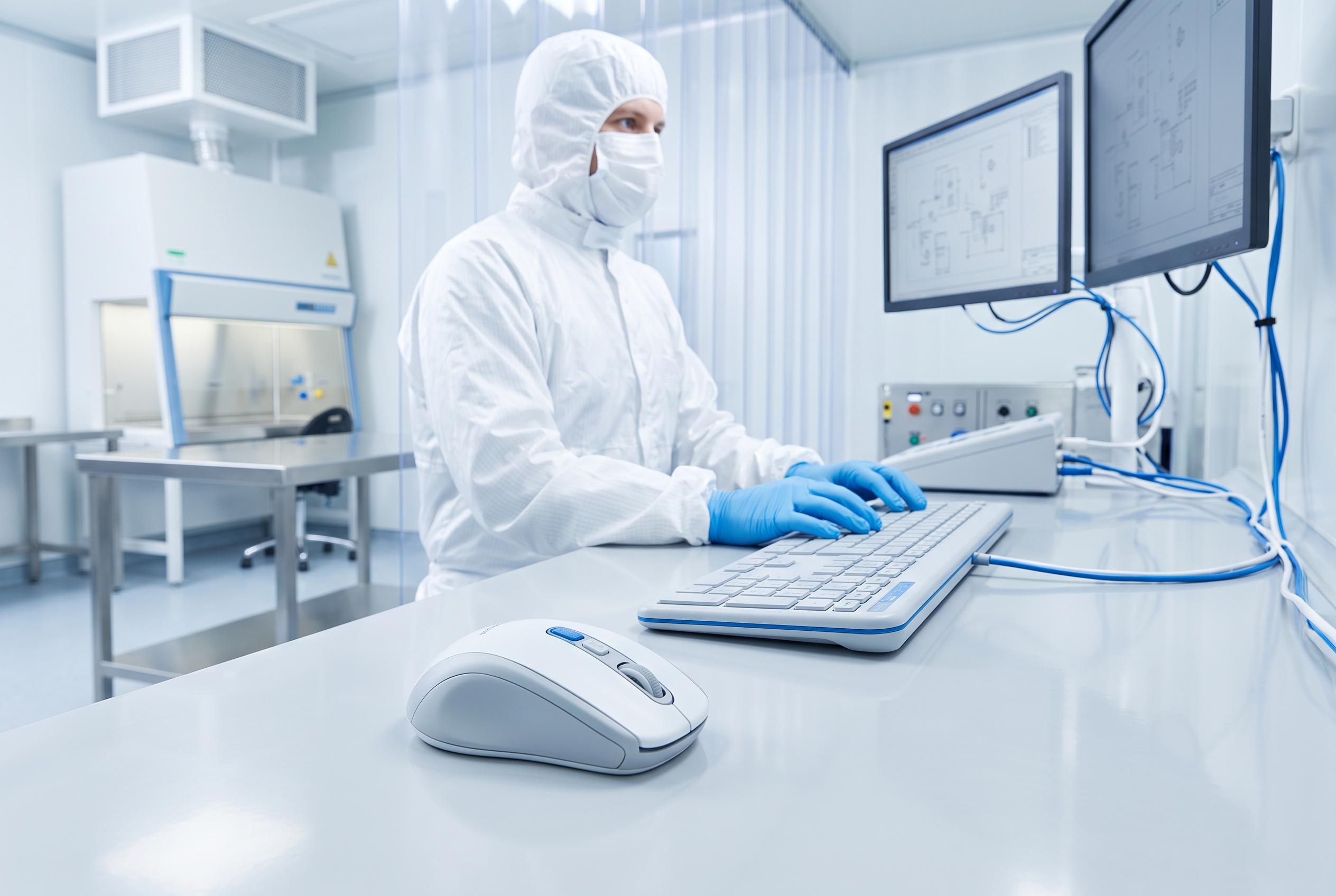
Cleanroom productivity is often framed around large capital items such as displays, panel PCs and workbenches. Yet in sterile environments, the smallest interface can create disproportionate disruption. A conventional office mouse, with seams, wheel assemblies and internal cavities, is difficult to disinfect to cleanroom standards. In practice, that makes it a contamination concern and, in some facilities, a hidden maintenance expense when it is repeatedly replaced rather than properly specified for the environment.
The issue is not only hygiene but usability. Operators in gloves need input devices that remain accurate when tactile feedback is reduced and fingers are less precise than in bare-hand use. Sterile processing and operating-room workstation suppliers have long argued that ergonomics and infection control have to be designed together, not treated as separate procurement decisions. Pure Processing says its ergonomic workstations are built to improve workflow in sterile departments, while LogiQuip and Southwest Solutions both emphasise adjustable-height designs to support long shifts and reduce strain on staff.
Durability under cleaning is where purpose-built peripherals distinguish themselves. Blue Line’s cleanroom mouse uses a fully silicone-sealed design rated to IP68, which is a stronger claim than simple splash resistance and is intended to tolerate repeated exposure to water, dust and disinfectants. That matters in pharmaceutical, food and life-sciences settings where equipment is wiped down aggressively and, in some routines, fully immersed. The company also says the device uses a laser sensor for precise tracking and carries CE and FCC certification, giving compliance teams additional documentation for validated areas.
Comparable attention to touchpoints appears elsewhere in sterile processing. Pure Processing’s Copper Clean wrist rest is described as continuously sanitising the surface and eliminating 99.9% of microorganisms within two hours, reflecting a broader industry shift towards hardware that reduces the burden on cleaning teams as well as on operators. Logitech, through its ergonomic product lines and its Ergo Lab development programme, has also positioned comfort and productivity as linked goals, with WegoErgo noting use across healthcare, government, education and corporate environments.
The commercial case is straightforward. A mouse that mis-registers clicks, degrades after repeated disinfection or forces staff to remove gloves to work accurately creates small delays that accumulate across shifts. Facility managers weighing a purpose-built sterile peripheral against a cheaper consumer device need to look beyond purchase price to total cost of ownership. In environments running continuously, the gains come from fewer support calls, fewer replacements and less time lost to avoidable friction at the workstation.
Disclaimer: This content is intended for informational purposes only. Readers are advised to exercise their own judgement, conduct due diligence, or consult a qualified expert before acting on any information provided.