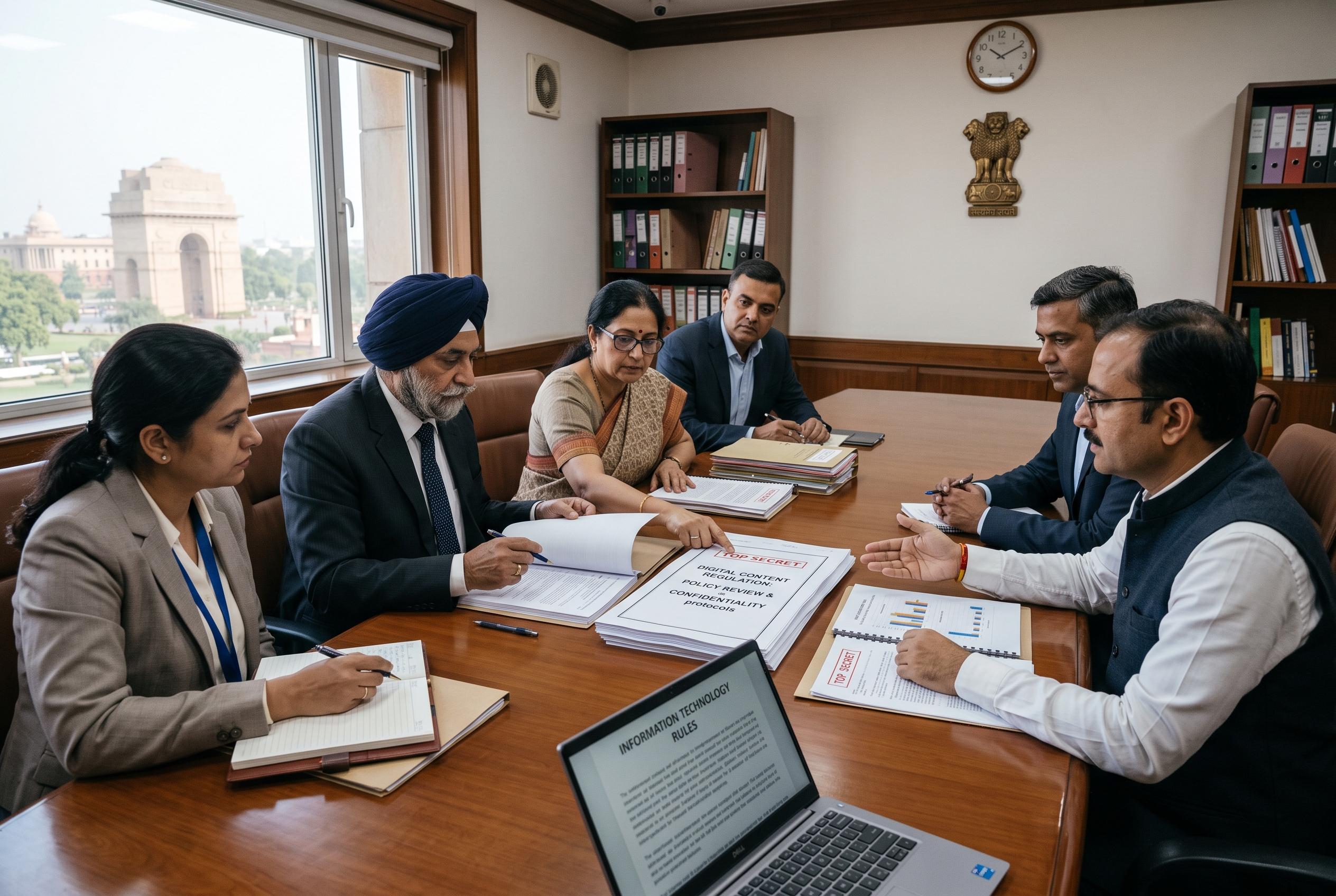

India opposes Elon Musk’s proposal for greater transparency on content removal on X, citing legal restrictions under the country’s confidentiality laws, highlighting diverging standards in global content moderation.
India has pushed back against Elon Musk’s plan to make government censorship demands on X more visible, saying the platform must comply with domestic law. The dispute goes to the heart of how X handles content-removal orders in different jurisdictions: what Musk presents as transparency in one country may be illegal disclosure in another.
The issue was sharpened after Musk said on 15 August that any censorship required by governments was now “clearly visible”. That followed a change to X’s open-source algorithm repository that exposed a filter affecting accounts blocked in Brazil. In that case, the company can point to a specific court-linked requirement. India is different. Under Section 69A of the Information Technology Act, content-blocking orders are issued under a confidentiality regime, and Rule 16 of the 2009 Blocking Rules keeps those orders secret.
That legal structure means X cannot simply publish the Indian equivalent of a Brazil-style code entry naming accounts and linking them to government orders. Doing so would itself risk breaching Indian law. According to reporting by the Times of India, the Indian government said X would have to follow the law of the land.
The broader conflict between X and India is not new. In March 2025, the company challenged the government’s use of Section 79(3)(b) of the IT Act, arguing that it was being used to bypass the safeguards attached to Section 69A. Reuters-style accounts of the dispute have described X’s position as a complaint that the government was relying on a less formal route to secure takedowns, while the Centre maintained that Section 79(3)(b) and the Sahyog portal are legitimate tools to tackle unlawful content.
The scale of India’s demands has also grown. MediaNama reported in March 2026 that X users were told posts had been withheld in India under Section 69A, with the company citing legal restrictions when asked for further detail. The same report said X notified affected users to contact the company or go to court. It also said that between January and June 2025, India made 29,118 removal requests to X, with 26,641 complied with, a 91.49% rate.
That leaves Musk’s transparency pledge in an awkward position. In Brazil, X can publicly link restrictions to a named court order. In India, the law requires the opposite. The result is a system in which users may see posts disappear without a public explanation, while X continues to frame its code changes as a step towards open accounting of censorship.
Disclaimer: This content is intended for informational purposes only. Readers are advised to exercise their own judgement, conduct due diligence, or consult a qualified expert before acting on any information provided.