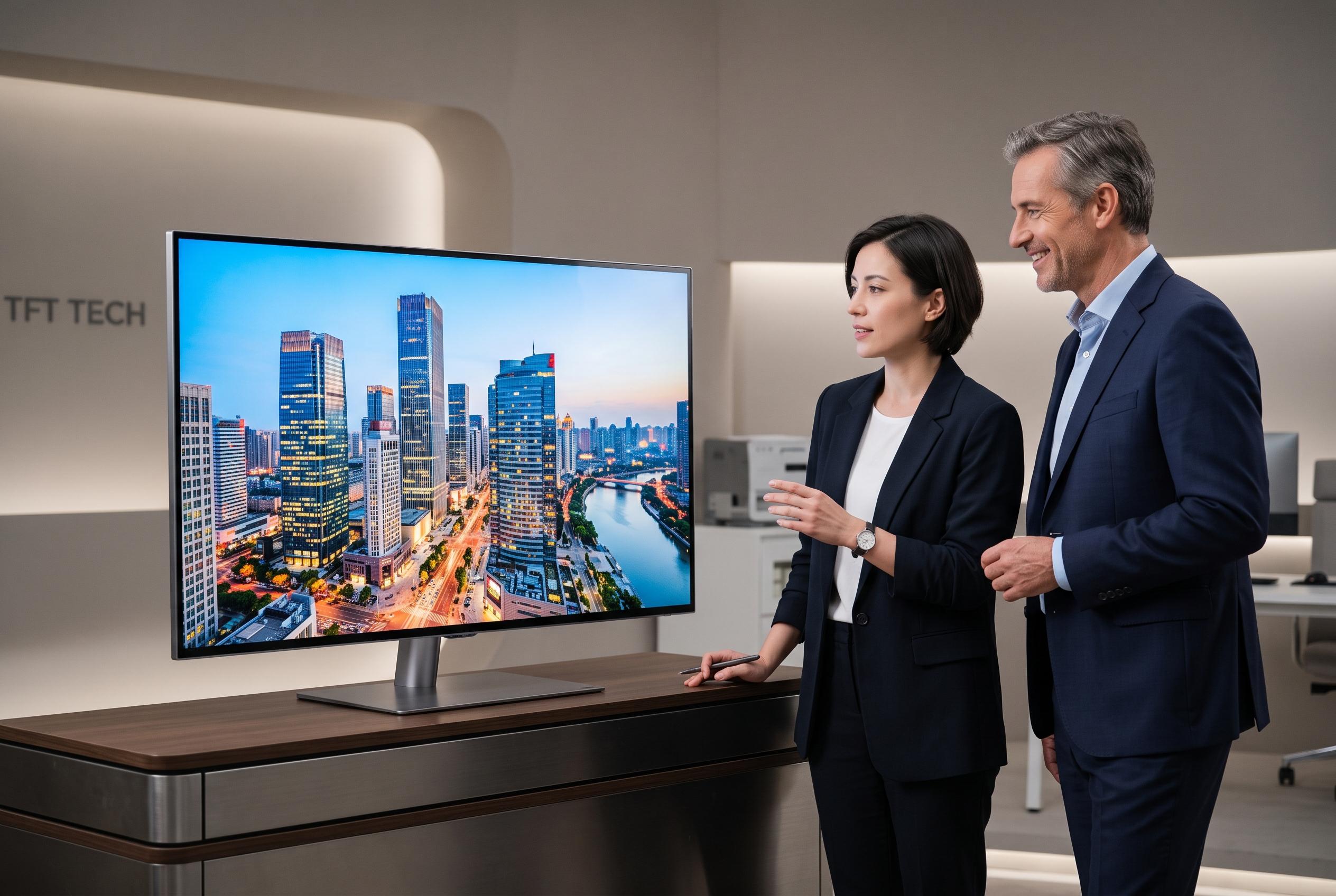

Despite varying forecasts, the TFT LCD sector remains a vital force in consumer electronics, automotive, and industrial displays, with Asia-Pacific leading capacity expansion amid rising demand for specialised formats and high-generation panels.
The TFT LCD screen market is forecast to keep expanding through the next decade, but industry estimates vary sharply depending on how the market is defined. Semiconductor Insight values the sector at $128.4 billion in 2025 and expects it to reach $198.7 billion by 2034, while other recent research places the market much lower, at about $30.6 billion in 2025 with mid-single-digit annual growth. The gap suggests that some reports are measuring the broader TFT LCD panel ecosystem, while others are tracking a narrower screen segment.
Even with those differences, the direction of travel is consistent: TFT LCD remains a core display technology across consumer electronics, automotive systems, industrial equipment and medical devices. Reuters-style market reporting is not available here, but the supplied research points to the same underlying strengths: reliable performance, comparatively low cost, and the ability to deliver sharp images at scale. The technology’s endurance is notable in a display market that has also seen rapid gains in OLED and other premium formats.
Consumer electronics continues to be the largest demand centre. Smartphones, tablets, laptops and televisions still account for the bulk of shipments, and panel makers are improving refresh rates, power efficiency and colour performance to support replacement cycles. At the same time, automotive adoption is rising quickly as digital instrument clusters, infotainment units and heads-up displays spread through mainstream vehicles. CDTech Display said TFT-LCD now commands more than 70% of the $15 billion automotive smart display market in 2026, reflecting the sector’s preference for mature technology that can operate reliably across a wide temperature range.
The market is also being shaped by product segmentation. IPS panels are increasingly used where viewing angle and colour accuracy matter most, while LTPS technology is gaining ground in premium smartphones and laptops because it supports higher pixel density and lower power use than conventional a-Si designs. Larger formats above 16 inches are also drawing interest for televisions, control rooms and digital signage, as manufacturers work to reduce bezel size and build multi-panel installations for commercial and public environments.
Geography remains a decisive factor. The report from Semiconductor Insight says TFT LCD production is concentrated overwhelmingly in Asia-Pacific, where large-scale fabrication and supply-chain depth continue to underpin pricing and availability. That is echoed by other industry commentary pointing to China and the wider region as the principal manufacturing base. Recent investment plans, including Laibao’s stated intention to build a new Gen 8.6 TFT LCD fab, suggest that capacity expansion remains part of the competitive response as suppliers try to meet demand across consumer, automotive and industrial channels.
Competitive pressure is now focused less on basic display capability and more on specialisation. The companies named in the report, including BOE Technology Group, LG Display, Innolux, AU Optronics, Tianma, JDI, Sharp, TCL China Star, Samsung Display and others, are being pushed to invest in higher-generation fabs, custom formats and panels tuned for automotive or industrial use. In a market where pricing remains sensitive and product lifecycles are long, scale and engineering flexibility are becoming as important as raw output.
Disclaimer: This content is intended for informational purposes only. Readers are advised to exercise their own judgement, conduct due diligence, or consult a qualified expert before acting on any information provided.