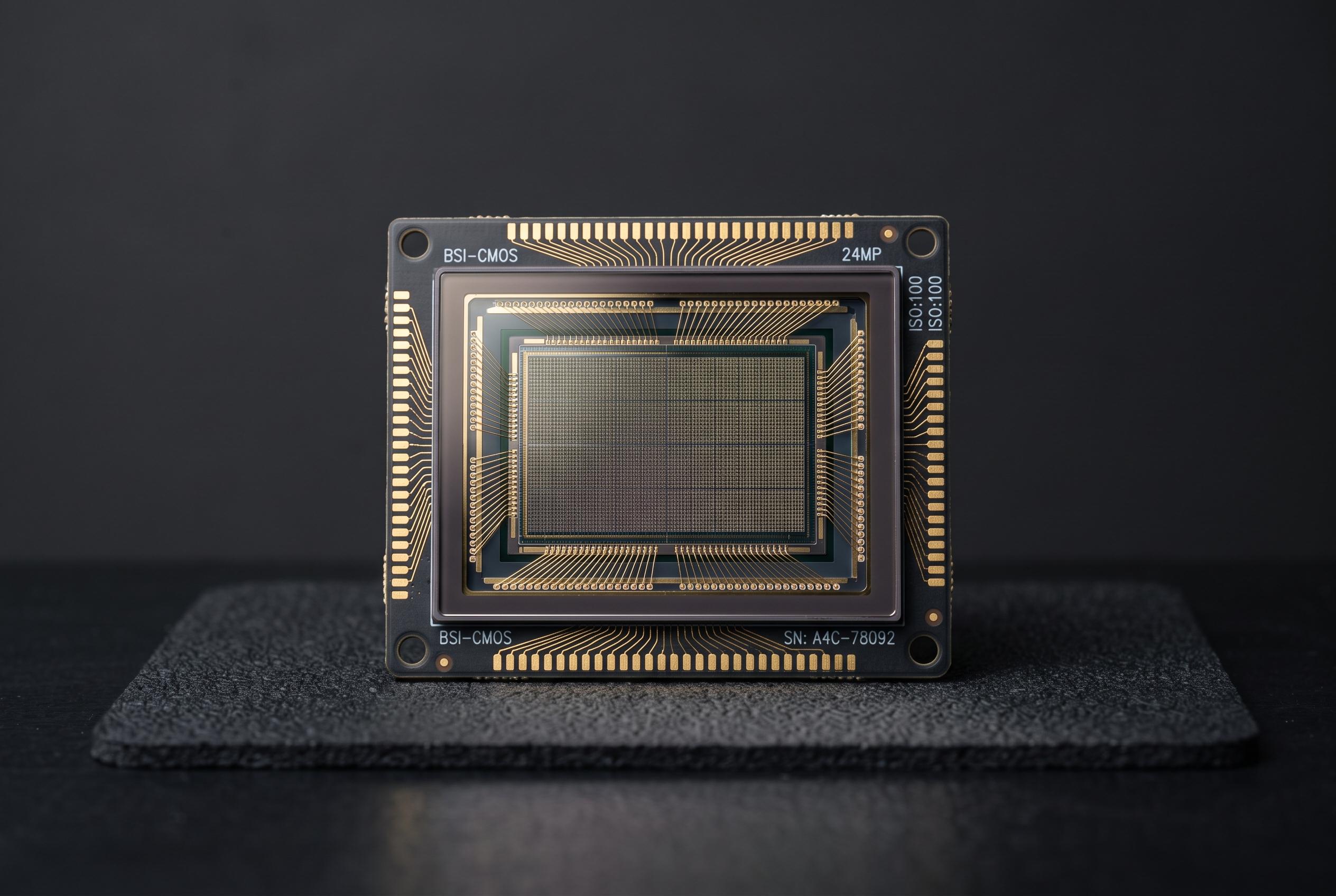

The global market for backside-illuminated CMOS image sensors is set to nearly double by 2032, driven by demand from premium smartphones, automotive vision systems, and medical imaging, as industry leaders explore new applications and advanced technologies.
Semiconductor Insight says the global market for backside-illuminated CMOS sensors was worth US$353 million in 2024 and could rise to US$604 million by 2032, as demand builds for image sensors that perform better in low light and support higher dynamic range. Other market researchers cited in related reports place the sector much higher, but they broadly agree on the direction of travel: strong growth driven by premium smartphones, automotive vision systems and medical imaging. Analysts at Emergen Research, Zion Market Research and GI Research all describe BSI sensors as a core imaging technology for applications where sensitivity and compactness matter most.
The appeal of the architecture is straightforward. By moving wiring behind the photodiode, the sensor exposes more of the light-sensitive area to incoming photons. That improves quantum efficiency, reduces crosstalk between pixels and helps produce cleaner images with less noise. According to the reports, those characteristics have made BSI designs the default choice for high-end imaging products, especially where users expect sharper results in difficult lighting conditions.
Smartphones remain the main commercial engine. Semiconductor Insight says premium handsets accounted for about 68% of BSI sensor shipments in 2024, reflecting the industry’s push towards larger sensors, higher resolutions and more advanced computational photography. The report also points to Asia-Pacific as the centre of demand and supply, with about 79% of global consumption tied to that region. Related market studies similarly identify mobile devices, ADAS and medical imaging as the largest application areas, with demand underpinned by clearer low-light performance and improved image capture.
The next phase of expansion appears to be moving beyond consumer devices. Semiconductor Insight says automakers are adopting BSI sensors for driver-assistance systems that must work across wide lighting ranges, from glare to darkness. The report also highlights edge AI as an emerging use case, where compact sensors with on-chip processing could reduce latency and power draw in factory automation, retail analytics and public safety systems. Several companies, including Sony Semiconductor Solutions, Samsung Electronics, Omnivision, STMicroelectronics and Canon Imaging Systems, are investing in 3D stacking, next-generation pixel layouts and AI-enabled sensor processing as competition intensifies.
Disclaimer: This content is intended for informational purposes only. Readers are advised to exercise their own judgement, conduct due diligence, or consult a qualified expert before acting on any information provided.