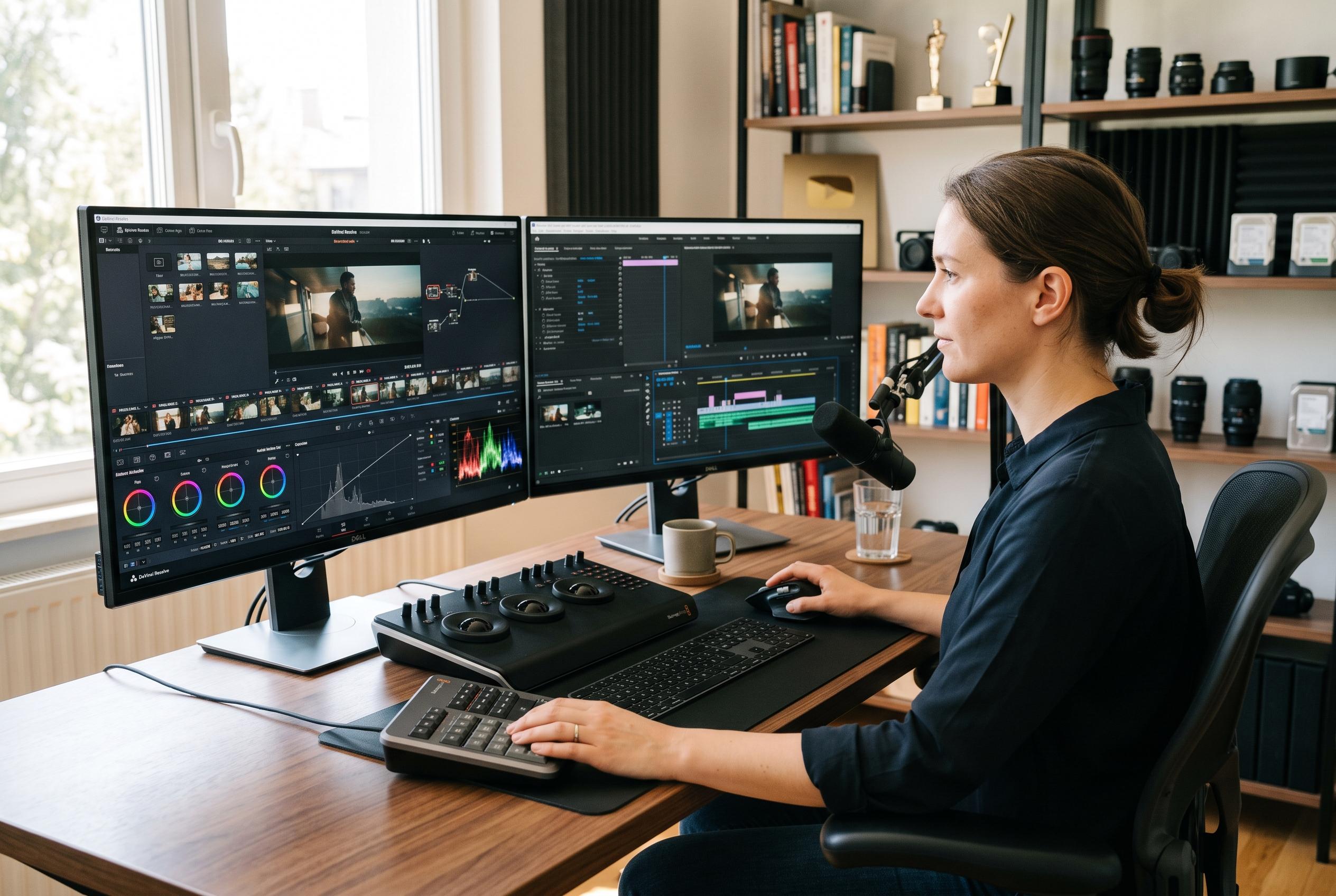

Recent trends in colour grading education highlight a shift towards practical, workflow-focused courses tailored to indie editors, with DaVinci Resolve remaining the preferred platform for comprehensive training, while Premiere Pro remains a viable alternative for quick improvements within existing workflows.
For indie editors, the best colour grading course is not the most expensive one. It is the one that teaches a usable workflow, fits the software already on the timeline, and reflects how small teams actually finish work. Recent course round-ups and training platforms point to the same split: DaVinci Resolve remains the strongest all-round route for most users, while Premiere Pro training still matters for editors who grade inside Adobe’s ecosystem.
That is why structured Resolve training continues to dominate the market. Manhattan Edit Workshop’s two-day COL 201 workshop is aimed at experienced editors and colourists, and its syllabus covers secondary correction, power windows, tracking, keying, HDR workflows, look development, image refinement and finishing. Visionary Colour Academy takes a different approach, offering an eight-hour-plus online course built around fundamentals, colour theory and creative look development, with follow-along projects and access to digital assets.
For editors who want a broader learning path, Colour Grading Academy now offers a tiered structure that starts with free foundations, moves into a subscription track and extends to a master’s programme. That reflects a wider trend in 2026: training is increasingly modular, with learners choosing between free basics, paid self-paced courses and live cohort formats. Independent comparison pieces also keep returning to the same practical advice: DaVinci Resolve is the default recommendation for most users, while Premiere’s Lumetri tools can handle a large share of everyday grading tasks without forcing a software switch.
For indie editors, the most sensible choice is still to match course format to the job. If the goal is to understand scopes, nodes and professional grading structure, a Resolve-focused course is the better investment. If the work lives inside Premiere, a Lumetri course may be enough to raise the standard quickly. The most useful programmes, whether self-paced or live, are the ones that combine clear theory with practical projects and enough depth to move beyond simple correction into controlled, repeatable look development.
Disclaimer: This content is intended for informational purposes only. Readers are advised to exercise their own judgement, conduct due diligence, or consult a qualified expert before acting on any information provided.