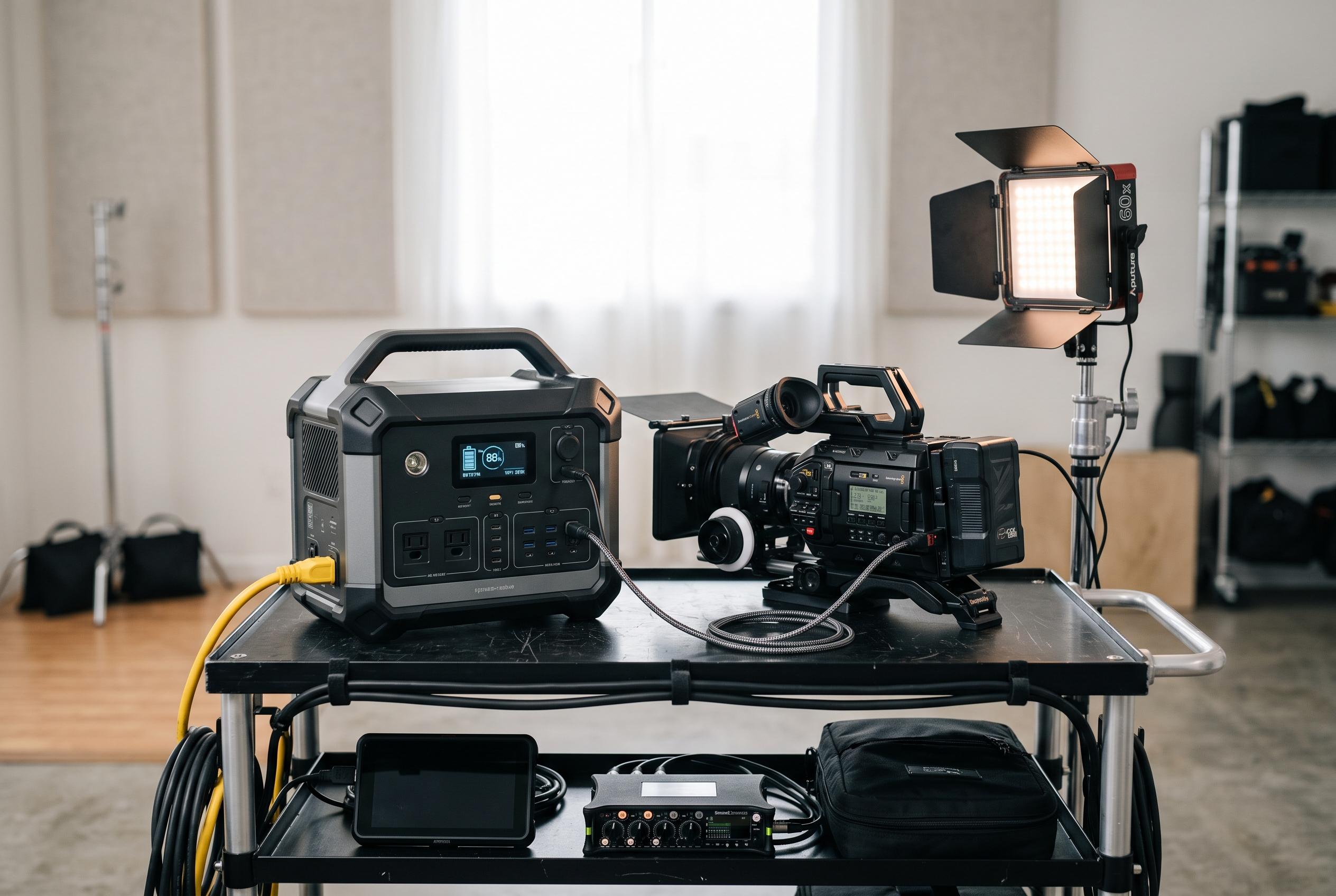

Advances in portable power stations have made batteries the preferred choice for filmmakers on set, offering quieter, faster, and more practical solutions than traditional generators, especially for indoor and documentary shoots.
For filmmakers working away from mains power, the core trade-off has not changed: batteries are quieter and cleaner than generators, but capacity, recharge speed and weight determine whether they are genuinely useful on set. Short Film Central’s August 2026 guide to portable power stations for film shoots argues that the best units now bridge that gap well enough to support documentary work, interview setups and even small commercial crews without the noise or fumes of fuel-powered equipment.
Its top recommendation is the Jackery Explorer 1000 v2, which the site says handled a full interview day in silence and could recharge in about an hour when needed. The review also highlights why that matters for production sound: a station running at around 30dB can sit close to a boom microphone without becoming part of the recording. For many crews, that alone makes a battery station more practical than a generator, especially in indoor, residential or restricted locations.
The strongest alternative, according to the same guide, is the Anker SOLIX C1000 Gen 2, mainly because it can return to full charge in under an hour and offers enough output for a 600W light setup. Short Film Central places the EcoFlow Delta 3 Classic just behind it for crews that need more headroom for sensitive cinema gear, noting its fast UPS-style switchover and the extra flexibility of a higher inverter ceiling. That assessment broadly matches TechRadar’s wider 2026 portable power station testing, which names the EcoFlow Delta 3 Plus as its overall pick on the strength of a 1024Wh battery, strong output and very fast switchover for backup use.
The rest of the field fills distinct production roles. Short Film Central’s testing suggests the Jackery Explorer 2000 Plus is the better choice for multi-light shoots, while the BLUETTI Elite 100 V2 stands out for exterior work because of its unusually high solar input. For smaller kits, the Anker SOLIX C300 and BLUETTI Elite 30 V2 cover accessory charging, camera batteries and lightweight panels rather than full lighting packages. At the smallest end, the BLUETTI Handsfree 1 is aimed at drone pilots and cramped camera bags, not mains-equivalent loads.
What emerges from the testing is a simple planning rule. For film work, the important figures are not just watt-hours, but continuous output, recharge time, noise and the practical layout of ports. A 1kWh station is usually enough for interviews, monitors and battery chargers; once lighting draws rise towards 600W or more, 2kWh-class units become far more realistic. Short Film Central also argues that LiFePO4 batteries are now the sensible baseline for professional use because they offer longer cycle life and better durability than older chemistry, which is consistent with broader 2026 power-station buying advice from TechRadar.
That leaves the generator question. Battery stations clearly win for dialogue-heavy work, small crews and interiors, while generators still make sense when total energy demand climbs beyond what a portable battery can provide across a long day. For most filmmakers, though, the shift is already clear: the best portable power station is no longer an emergency accessory, but a legitimate part of the production toolkit.
Disclaimer: This content is intended for informational purposes only. Readers are advised to exercise their own judgement, conduct due diligence, or consult a qualified expert before acting on any information provided.