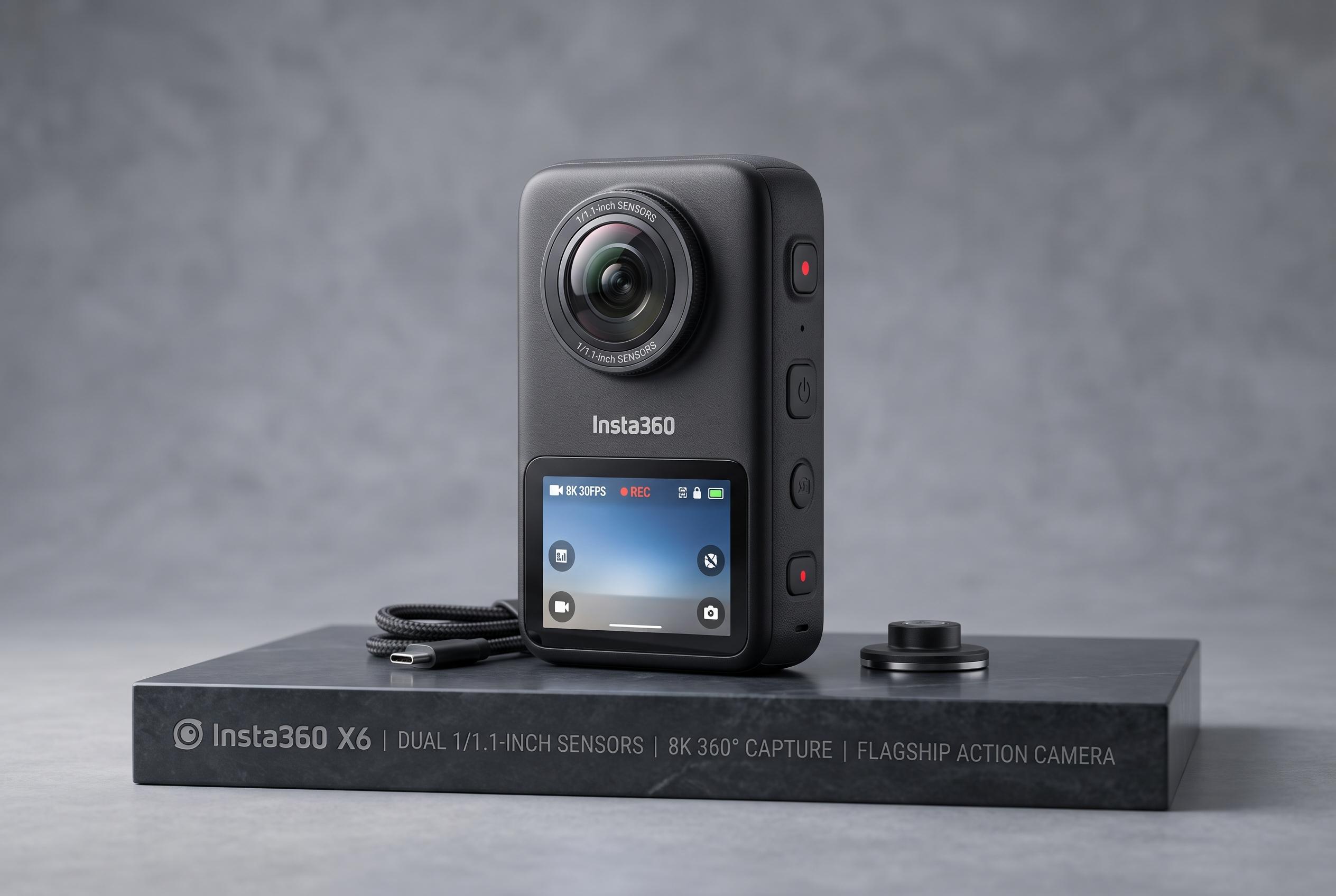

The Insta360 X6 introduces dual 1/1.1-inch sensors, 8K recording, and improved data handling, yet early tests suggest its real-world advantages may be modest, highlighting still unresolved trade-offs and design compromises.
Insta360’s X6 arrives with a familiar promise and a more complicated pitch: larger imaging area, better handling, and enough speed to make 360-degree capture less cumbersome. The company launched the camera on 12 August, saying its dual custom Sony square sensors deliver the equivalent of a 1-inch sensor in 360 mode, which would make it the largest imaging surface yet fitted into a pocketable 360 camera. TechRadar, T3 and Digital Camera World all note that the X6 builds on that theme with dual 1/1.1-inch sensors, 8K recording at 50fps and 10-bit colour support. According to those reviews, the camera also adds IP68 waterproofing to 20 metres, replaceable lenses and a 2.32-inch OLED touchscreen.
Early hands-on testing suggests the practical gains may be as important as the headline sensor claim. A Reddit user quoted by the launch write-up, gshaw1967, reported USB transfer speeds of up to 32MB/s on the X6, compared with 17MB/s on the X5, which could cut offload time sharply when dealing with large 360 files. The same test session produced a 120-megapixel still at 59MB, underlining how quickly the new format can fill storage. Tom’s Guide also points to built-in 47GB storage and faster data handling, while TechRadar says the camera supports USB 3.0 and Wi-Fi 6 for transfers.
The sensor story is not as straightforward as the marketing suggests. Insta360’s own footnote says the 1-inch claim refers to imaging area in 360 mode, not a literal 1-inch sensor, with the actual diagonal closer to 14.5mm. In the same user test cited by the launch article, footage from the X6 looked very similar to that from the X5 at first glance, and the camera was still running pre-release firmware with a day-one update pending. That means the most obvious real-world difference may emerge in low light, especially in PureVideo mode, rather than in daylight clips.
There are also smaller design changes that affect everyday use. The X6’s reduced screen size means less of the user appears in the live preview, which matters when framing on an invisible selfie stick; gshaw1967 said the X5 showed him from head to knees, while the X6 only showed him from head to just above the waist. Battery claims remain strong on paper, with Insta360 quoting 140 minutes of 8K/30fps recording, and review sites say the camera can reach 80% charge in about 24 minutes. The launch article’s testing found full charging was faster than on the X5, though actual recording endurance appeared only modestly better. Digital Camera World and T3 both describe the X6 as a more ambitious hybrid device, with support for Dolby Vision, I-Log and improved AI tools, but Tom’s Guide notes that overheating at high frame rates and the price still limit its appeal for some buyers.
Disclaimer: This content is intended for informational purposes only. Readers are advised to exercise their own judgement, conduct due diligence, or consult a qualified expert before acting on any information provided.