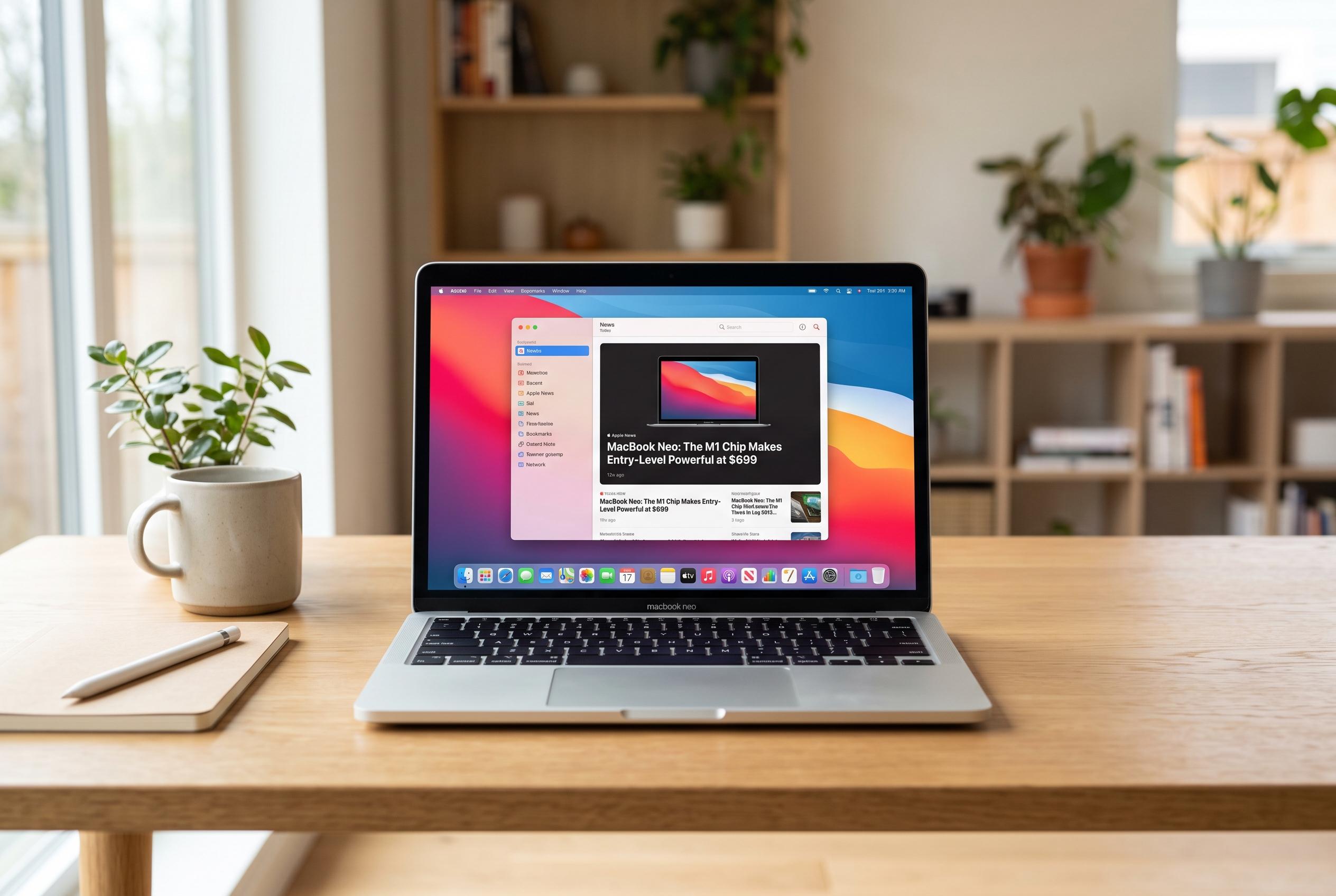

Apple’s new MacBook Neo, priced at just $699, offers an affordable entry into the Mac ecosystem powered by an iPhone chip. However, reviews highlight notable trade-offs that could limit its appeal for students with demanding workloads.
Apple’s MacBook Neo is the cheapest new Mac the company has sold in years, and that alone has made it one of the most tempting back-to-school buys of the season. With a starting price of $699, or $599 with an education discount, it looks at first glance like a rare chance to buy into Apple’s aluminium design language and macOS ecosystem without paying MacBook Air money. But the low entry price is the result of deliberate compromises, and those trade-offs matter more as soon as a student moves beyond basic web work. According to Tom’s Guide and reviews from MacRumours and PCWorld, the Neo is best understood not as a cut-price Air, but as a separate class of machine built around a phone chip.
The key difference is the processor. Instead of an M-series chip, Apple has put the A18 Pro, the same silicon used in the iPhone 16 Pro, into the Neo. That makes the laptop impressively efficient and well suited to everyday tasks, with strong single-core performance, quiet operation and all-day battery life. Tom’s Guide’s testing put the Neo ahead of several budget rivals on battery endurance, while MacRumours and PCWorld both found it competent for browsing, writing and streaming. The limitation is sustained workload. Multi-tab research, large spreadsheets, code compilation and creative software place more pressure on the chip than Apple seems to have intended.
The more serious concern is that Apple has stripped back several features that matter in real student use. The Neo is capped at 8GB of unified memory with no upgrade path, and both Macworld and MacRumours flag that as the most important long-term constraint. Tom’s Guide also highlights the lack of a backlit keyboard, which can make late-night work awkward in dorms and lecture halls. The port selection is equally lean: there are only two USB-C sockets, and one of them runs at USB 2.0 speeds, which creates an obvious bottleneck for file transfers and accessories. Other reviewers add that the base model also misses Touch ID, MagSafe and, in some reports, several display refinements found on more expensive Macs.
That leaves the Neo in a narrow but clear market position. For younger pupils whose schoolwork lives almost entirely in browsers, learning portals and word-processing apps, it is an excellent fit: durable, fast enough and far better built than many low-cost Windows laptops or Chromebooks. For college students, the picture changes sharply. Tom’s Guide argues that high school seniors, undergraduates and students in demanding subjects are far better served by a MacBook Air with an M-series chip, more memory and a backlit keyboard. That advice is supported by the wider review consensus: the Neo offers remarkable value, but only for people whose computing needs stay simple.
Disclaimer: This content is intended for informational purposes only. Readers are advised to exercise their own judgement, conduct due diligence, or consult a qualified expert before acting on any information provided.