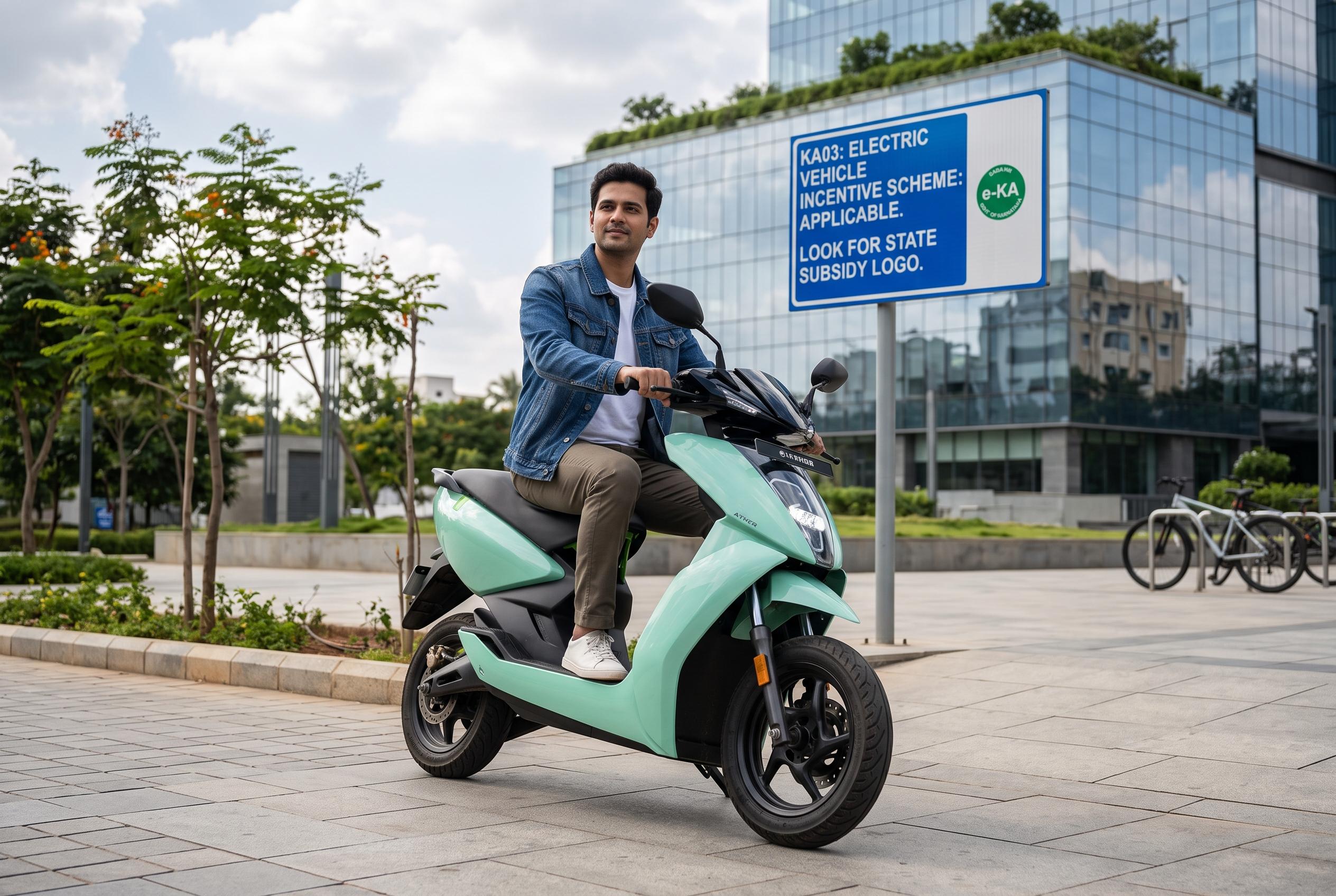

The Indian electric scooter segment in 2026 expands beyond affordability, offering higher specs, innovative features, and flexible battery options, reshaping consumer choices amid government incentives.
India’s electric scooter market in 2026 spans basic city runabouts to more capable, higher-spec machines, with prices stretching from under ₹1 lakh to around ₹2 lakh. The latest budget-led picks show how sharply the segment has broadened: buyers can now choose between models built for low running costs, removable batteries, larger storage and stronger performance. According to the India-specific round-ups cited here, the main names in this bracket include Ampere, VIDA, TVS, BGauss, River, Ather and Simple Energy, with final on-road pricing still affected by city, variant and subsidy.
At the entry end, the emphasis remains on practicality. The Ampere Magnus Neo is priced at ₹86,999 ex-showroom in the Drivespark report, with a 2.3kWh battery, 118km IDC range and a claimed top speed of 65km/h. The same report says the scooter can take up to 5 hours to reach 80% on its off-board charger and that buyers may still benefit from the PM e-Drive scheme, which was extended to 31 July 2026. The broader buyer’s guide from Electric Scooter Guides notes that the scheme replaced FAME-II in October 2024 and continues to shape the economics of mass-market electric two-wheelers through 2026.
VIDA’s VX2 is being positioned as another strong value option, particularly where removable batteries matter. Smartprix lists the VX2 at between ₹44,990 and ₹84,800, depending on version, and says the scooter can offer up to 142km of range with a 3.4kWh swappable battery, along with connected features, navigation and USB charging. A separate Smartprix rating page highlights the VX2 Plus, which uses a 4.4kWh swappable pack and is quoted with a range of up to 187km. EvNomadz also places the related VX2 Go in the under-₹80,000 bracket, with a removable battery and a practical boot, underlining how the model family is aimed at commuters who want flexibility more than outright speed.
TVS is using the Orbiter to push the affordable segment towards better equipment and packaging. The Bike Junction lists it at ₹95,250 ex-showroom with a 3.1kWh battery, up to 158km IDC range and a 34-litre boot, which is unusually generous for this price band. Smartprix says the scooter also brings connected technology, reverse mode, hill-start assist, navigation and a 5.5-inch digital display. Taken together, the available data suggests that 2026 buyers are no longer choosing electric scooters only on price; range, battery type, storage and digital features are becoming equally important in deciding value.
Disclaimer: This content is intended for informational purposes only. Readers are advised to exercise their own judgement, conduct due diligence, or consult a qualified expert before acting on any information provided.