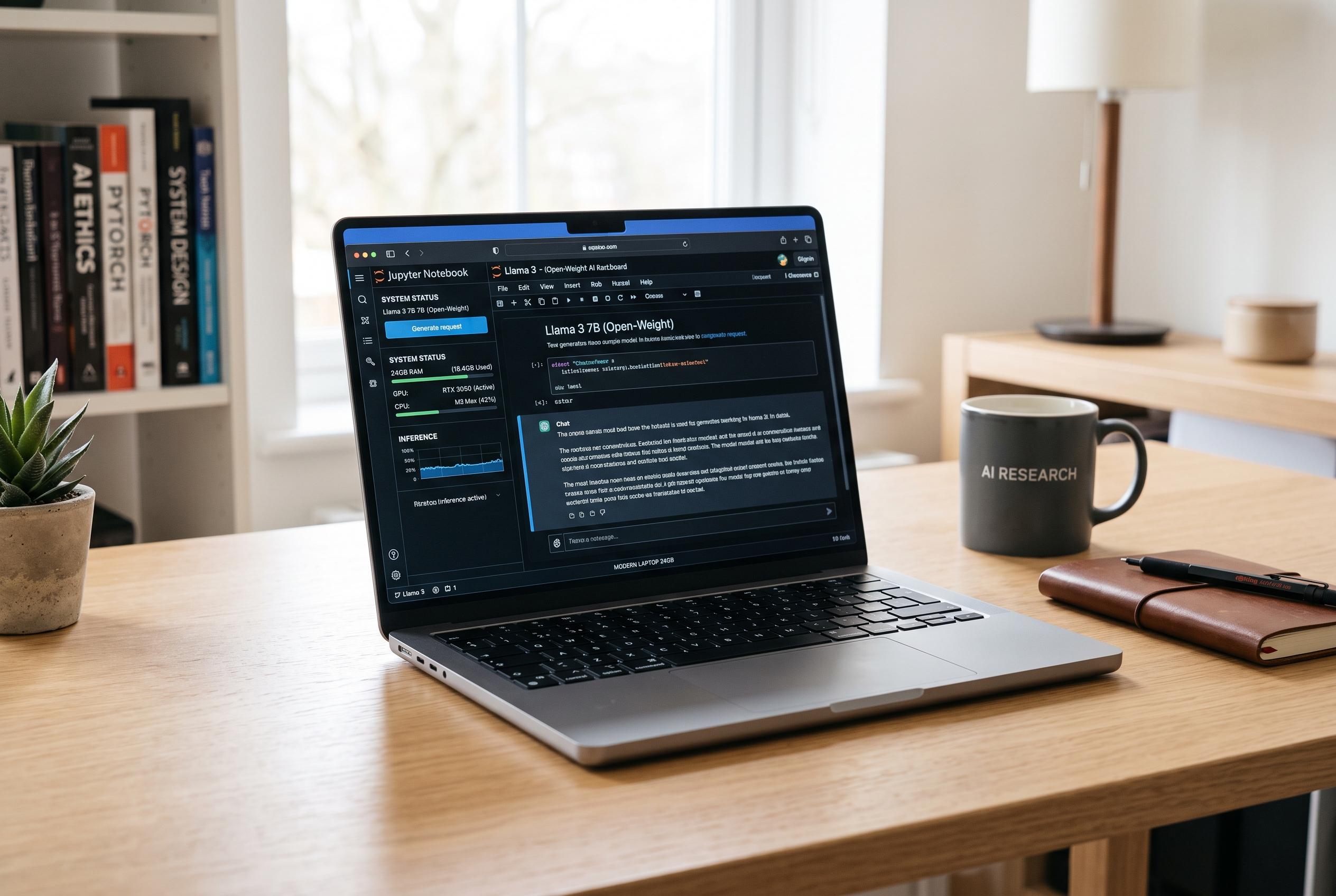

Emerging research and expert insights reveal that a 24GB laptop can effectively run sizeable open-weight models, challenging conventional wisdom that bigger, costlier machines are always necessary for local AI deployment. The real limit often lies in software configuration, not hardware capacity.
The common advice in local AI circles is to buy a larger, costlier machine, with more memory and a powerful GPU. That may be sensible for some workloads, but it is not the whole story. In practice, a 24GB laptop can already run sizeable open-weight models if the software stack is configured carefully enough. The key point in the lead article is that the limitation was not the hardware itself, but the defaults imposed by the orchestration layer.
That distinction matters because tools such as Ollama are designed to simplify deployment, not to expose every performance lever. Once memory becomes tight, those hidden choices can determine whether a model feels usable or constantly stalls. The article argues that what looked like a hardware ceiling was actually a software bottleneck: the machine was being underused because the user had little control over how memory and inference settings were handled.
Related guides on local model selection support that broader view. According to modelfit.io, 24GB systems can run a number of open-weight models effectively, including 20B-class and mid-sized instruct models, if the configuration matches the available memory. Tech Verdict’s 2026 review similarly places models in the high teens to low 30 billions of parameters within reach of 24GB systems, while noting that context window size remains an important constraint. In other words, parameter count alone does not decide feasibility; memory management and prompt length are just as important.
Hardware guidance for Apple’s Mac mini M4 Pro reinforces that point from another angle. Local Claw’s overview of the 24GB configuration highlights that models such as Devstral 24B and Qwen 3 14B are realistic choices on that platform, while Inkeybit argues that memory bandwidth can matter more than raw compute for local inference. That is especially relevant on systems with unified memory, where the practical ceiling is shaped not just by capacity but by how quickly the model can move data.
The broader conclusion is that many users may be overspending because they are solving the wrong problem. A 24GB laptop, and in some cases even a 16GB machine, can handle local AI more comfortably than the usual forum wisdom suggests, provided expectations are matched to the hardware. The better question is not whether a system is “serious” enough in abstract terms, but whether the model, memory budget and runtime settings are aligned.
Disclaimer: This content is intended for informational purposes only. Readers are advised to exercise their own judgement, conduct due diligence, or consult a qualified expert before acting on any information provided.