
Singapore’s luxury digital lock market is increasingly prioritising aesthetics alongside security, with innovations in biometrics, customised fittings, and integration options redefining homeowner expectations for style, functionality, and reliability.
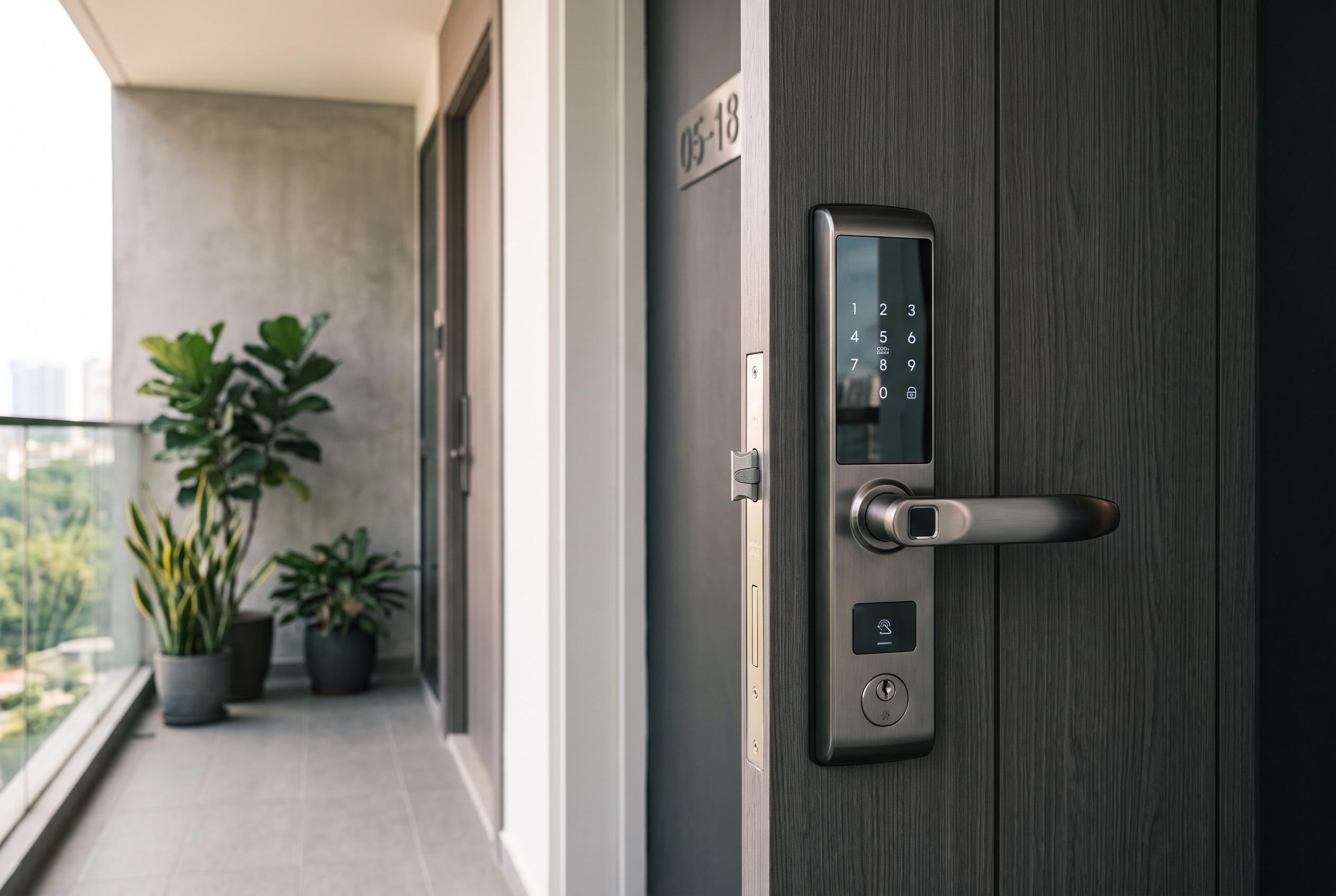
Singapore’s premium digital lock market is increasingly defined by design as much as security. Homeowners are no longer looking only for keyless entry; they want hardware that sits neatly within a refurbished HDB doorway, a condominium entrance or a landed property gate without breaking the visual line of the space. That is driving demand for slimmer bodies, more refined finishes and biometric systems that feel fast rather than clinical. My Digital Lock’s Lusano+ range, for example, is being positioned around compact profiles and face-recognition features, while other brands are emphasising premium construction, temporary access control and video monitoring.
The luxury segment has also moved well beyond a simple PIN pad and fingerprint reader. The latest models highlighted by retailers now include LiDAR face recognition, palm recognition, animated status displays, live visitor viewing and remote unlocking through Wi-Fi or mobile networks. Some products are designed specifically for narrow HDB doors, with slim bodies of around 3cm to avoid clashing with a gate, while others focus on premium construction and more flexible access control. Interlock Singapore’s 2026 guide also shows that buyers increasingly want a balance between advanced biometrics and dependable offline operation, particularly where cloud accounts are not wanted.
Brand positioning has become part of the buying decision. Kaadas continues to market itself on long experience in digital lock engineering, emphasising style, reliability and broad international adoption, while retailers such as AN Digital Lock and others promote curated ranges from brands including Zigbang, Philips and Hafele. The market message is consistent: buyers want locks that look discreet, support smart-home integration and still deliver strong physical security. In practice, that means paying attention to the mortise configuration, the thickness of the door, and whether a chosen model fits a fire-rated door or a gate without compromising the finish.
Installation remains critical. Even the most advanced lock can fail to perform properly if the door alignment is poor, the mortise cut is inaccurate or the wireless signal is weak at the entrance. Retail guidance in Singapore increasingly stresses site checks before purchase, especially for homes that want app notifications, remote unlocking or video access. The practical issue is not just convenience: if a system depends on network connectivity, signal strength and correct calibration, professional fitting becomes part of the product rather than an optional extra.
Price and warranty expectations vary sharply across the market. Entry-level smart locks can begin at a few hundred dollars, with some slim HDB-oriented models priced between $299 and $599, while higher-end units add camera modules, richer biometrics and more robust materials. Retailers also flag that warranties are often modest, with some products offering a one-year term, making after-sales support an important part of the purchase decision. For buyers comparing options, the main trade-off is clear: the more features a lock packs in, the more important it becomes to assess reliability, service support and long-term compatibility with the door it is meant to secure.
Disclaimer: This content is intended for informational purposes only. Readers are advised to exercise their own judgement, conduct due diligence, or consult a qualified expert before acting on any information provided.