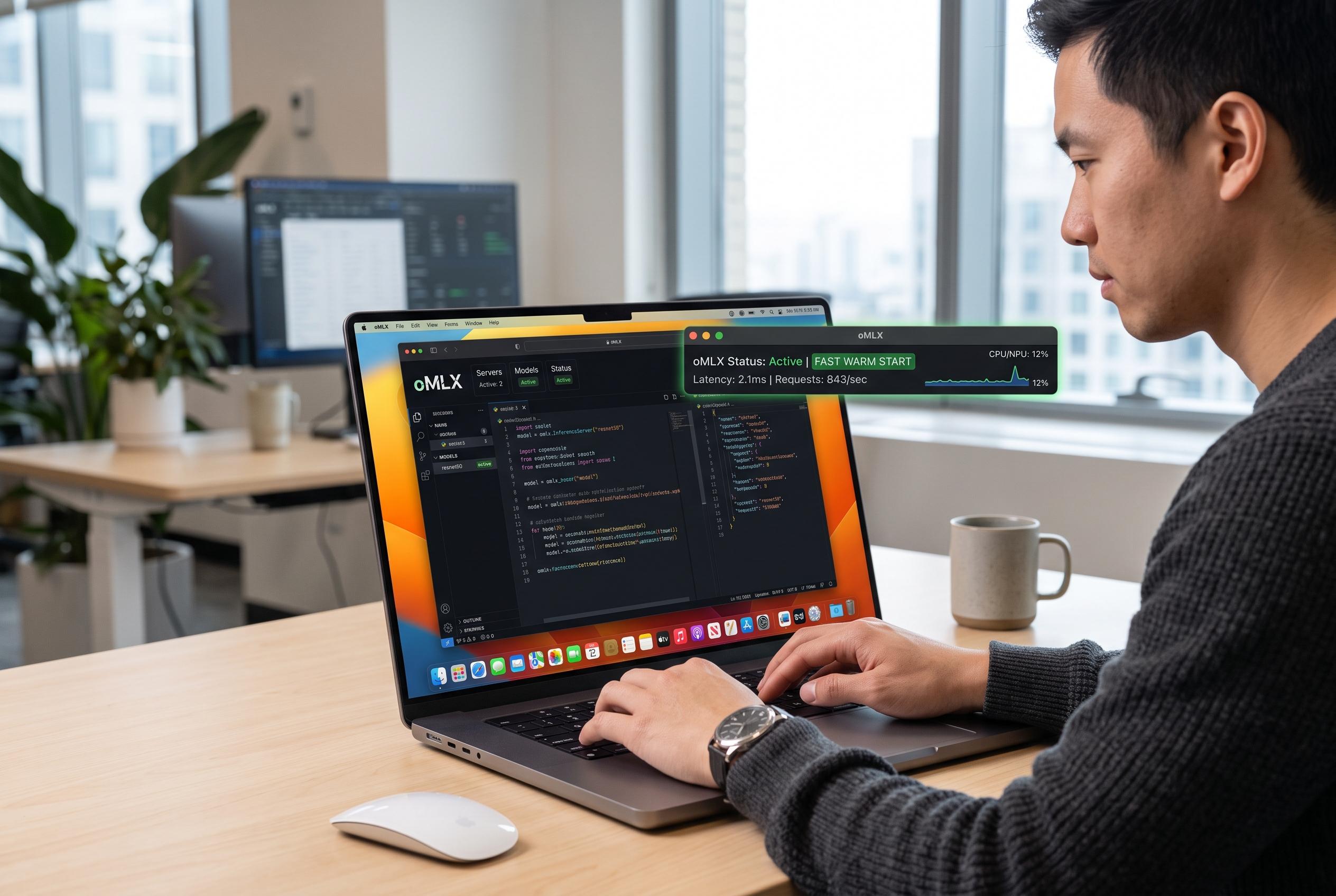

The macOS-native inference server oMLX streamlines local AI coding workflows by significantly reducing time-to-first-token through persistent caching, making it easier to integrate large language models into agent workflows on Apple Silicon Macs.
On a Mac, running a local model is no longer the hard part. The difficult part is making it useful for coding agents, because each new session can force the server to rebuild a very large context before it emits a first token. oMLX, a macOS-native inference server for Apple Silicon, addresses that bottleneck by persisting the key-value cache to SSD in safetensors format, so previously seen prompts, system instructions and read files can be restored rather than recomputed. According to oMLX, that approach can cut time-to-first-token from tens of seconds to under five seconds for long contexts.
The project is designed to slot into existing agent workflows. It exposes both OpenAI-compatible and Anthropic-compatible APIs, which means tools such as Claude Code can connect to localhost without additional glue. oMLX also includes a native macOS menu bar application and a dashboard that helps users wire up agents and manage the server. The official documentation says it supports Apple Silicon machines from M1 onwards, with macOS 15 or later, and recommends at least 16GB of memory, although 64GB or more is presented as the more comfortable range for heavier models and daily coding work.
There is, however, an important practical detail. Korben notes that a default pip installation does not compile the Metal kernels, which can push some models back on to a slower generic path. For that reason, the safer route is to use the provided DMG builds, which already include the compiled kernels. The same report also points out that the cache consumes disk space by default, with the ceiling set at roughly 10% of the host drive, although that limit can be changed and the cache cleared from the dashboard. The main trade-off is clear: oMLX reduces the wait for the first token, but the speed of subsequent output still depends on the model and the Mac itself.
Disclaimer: This content is intended for informational purposes only. Readers are advised to exercise their own judgement, conduct due diligence, or consult a qualified expert before acting on any information provided.