
Johannesburg’s residential market is increasingly adopting automated window coverings, blending security, comfort, and energy efficiency, with new innovations making motorised blinds more accessible beyond luxury estates.
Johannesburg’s residential market is showing a clearer appetite for automation, with motorised window coverings moving from a niche luxury to a more routine feature in mid- to upper-tier homes. What was once associated mainly with large estates in places such as Steyn City and Sandhurst is now appearing more widely across Gauteng, as buyers and homeowners place greater value on systems that combine comfort, security and energy control. The shift reflects a broader change in how property owners think about fittings: window treatments are no longer judged only on appearance, but also on how they perform in a demanding urban climate.
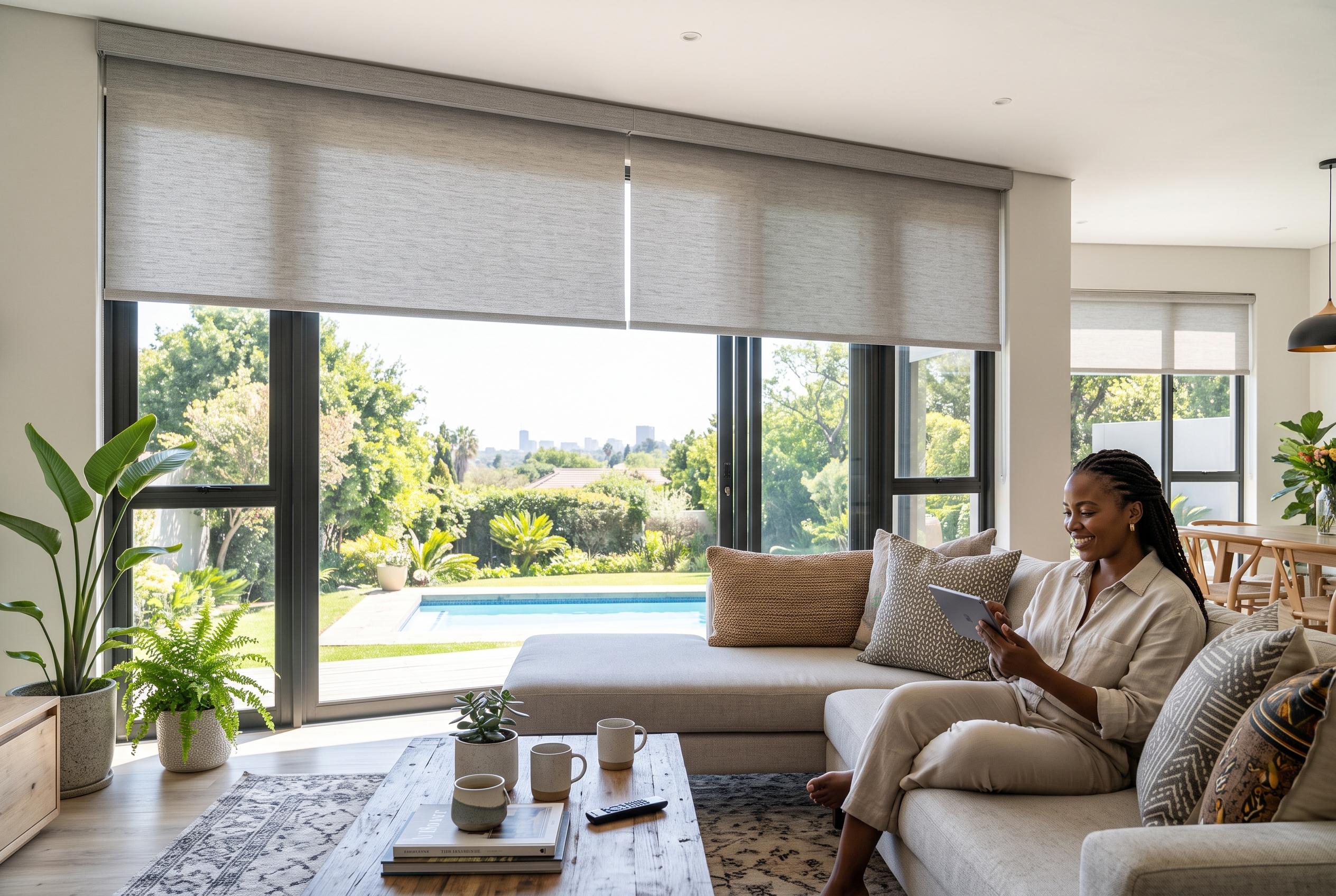
In practical terms, the appeal is straightforward. Johannesburg’s high-altitude weather brings strong sun, sharp seasonal swings and heavy reliance on cooling in summer. Automated blinds can be timed to close during peak heat and UV exposure, helping to reduce glare and ease pressure on air-conditioning systems. According to local specialists, this is one reason the products are increasingly being treated as a functional upgrade rather than an optional decorative extra. Security is another factor. When linked to wider home systems, motorised blinds can be set to move at intervals, creating the impression that a house is occupied while the owner is away.
The technology has also become more adaptable. Industry commentary from South African suppliers indicates that motorised blinds now integrate more easily with common smart-home platforms, including voice assistants and app-based controls. That makes them suitable for larger homes, high windows and difficult-to-reach openings, where manual operation is inconvenient. Recent case studies from Johannesburg installers show strong interest in custom-made solutions, particularly for tall glass façades and premium interiors where clean lines, concealed wiring and quiet operation matter as much as convenience. The market has also broadened beyond premium wired systems, with battery-powered and solar-rechargeable options helping households maintain control during load-shedding.
Energy resilience is especially relevant in South Africa. Battery-backed and solar-assisted systems allow blinds to function even when the grid is disrupted, while heavier fabrics and well-fitted coverings can improve insulation by limiting heat transfer through glass. That matters both in summer, when solar gain raises cooling costs, and in winter, when homes lose warmth quickly after sunset. The result is a product category that sits at the intersection of design, automation and utility. As prices for smart-home hardware continue to settle, motorised blinds are likely to become a more standard specification in new residential projects, rather than a luxury add-on reserved for the top end of the market.
Disclaimer: This content is intended for informational purposes only. Readers are advised to exercise their own judgement, conduct due diligence, or consult a qualified expert before acting on any information provided.