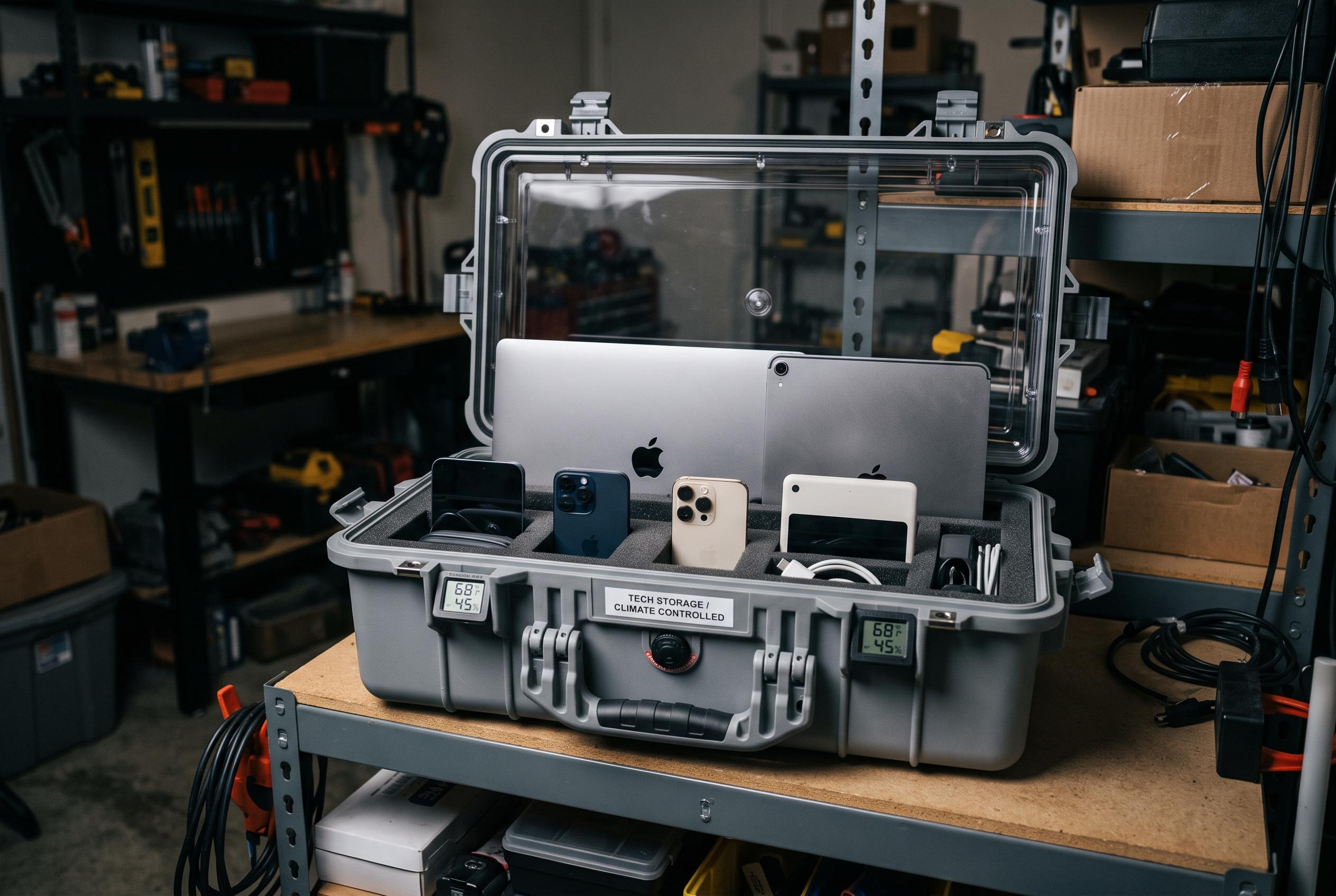

Storing electronics in garages exposes devices to extreme temperature fluctuations and moisture, risking accelerated ageing, corrosion, and failure. Experts suggest practical measures to safeguard your gadgets against environmental damage.
Keeping electronics in a garage may seem practical, but it is often one of the worst places for them. The risk is not the storage space itself, but the combination of heat, cold and moisture that garages commonly experience. According to Engadget, Thomas Godwin argues that these conditions can speed up ageing in batteries, stress circuit boards and create condensation inside devices when temperatures change sharply.
The main problem is instability. Uninsulated garages can become far hotter than the outside air in summer and much colder in winter, especially where there is no climate control. BGR and local storage operators cited in the material both note that wide temperature swings can warp plastics, dry out thermal compounds and weaken solder joints. Humidity adds another layer of damage by encouraging corrosion on contacts, connectors and boards.
Lithium-ion batteries are especially vulnerable. Guidance in the supplied material recommends storing them at around 40 to 50 per cent charge in a cool, dry place, rather than leaving them full or empty for long periods. High temperatures accelerate degradation, while low temperatures can reduce battery performance and, in some cases, increase the risk of failure once the device is used again. The same advice applies broadly to laptops, consoles, phones and other rechargeable equipment.
Televisions and other screen-based devices are not immune. The material notes that many modern LCD sets can survive a wider storage temperature range than people expect, but the danger comes when a cold device is powered on too quickly. Moving it straight from a cold garage into a warm room can cause condensation to form inside the casing. That is why the guidance is to let equipment reach room temperature before switching it on, ideally with the packaging opened so moisture can dissipate.
If garage storage cannot be avoided, the sensible response is to reduce the environmental risk as much as possible. The supplied sources recommend sealed hard plastic boxes, silica gel, anti-static bags for sensitive parts and keeping devices off bare concrete. They also suggest monitoring temperature and humidity with an inexpensive sensor, because sustained readings above roughly 35°C or above 60% relative humidity indicate that stored electronics are in a danger zone. For anything valuable, or anything still in use, a room inside the home remains the safer option.
Disclaimer: This content is intended for informational purposes only. Readers are advised to exercise their own judgement, conduct due diligence, or consult a qualified expert before acting on any information provided.