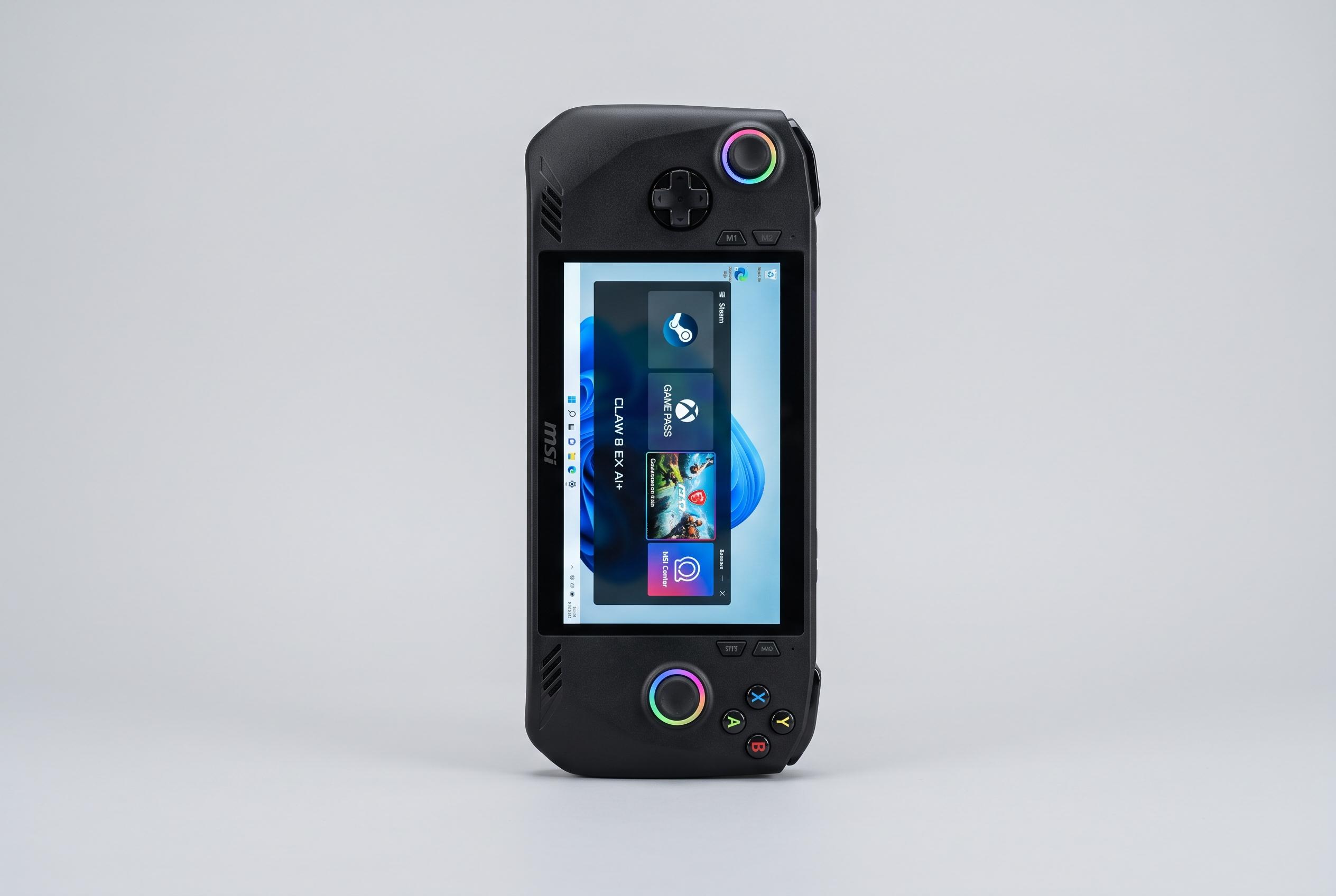

MSI’s latest Claw 8 EX AI+ pairs cutting-edge Intel Arc G3 Extreme platform with portable design, delivering top-tier gaming performance but at a premium price of $1,799, marking a significant shift in the fiercely competitive handheld PC market.
MSI’s latest Claw marks a decisive shift in the handheld PC race. After two earlier attempts that never quite matched the best AMD-based rivals, the Claw 8 EX AI+ finally pairs the company’s portable gaming design with Intel’s new Arc G3 Extreme platform, built on Panther Lake silicon. The result is a machine that, by several early reviews, delivers class-leading performance in a segment that has become fiercely competitive. Yet that technical leap arrives alongside a far less welcome milestone: a price of $1,799, which places it among the most expensive mainstream gaming handhelds on the market.
The hardware itself is far more convincing than MSI’s first two handhelds. Tom’s Hardware reports that the Claw 8 EX AI+ uses an 8-inch 1,920 x 1,200 IPS panel with a 120Hz variable refresh rate, hall-effect controls, dual Thunderbolt 4 ports, Wi-Fi 7 and Bluetooth 6, plus an 80Wh battery. The device also supports up to 32GB of LPDDR5x memory and a full-size M.2 2280 SSD, making it unusually upgrade-friendly for a portable system. MSI has also reworked the shape, adding larger side grips and a more controller-like body, which multiple early assessments describe as markedly more comfortable than the earlier Claw models.
Performance is the real story. Reviewers say the new Intel handheld chip comfortably outpaces AMD’s current competition, including Ryzen Z2 Extreme systems such as the Asus ROG Xbox Ally X and Lenovo Legion Go 2. In testing from PCMag and other outlets, the Claw 8 EX AI+ showed particularly strong results in demanding games, helped by Intel’s XeSS upscaling and multi-frame generation. Tom’s Hardware and Notebookcheck both describe it as the fastest gaming handheld they have tested, while noting that the gains are most visible when AI-assisted rendering is switched on. In practical terms, that means smoother play in modern AAA titles, but also a reliance on techniques that can introduce visual compromises such as ghosting and softer image detail.
The software experience remains more complicated. Like other Windows-based handhelds, the Claw benefits from the Xbox full-screen interface, which reduces background tasks and makes the device easier to use with controls alone. But it still inherits Windows 11’s awkwardness, especially when moving between game launchers, settings menus and the desktop environment. MSI’s own launcher adds useful system controls, yet it also reinforces how much of the handheld experience still depends on software layers that were never designed primarily for this form factor.
Battery life appears respectable rather than exceptional. With an 80Wh pack, the Claw is in line with the most capable rivals and, in lighter workloads, can last impressively long. In gaming, however, expectations must be moderated: intensive titles still drain portable PCs quickly, and MSI’s gains in efficiency do not change the basic physics of running demanding games on a battery-powered device. That leaves the Claw 8 EX AI+ in a curious position. It is, by most accounts, the most powerful handheld available today. It is also priced so aggressively that it becomes a niche product for enthusiasts rather than a broad-market recommendation.
Disclaimer: This content is intended for informational purposes only. Readers are advised to exercise their own judgement, conduct due diligence, or consult a qualified expert before acting on any information provided.