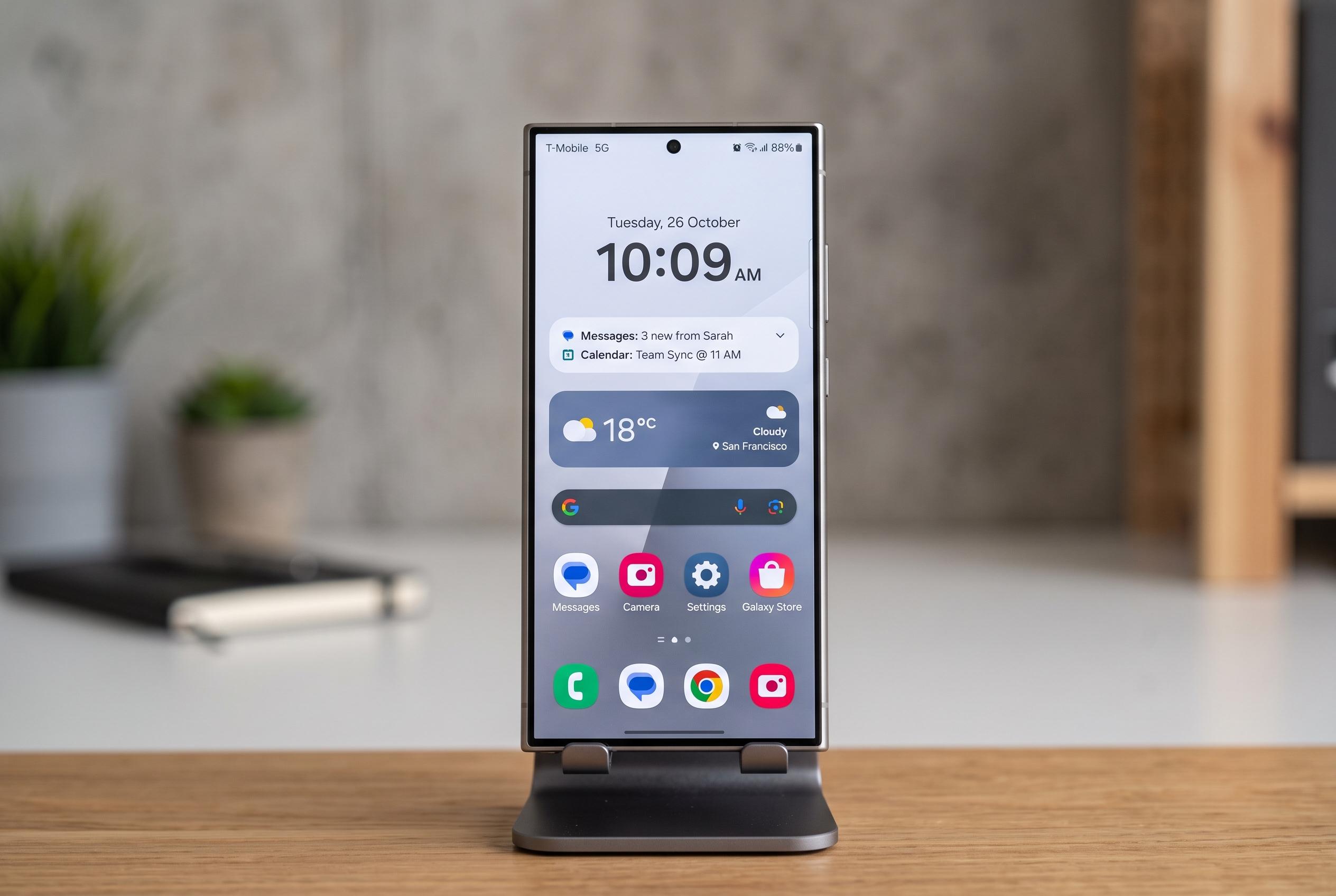

Samsung’s latest beta for One UI 9 focuses on visual consistency and practical improvements, but leaks suggest a significant AI-powered redesign with One UI 9.5 is on the horizon, potentially transforming the user experience by 2027.
Samsung’s One UI 9 may be nearing its final form, but the software still looks more like a refinement pass than a rethink. On the Galaxy S26 series, the fifth beta has focused on smoother motion and tighter visual consistency, while leaving broader interface questions largely untouched. That matters because attention is already shifting towards One UI 9.5, which early leaks suggest will add a glass-like design and deeper integration of AI features into Samsung’s core apps. Android Central reported that those test builds could reach beta later in 2026, with a stable release unlikely before spring 2027.
Some of Samsung’s newer additions show that the company can improve practical features when it chooses to. Android Central reported that One UI 9 has introduced a new Warranty and Care hub that brings diagnostics, warranty checks, Samsung Care+ information and repair guidance into one Settings section. The same reporting says Samsung has also begun tightening protections around app security, with One UI 9 beta builds blocking certain high-risk APKs. Yet those gains sit alongside long-running frustrations that Samsung has not fully addressed.
One of the clearest examples is app drawer behaviour. Samsung added a vertical drawer in One UI 7, but only if users accept Samsung’s preferred alphabetical sorting. Anyone who wants a custom app order still has to use a paged layout or rely on Good Lock, Samsung’s own add-on framework. That leaves a basic launcher function feeling unnecessarily conditional on extra software.
Power management remains another weak point. The developer benchmark DontKillMyApp continues to place Samsung among the worst Android manufacturers for aggressively terminating background processes. In practice, that can mean apps lose state, delay notifications or restart too often. Android Police argued that this reflects Samsung’s own memory policies layered on top of Android, and there is little reason to expect One UI 9.5 to reverse that approach if on-device AI features continue to compete for resources.
Navigation and messaging still show similar gaps. Predictive back gestures have remained uneven across Samsung’s software and third-party apps, despite Google’s wider push to make back navigation more consistent in Android 17. Android 17 has also changed smart-reply behaviour so suggested responses from notifications can be edited before sending, but One UI 9 has not adopted that adjustment. That leaves Samsung behind a fix that is already available in the underlying platform.
The other obvious problem is duplication. Samsung did remove one source of frustration in One UI 9 by allowing Microsoft SwiftKey to be uninstalled rather than merely disabled. But much of the bundled software stack remains intact, including duplicate browsers, app stores, galleries and wallets, alongside Bixby and partner services that continue to occupy menu space and the share sheet. The company knows most Galaxy owners will update anyway, which reduces the incentive to strip out the extra layers. As Android Police noted, that is a comfortable position for Samsung, but not necessarily a convincing one for users who want the software to feel lighter, simpler and more complete.
Disclaimer: This content is intended for informational purposes only. Readers are advised to exercise their own judgement, conduct due diligence, or consult a qualified expert before acting on any information provided.