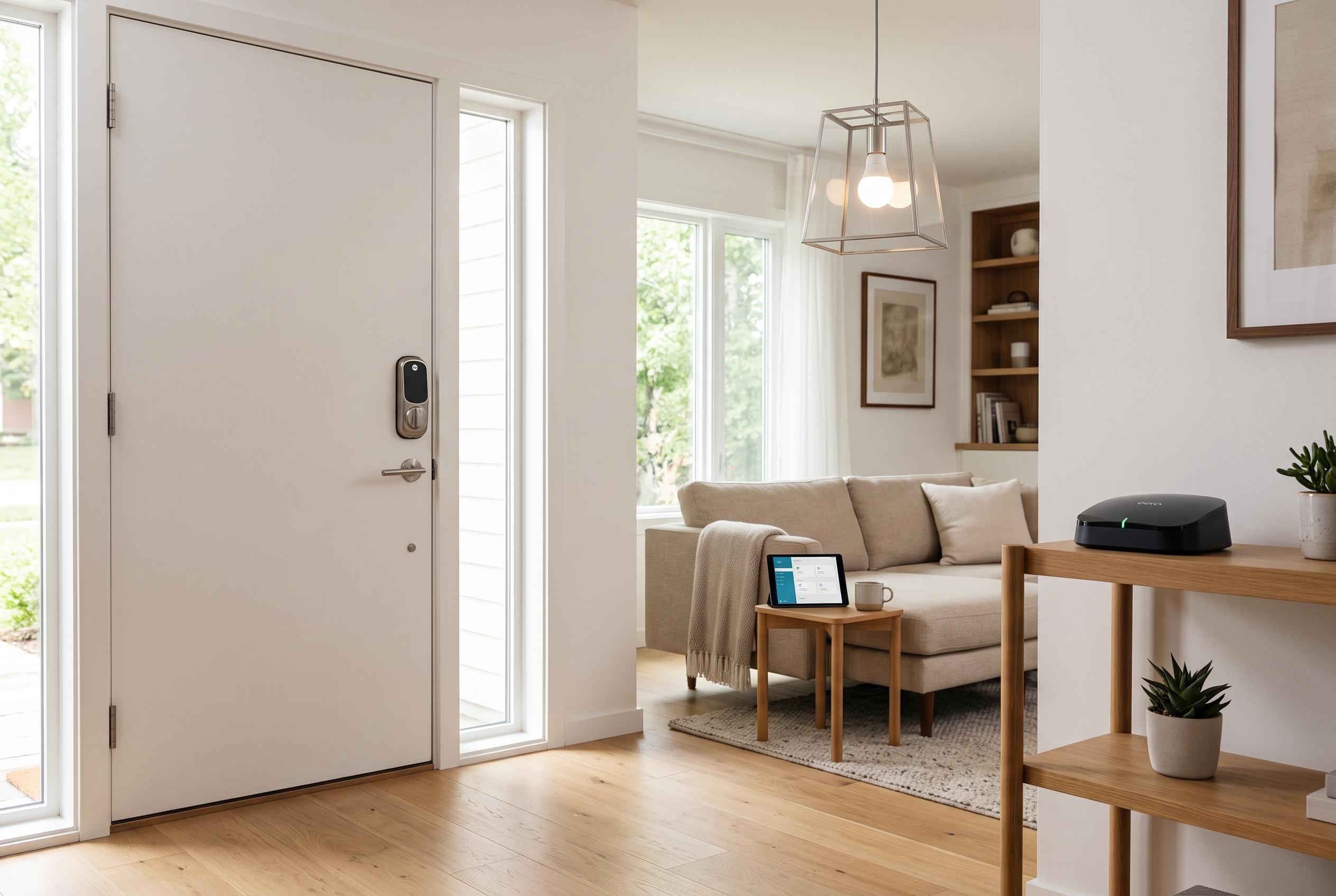

With a fragmented market and evolving interoperability standards, initial smart home setups benefit from simplicity, security, and restraint. Experts recommend starting with basic devices, securing networks, and avoiding unnecessary cloud dependencies for a smoother experience.
For most first-time smart home buyers, the best starting point is still the simplest one: pick a single ecosystem, add a small number of devices that solve ordinary problems, and leave deeper automation for later. Matter-certified products can help with compatibility across platforms, but they do not remove the need to check which features work locally and which still depend on the manufacturer’s app or cloud services. In practice, the point of Matter is interoperability, not magic simplicity.
That matters because the market is still fragmented. MatterCatalog describes Matter-certified devices as a way to bridge Amazon Alexa, Google Home, Apple HomeKit and Samsung SmartThings, while guidance from HomeControlHub and Asurion emphasises that the standard is meant to improve compatibility, security and reliability rather than replace every ecosystem feature. For beginners, that usually makes the smart plug, bulb or speaker the most sensible first purchase.
A low-cost starter setup can cover one annoyance well: a lamp, fan or coffee maker controlled by a smart plug, plus a speaker that fixes the platform you are likely to stay with. Budget kits are attractive because they are quick to install, but they also tend to rely more heavily on cloud services. That leaves them vulnerable if a provider has an outage, and it makes the quality of the software and security record at least as important as the hardware itself.
Renter-friendly kit is a different calculation. Portable devices such as plugs, bulbs, cameras, speakers and battery sensors can be removed without altering the property, while hardwired products usually need permission and more permanent work. For those who want locks or more private camera use, local-first systems and Apple Home’s stronger emphasis on on-device processing are often the more cautious choice, although some features still require extra hardware or subscriptions.
The case for a hub, or for a more advanced platform such as Home Assistant or Hubitat, becomes stronger only when the system has to do real work: conditional rules, local operation when the internet fails, whole-home scenes, or a large number of devices. That is especially relevant in renovations, server-based households, homes with time-sensitive heating or energy tariffs, and installations with dozens of endpoints. Even then, the practical test is whether someone else in the home can still use it without support.
The most sensible advice is also the most boring: secure the network first, buy one device for one problem, and live with it for a week before adding more. Turn off cloud functions you do not need, keep a physical backup for critical tasks, and avoid building a system that only works when one person remembers how it was configured. In smart home buying, restraint is often the feature that saves the most money and the most frustration.
Disclaimer: This content is intended for informational purposes only. Readers are advised to exercise their own judgement, conduct due diligence, or consult a qualified expert before acting on any information provided.