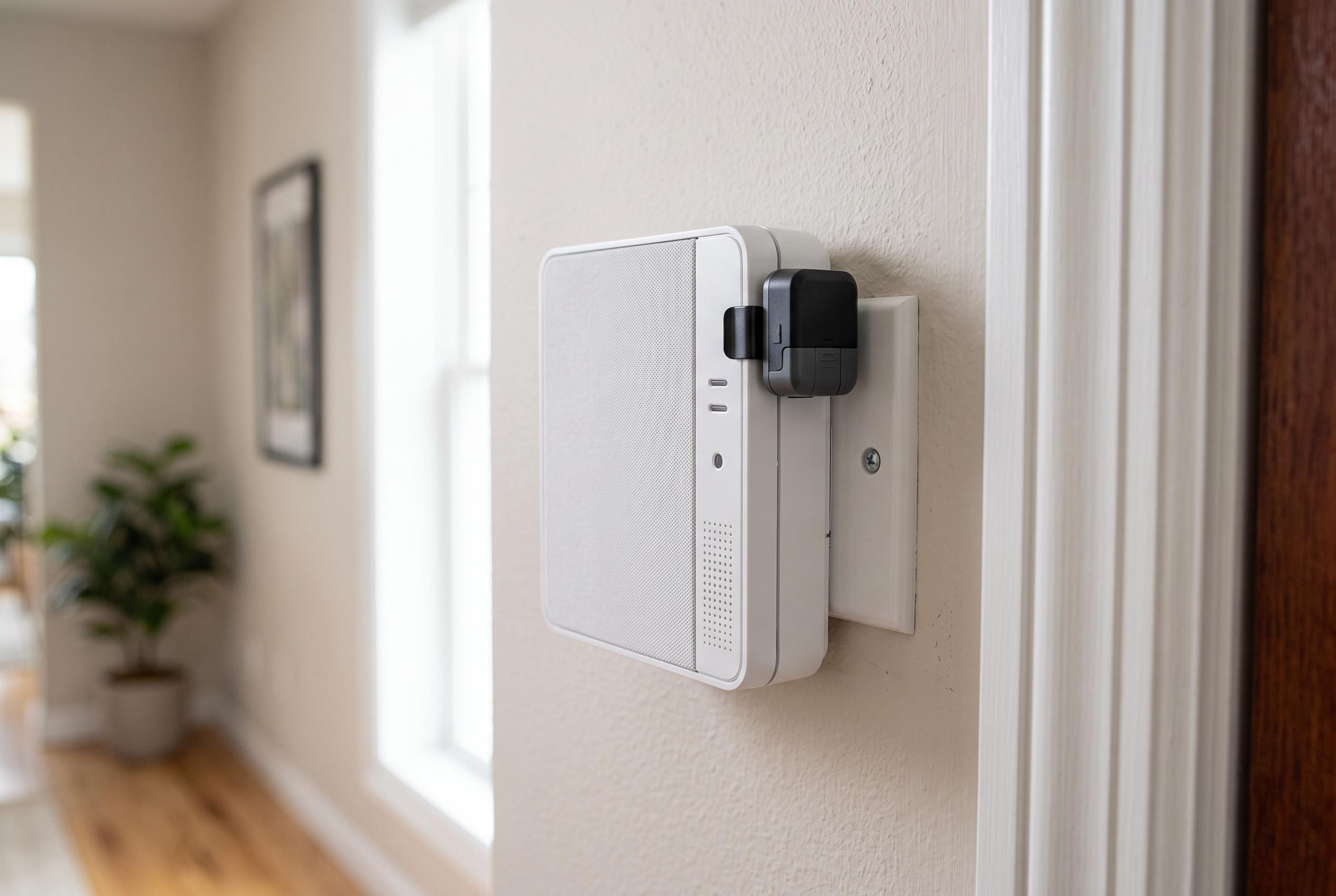

A simple, non-invasive method leverages vibration sensors to turn existing wired doorbells into smart notification systems, bypassing complex rewiring and maintaining the classic chime experience.
A simple way to make an older wired doorbell more useful is to leave the wiring untouched and listen for the chime’s vibration instead. The original setup still rings as normal, but a small battery-powered sensor can turn that familiar mechanical strike into alerts on a phone, a smart speaker or connected lights. That approach avoids transformer checks, low-voltage splicing and the complexity that often comes with replacing the button with a full video doorbell, while also keeping the house’s existing chime in service.
The method works because a traditional chime does more than make noise: its solenoid physically knocks the tone bars and shakes the housing. That movement is easy for a vibration sensor to detect, regardless of the age of the chime or whether the button is mounted on the front door, a porch or another exterior entry point. It is also friendlier for renters, since an adhesive-mounted sensor can be removed later without disturbing the wiring. By contrast, contact sensors and relay modules can achieve the same result, but usually require access to the transformer and more invasive installation.
Choosing the right sensor depends largely on the smart home system already in the home. The Third Reality Zigbee vibration sensor is a low-cost option for Alexa users, especially where an Echo with built-in Zigbee support is already present. Aqara’s Multi-State Sensor P100 adds more sensing modes, but TechRadar notes that its more advanced vibration settings are best exposed when used over Zigbee with an Aqara hub rather than through Matter, which can reduce it to a simpler state. YoLink’s LoRa vibration sensor makes more sense where the chime sits in an outbuilding, such as a detached workshop or barn, because its long-range radio can cover places Zigbee may not reach.
Placement matters more than most of the setup. The best results usually come from fixing the sensor to the inside of the chime cover or close to the solenoid, where the strike is strongest. Mounting it on drywall is less reliable because the wall can dampen the signal and pick up unrelated vibration. Sensitivity then needs to be tuned carefully: too high, and a slammed door or garage opener may trigger it; too low, and a single chime may be missed. Some low-cost models also remain in a triggered state for up to a minute, which is not a problem for a doorbell, but does mean repeated presses need a built-in cooldown in the automation.
Once the sensor is visible to the hub, the rest is software. Alexa routines can announce that someone is at the door, flash a light, or send a notification while keeping the action silent at night. A light cue is often more practical than an audio alert in noisy rooms or for anyone wearing headphones. If a sensor does not appear directly in a voice assistant’s trigger list, a virtual switch in SmartThings or Home Assistant can bridge the gap. The advantage of this approach is that the old chime continues to work for anyone who wants a physical alert, while the smart layer serves everyone else without rewiring or the added cost of a new doorbell system. Ring’s recent battery-powered 4K doorbell and Aqara’s hub-based video doorbell both show how the market is moving towards simpler installation, but a vibration sensor remains the cheapest upgrade for households that only want a smarter alert, not a full replacement.
Disclaimer: This content is intended for informational purposes only. Readers are advised to exercise their own judgement, conduct due diligence, or consult a qualified expert before acting on any information provided.