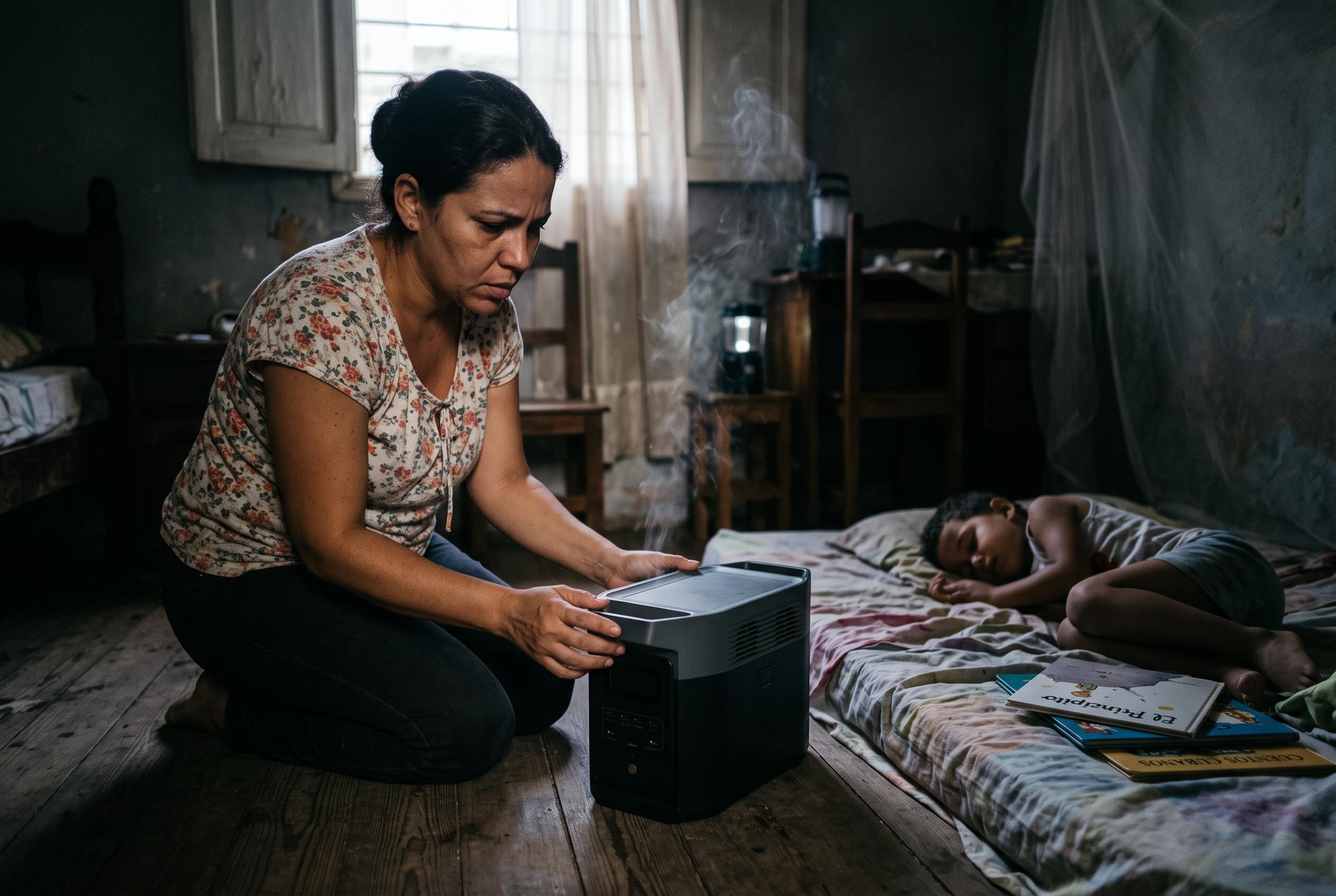

As Cuba increasingly relies on portable power stations for electricity amid chronic outages, safety experts warn of fire hazards linked to lithium batteries. A recent US recall and multiple local incidents highlight the dangers of improper use and faulty batteries, urging cautious handling to prevent tragedies.
Portable power stations have become a practical answer to Cuba’s long electricity cuts, with brands such as EcoFlow, Bluetti, Jackery and Anker helping households keep essential devices running when the grid fails. But the convenience comes with risk: specialists warn that lithium batteries can become dangerous if they are exposed to heat, poor wiring, makeshift repairs or an unstable supply when power returns.
That warning is not theoretical. In Santiago de Cuba, fire services have dealt with several incidents linked mainly to electric motorbike batteries. Local reports describe a garage fire in Micro 9 in July 2024, a blaze in Santa Bárbara a month later, another house fire in March 2025 on Calle Tramayo, and a further case in June 2026 in the Jiménez area shortly after electricity was restored. In each instance, an electric motorbike battery was central to the fire.
Concern also rose after a portable lithium battery caught fire in a passenger’s luggage on a trip from Miami to Cuba. Social media users said the device was an EcoFlow unit, but the airport statement identified it only as a lithium battery and did not name the model. That distinction matters, because the current recall applies to only one specific product: the EcoFlow DELTA Max 2000, model EFD310.
According to the US Consumer Product Safety Commission, the recall covers about 25,030 units sold between July 2022 and May 2025. The agency said six incidents had been reported, with property damage exceeding $850,000, and told consumers to stop using affected units immediately and follow the instructions for a free firmware update. EcoFlow has issued the same advice on its own recall pages, and Health Canada has separately listed 1,116 units in its notice for the Canadian market.
Beyond that single recall, Cuba’s fire specialists have repeatedly pointed to broader problems with motorbike and battery use. They say more than 3,000 fires linked to electric motorbikes or lithium batteries were handled between 2019 and mid-2023. Common causes include unsuitable chargers, damaged or home-repaired batteries, missing battery-management protection systems, overload and charging a battery while it is still hot. One of the most serious failure modes is thermal runaway, in which a damaged cell overheats and can spread heat to neighbouring cells, releasing toxic and flammable gases.
The practical advice is simple but strict. During an outage, portable power stations should be unplugged from the wall so they do not begin charging automatically when electricity returns in an unstable state. After the grid comes back, users should wait until the supply is steady; if lights flicker or voltage fluctuates, the unit should remain disconnected. A proper surge and voltage-protection device with delayed reconnection is preferable to an ordinary power strip, and equipment rated only for 110 or 120 volts must not be plugged into 220 volts.
Charging should take place in daylight, under supervision, on a firm non-combustible surface in a dry, well-ventilated space. The battery should never be left charging while the household is asleep or empty. It should not be kept under a bed, inside a cupboard, beside curtains or in a sealed car. Users should also avoid improvised cables and unsafe connections, especially the dangerous practice of feeding a house through a socket with a two-male-ended lead, which can energise domestic wiring unexpectedly and endanger anyone working on the system.
Any battery that swells, cracks, smells chemical, overheats or emits smoke, hiss, crackling or vapour should be treated as an emergency. People should not try to carry it through the house. They should leave the property if necessary, close the door only if it can be done safely, and call Cuba’s fire service on 105. A smoking battery should not be covered with blankets or boxes, as this can trap flammable gases. Anyone with burns, breathing difficulty, coughing, dizziness or smoke inhalation needs immediate medical attention.
Disclaimer: This content is intended for informational purposes only. Readers are advised to exercise their own judgement, conduct due diligence, or consult a qualified expert before acting on any information provided.