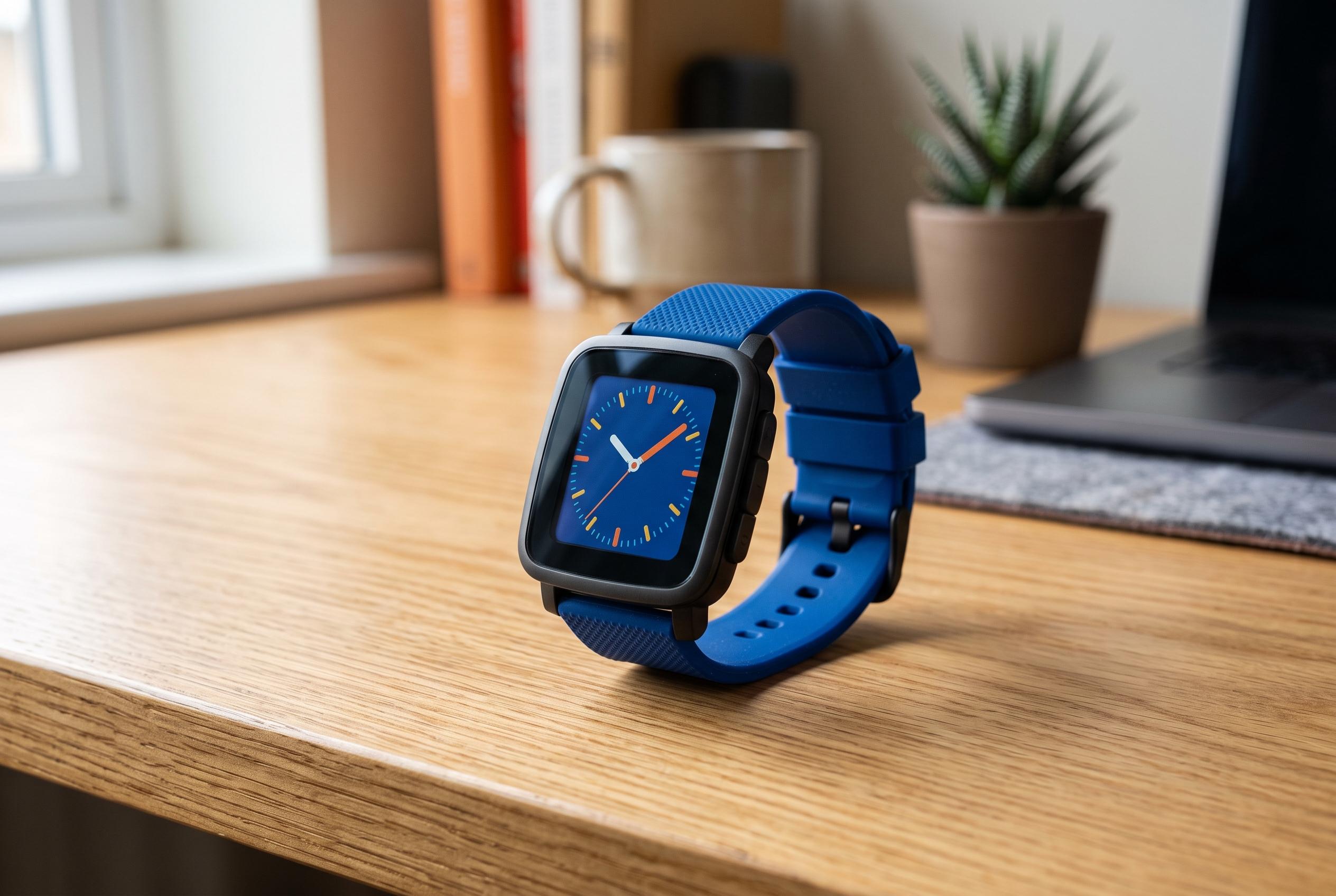

Pebble returns to the wearable market with the Time 2, emphasizing a playful, low-key design and exceptional battery life, driven largely by its dedicated community and open-source software ecosystem.
Pebble’s return is built around a simple idea: smartwatches can be playful rather than severe. The Pebble Time 2, priced at $225, leans into that with a colour e-paper display, physical buttons and a deliberately low-key design that feels closer to a retro gadget than a wrist-bound computer. Reviews from PhoneArena and Stuff describe the watch as an easygoing, practical device with strong battery life, while TechCrunch’s hands-on report says its charm lies in how little it tries to imitate the Apple Watch.
That difference is visible in the hardware. Instead of an OLED panel and a broad range of premium finishes, the Pebble Time 2 uses a stainless steel case, a silicone strap and a 64-colour always-on e-paper screen. The display is less vivid than an Apple Watch’s, but it is readable outdoors and can be illuminated by an RGB LED. The trade-off is endurance: the company says the battery should last about 21 days, while other reviews put real-world longevity at up to 30 days.
The Pebble comeback is unusual because it was driven largely by its community. Pebble originally sold about 2 million watches and generated $230 million in sales before financial pressure pushed the business into Fitbit’s orbit, according to reporting by TechCrunch. After Fitbit kept the servers and app store alive for several years, the user base helped preserve the platform informally. In 2025, Eric Migicovsky and former Pebble and Fitbit staff persuaded Google to open-source the original operating system, making a relaunch possible through his new company, Core Devices.
That rebirth has also restored one of Pebble’s defining strengths: a remarkably eccentric software ecosystem. The Time 2 ships with more than 2,120 watch faces and apps, including over 500 added through a spring developer contest, according to TechCrunch. The selection runs from utility tools such as timers, calendars, weather, stock tracking and Strava integration to novelty apps, retro games and AI tools. The breadth is impressive, but it also exposes a weakness: discovery is still clunky, and the store would benefit from better search, categorisation and recommendations.
Even without extra downloads, the watch covers the basics well. It mirrors phone notifications, controls music, and offers step, sleep and heart-rate tracking. The familiar Pebble timeline remains, letting users move through appointments, reminders and weather from the side button, and the four-button layout is designed for quick, deliberate use. The main limitation is iOS, where Apple’s platform rules restrict actions on notifications and prevent some features from syncing automatically. Pebble is also said to be shipping frequent firmware and app updates, with the company planning further additions such as improved use of the second microphone for noise cancellation. TechRadar also notes that the related Pebble Round 2 is intended to address earlier design shortcomings, underscoring that the reboot is still expanding rather than settling into a final form.
Disclaimer: This content is intended for informational purposes only. Readers are advised to exercise their own judgement, conduct due diligence, or consult a qualified expert before acting on any information provided.