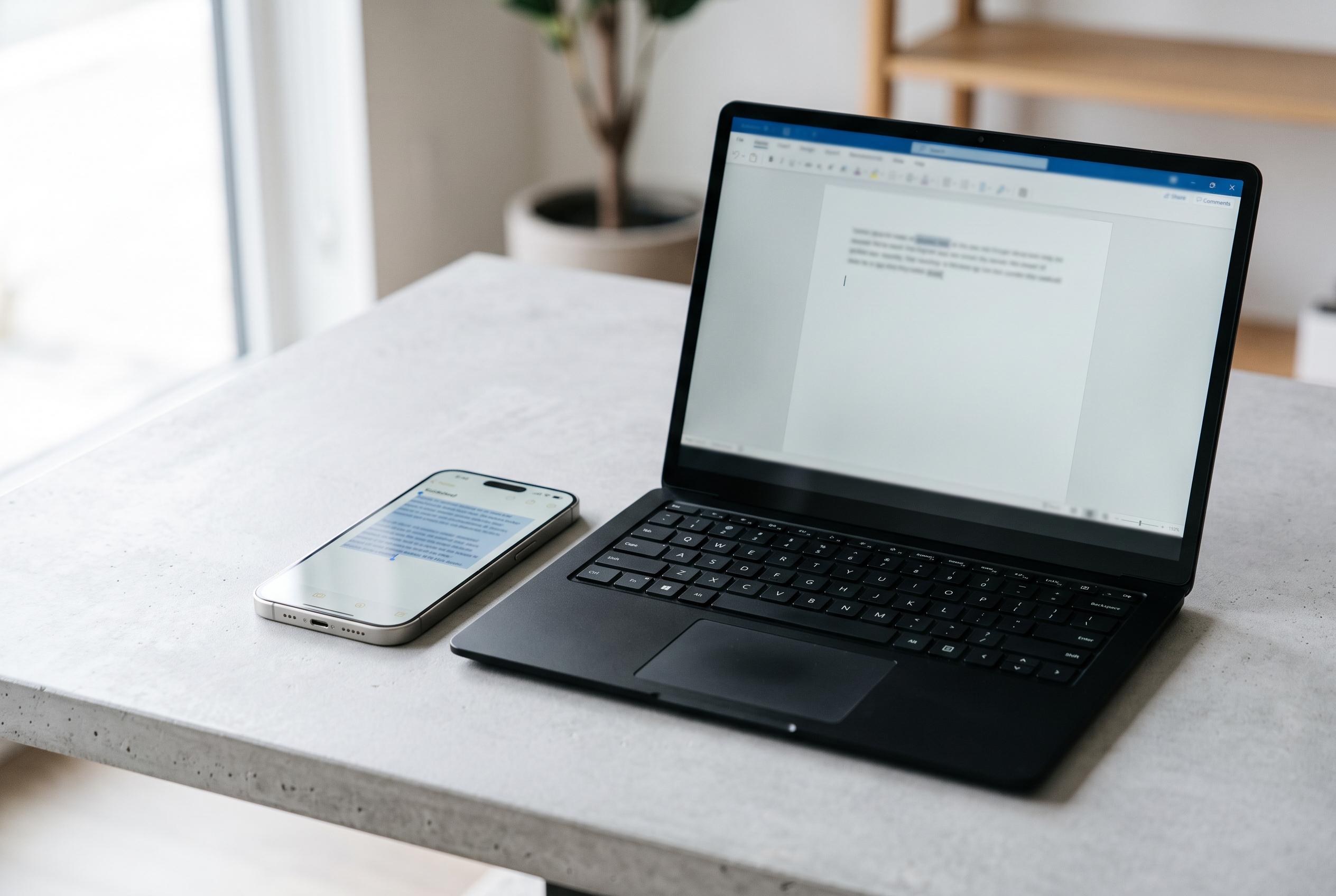

Apple is developing a new feature to enable direct copying and pasting between iPhones and Windows PCs, aligning with EU regulatory pressures and narrowing a long-standing platform gap.
Apple is working on a feature that would let iPhone users copy content and paste it directly on to Windows PCs, closing a long-standing gap between the two platforms. According to MacRumors, the work follows a Microsoft interoperability request made through Apple’s EU process and is intended to support text and other compatible content in both directions.
If it ships, the change would remove a clumsy but familiar routine for people who move between an iPhone and a Windows machine. At present, there is no built-in cross-platform clipboard between the two, so users often rely on workarounds such as syncing notes, emailing text to themselves or saving content as a draft before opening it on a PC. By contrast, Apple already offers a similar experience between its own devices through Universal Clipboard, which requires Wi-Fi, Bluetooth, Handoff and the same Apple ID.
The move also reflects pressure from the European Union’s Digital Markets Act, which requires gatekeepers such as Apple to give third parties access to the same operating system features available to their own services. The European Commission has already issued decisions and opened specification proceedings to clarify Apple’s interoperability duties, including for connected devices and future interoperability requests. Apple also maintains a formal EU developer process for such requests, with an initial eligibility assessment typically issued within 20 working days.
MacRumors says the planned iPhone-to-Windows clipboard support could resemble Apple’s iOS 26.5 “accessory notifications” approach, in which a user grants access once in Settings and the permission then continues to apply. Even so, features introduced to satisfy DMA obligations have not always rolled out globally; some capabilities, including certain pairing and notification functions for third-party wearables, remain limited to EU users. For now, the practical appeal is straightforward: a task that is already routine inside Apple’s ecosystem could finally become far less awkward across it.
Disclaimer: This content is intended for informational purposes only. Readers are advised to exercise their own judgement, conduct due diligence, or consult a qualified expert before acting on any information provided.