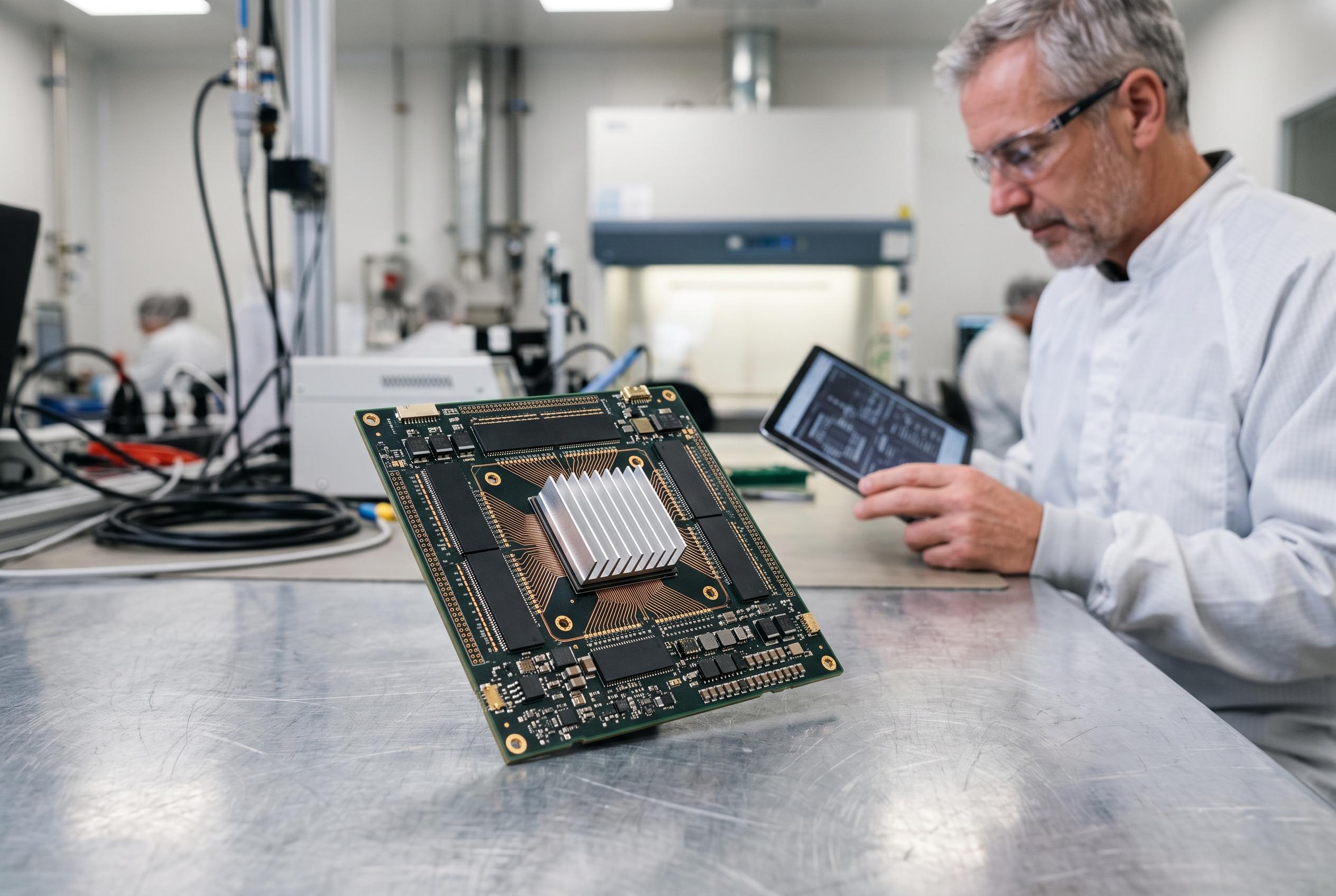

Anthropic has appointed Amir Salek, a veteran engineer from Google’s custom chip programme, signalling a strategic move to develop proprietary hardware amid industry-wide shifts towards customised AI chips and greater control over model training and deployment.
Anthropic has hired Amir Salek, the veteran engineer who helped build Google’s custom chip programme, as it moves further into the race to reduce dependence on outside silicon suppliers. Bloomberg, as relayed by 3DNews, said the appointment was confirmed by Anthropic and places Salek under James Bradbury on the company’s compute team.
Salek brings deep experience in custom hardware. He led Alphabet’s tensor processing unit effort until 2022 and was responsible for the first seven generations of TPUs, while his earlier career included work at Nvidia on GPU and Tegra products. After leaving Google, he joined Cerberus Capital Management as a senior managing director.
The hire fits a wider pattern across the artificial intelligence industry. As model training and inference become more compute-intensive, companies are increasingly trying to design chips around their own software stacks rather than adapting to general-purpose hardware. That approach can improve efficiency, cut costs and give vendors more control over performance, which helps explain why proprietary silicon has become a strategic priority for major AI groups.
TechCrunch reported earlier this month that Anthropic was assembling a chip design team and had also explored Samsung as a possible partner. The company has already taken a broad approach to infrastructure, relying heavily on Nvidia, Amazon Web Services and Google, while also building links with specialist suppliers and newer chip companies. The same report noted that OpenAI has taken a similar path, unveiling its Jalapeño chip with Broadcom, and that Anthropic has also arranged work with Fractile, Riot Platforms and Volta Infra Holdings.
The move suggests Anthropic wants not only more capacity, but also tighter control over how its models are served and trained. Tom’s Hardware reported that the company has separately agreed a major expansion of its Google Cloud TPU access, potentially giving it room to scale through 2026 while it builds longer-term in-house capability. In practical terms, the hiring points to a two-track strategy: secure near-term compute from large providers while laying the groundwork for custom hardware that can be tuned to its own systems.
Disclaimer: This content is intended for informational purposes only. Readers are advised to exercise their own judgement, conduct due diligence, or consult a qualified expert before acting on any information provided.