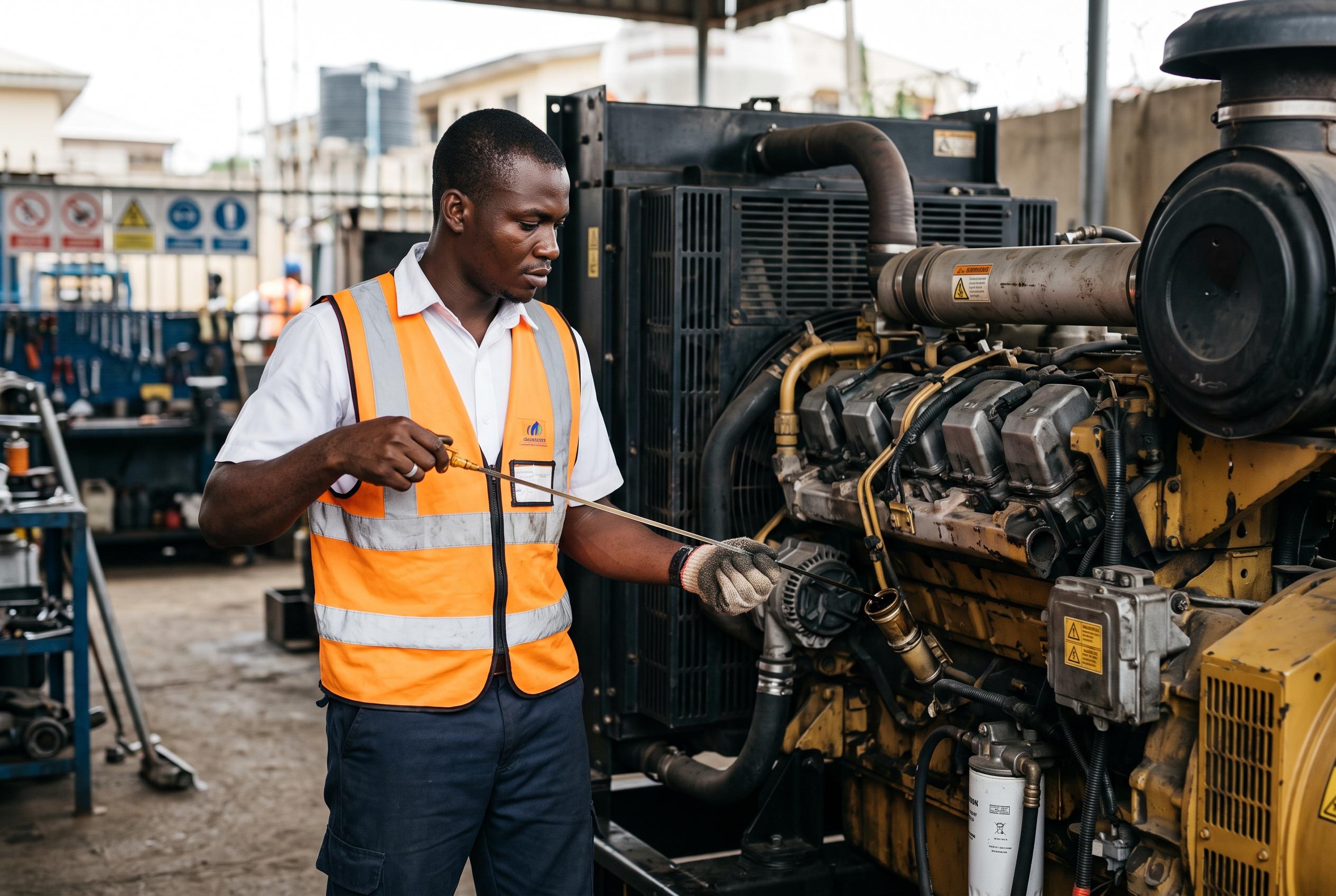

Proper upkeep of generators is crucial for Nigerian homes and businesses facing frequent power cuts, with expert advice emphasising oil checks, airflow, safety, and consistent servicing to prevent breakdowns and ensure safety.
For many Nigerian homes and businesses, a generator is less a convenience than a safeguard against power cuts. That makes routine upkeep a practical necessity, not an optional extra. Tribune Online says the most common failures, from hard starting to overheating and poor output, are often linked to neglected servicing rather than sudden breakdown.
The first priority is engine oil. Tribune Online notes that oil lubricates moving parts and helps prevent internal damage, while other maintenance guides for generator users in Nigeria also stress that oil should be checked often and changed according to the specific model’s schedule. There is no universal interval, because servicing needs vary by engine design, workload and operating conditions.
Air intake and fuel quality matter just as much. A blocked air filter restricts airflow and can reduce performance, while stale or contaminated fuel can make starting difficult and increase strain on the engine. Industry maintenance advice also recommends checking fuel lines, fittings and related parts for leaks, and stopping the machine immediately if there is a strong fuel smell.
Safety remains a central part of generator care. Tribune Online warns against running a fuel-powered unit in a room, garage or other enclosed space because carbon monoxide can be fatal. Repair Clinic gives the same warning and adds that generators should be used outdoors, with fuel added only when the machine is off and cool. For outdoor installations, weather protection should never come at the expense of ventilation.
Electrical and cooling systems also need attention. Battery condition can determine whether an electric-start generator powers up when needed, while liquid-cooled units depend on sufficient coolant to avoid overheating. CNV Power’s maintenance schedule for diesel generators in Nigeria similarly recommends regular battery, coolant and leak checks, together with test runs and inspections based on engine hours.
Clean surroundings are another simple but often overlooked safeguard. Dust, grass cuttings and rubbish can obstruct ventilation openings and trap heat around the set. Other maintenance guides also advise periodic load testing, careful record-keeping and correct sizing, since overloading can damage the generator and shorten its service life.
The final discipline is consistency. Tribune Online’s advice is to track running hours and service the machine before faults appear. That approach is echoed across maintenance guidance for commercial and domestic users: a generator lasts longer when owners follow the manual, keep records, and treat inspection as part of normal operation rather than a response to failure.
Disclaimer: This content is intended for informational purposes only. Readers are advised to exercise their own judgement, conduct due diligence, or consult a qualified expert before acting on any information provided.