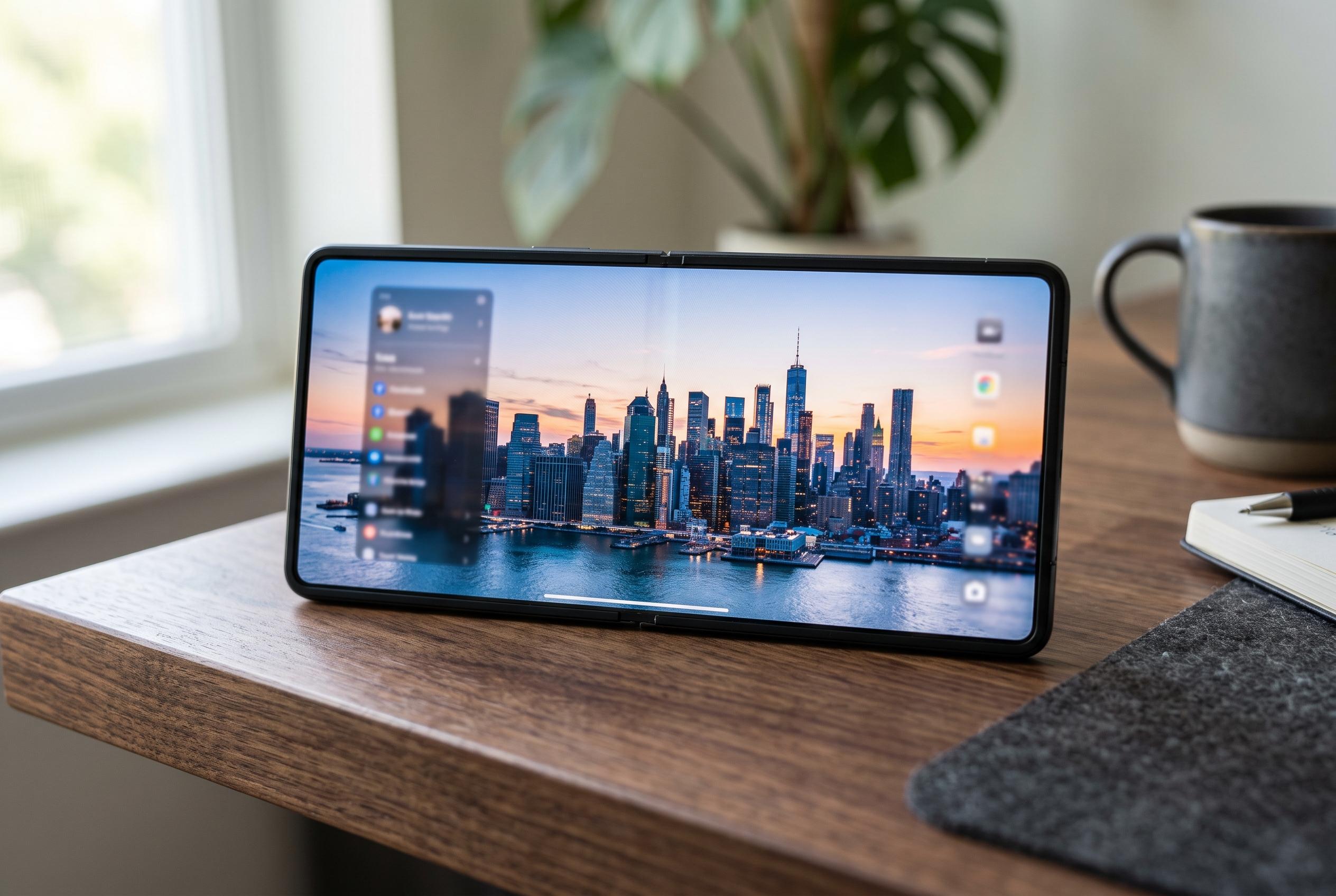

The foldable smartphone market is experiencing a shift towards larger, book-style devices, with shipments of wider formats dominating the segment in 2026. Huawei leads the market, signalling increasing consumer preference and a move towards mainstream adoption amidst a broader smartphone industry slowdown.
The foldable smartphone market is entering a more mature phase, with book-style devices now doing most of the heavy lifting. According to Omdia, shipments of the wider, tablet-like designs accounted for 69% of all foldable phones in the first half of 2026, while clamshell models fell sharply from the same period a year earlier. That shift reflects stronger consumer interest in larger foldables and a clear cooling in demand for the smaller, flip-style category.
Omdia’s figures put Huawei in first place in the book-style segment with 57% of the market in the first half of 2026. Samsung followed with 18%, ahead of Honor on 9%, Oppo on 7% and Vivo on 6%, with other makers sharing the remaining 3%. The ranking underlines how concentrated the market has become, even as more manufacturers try to position foldables as a mainstream premium product rather than a niche experiment.
The research firm expects the category to keep expanding at more than 20% a year through 2028, with annual shipments rising to 36 million units by then, roughly double the level forecast for 2025. Omdia also said leading vendors are increasing production targets for wide-format foldables in 2026, suggesting the format is becoming the main engine of growth for the segment. Broader market reports point in the same direction, although shipment estimates for 2025 still vary widely between research houses, reflecting how difficult the category remains to track consistently.
That growth is unfolding against a mixed backdrop for smartphones overall. In a separate Omdia update, global handset shipments fell 6% year on year in the second quarter of 2026, as higher memory costs and component shortages forced vendors to adjust pricing and product plans. Even so, Samsung remained the world’s largest smartphone maker in that period. Longer-term industry forecasts also point to sustained expansion for foldables, with Grand View Research valuing the market at tens of billions of dollars and projecting steady growth through 2030, especially in Asia Pacific.
Disclaimer: This content is intended for informational purposes only. Readers are advised to exercise their own judgement, conduct due diligence, or consult a qualified expert before acting on any information provided.