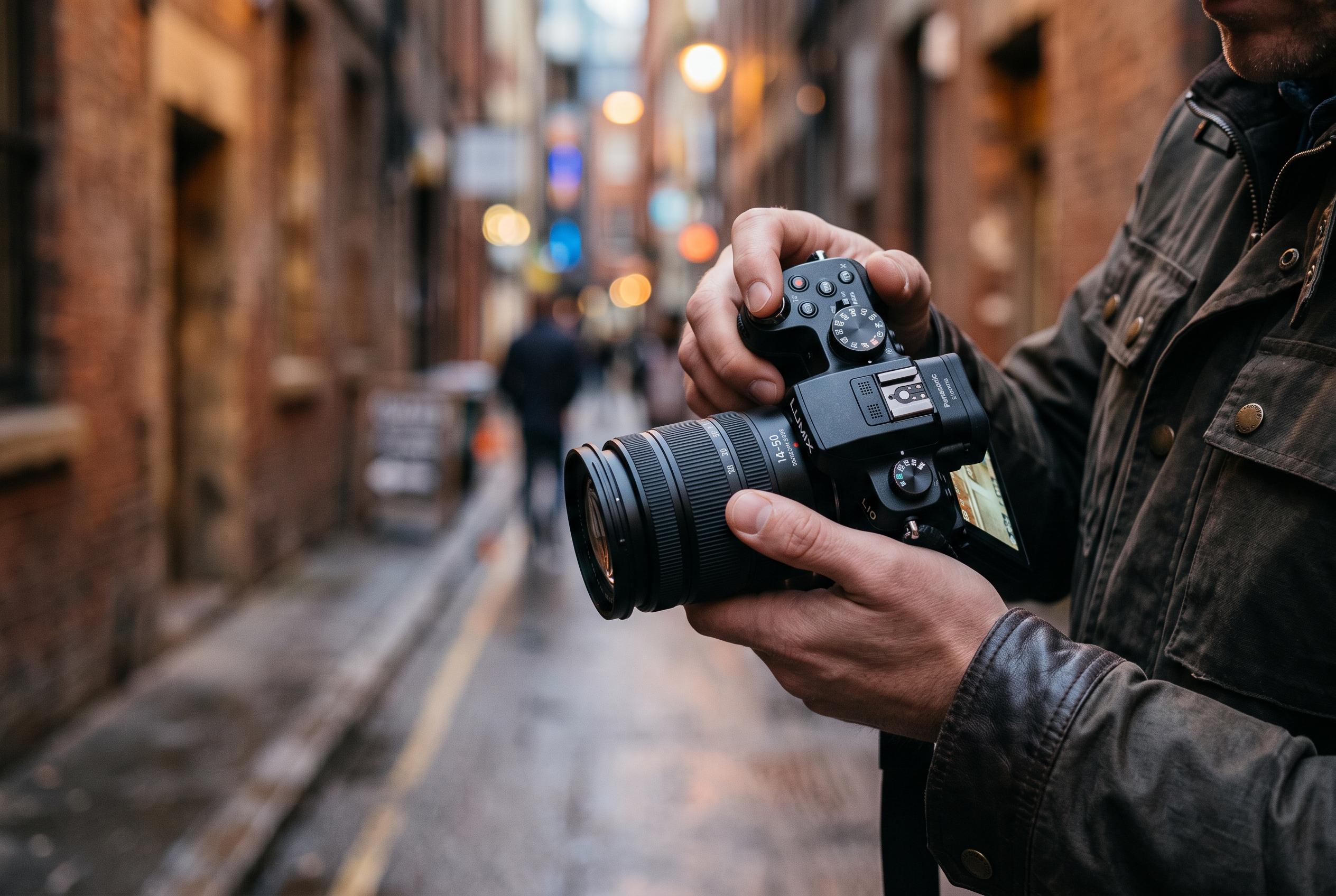

The Panasonic Lumix L10 offers a compact, versatile tool with fast zoom and customisable controls, making it a compelling choice for urban street photography enthusiasts seeking discretion and flexibility without sacrificing image quality.
The Panasonic Lumix L10 is not designed as a specialist street camera, yet its balance of size, flexibility and quiet operation makes it a persuasive one. DPReview describes it as a compact model with a useful 24-75mm equivalent zoom, customisable controls and an articulating LCD, while Panasonic’s own specifications underline the camera’s small form factor and fast F1.7-2.8 lens. In use, those traits matter more than any single headline feature. They make the camera easy to carry, discreet in public and ready for spontaneous work.
On a walking trip through Washington DC, the camera proved well suited to the pace of street photography. Its low profile drew little attention, which is often an advantage when the aim is to observe rather than intrude. The built-in zoom gave useful reach at the wide and short-telephoto ends, allowing environmental frames, tighter details and quick reframing without lens changes. Australian Photography has also pointed out that the L10 sits in the space between phone simplicity and more deliberate camera control, which helps explain why it feels practical for all-day urban use.
The lens range is central to that appeal. Panasonic’s official specifications describe a 24-75mm equivalent zoom with a bright maximum aperture, and that combination gives the camera a wide enough field of view for streetscapes while still allowing closer, more selective compositions. The flexibility reduces the need to move physically into a scene, which can be helpful when timing is critical or the photographer wants to stay unobtrusive. TechRadar’s review likewise highlights the Leica-branded zoom as a key part of the camera’s versatility.
Street work also rewards speed in handling, and here the L10 offers some useful shortcuts. A custom Step Zoom setup can jump quickly to common focal lengths, effectively mimicking a small set of primes. That is not a replacement for a conventional zoom ring, but it can save time when a scene changes quickly. The same applies to the Function Switch, which can be assigned to different shooting setups so the photographer is not buried in menus when switching between subjects.
Autofocus and subject detection were important in everyday scenes, especially with people, bicycles and moving vehicles. According to the camera’s feature set and user reports, the L10’s focusing system is intended to make that process less intrusive and more immediate. In practice, that means less concentration on technical adjustment and more attention on timing and framing. For street photography, that shift is often more valuable than raw speed alone.
The camera also handles movement better than its size might suggest. Panning a cyclist, for example, requires a careful mix of shutter speed, burst mode and continuous autofocus. The L10 is not an action specialist, but it can be configured for that kind of work with enough control to keep the subject reasonably sharp while blurring the background. TechRadar’s sample material shows that the camera is capable of respectable image quality in active urban scenes, provided the photographer works within its limits.
One of the more useful creative strengths is the combination of Photo Styles, Real Time LUTs and the multi-aspect sensor. Panasonic’s system lets the photographer preview a particular look in camera rather than waiting until post-processing, and that can sharpen decision-making at the moment of capture. Black-and-white profiles are especially effective in street work because they emphasise shape, contrast and gesture rather than colour. The articulating screen adds further flexibility, making it easier to shoot from lower angles or in a more discreet way.
There are compromises, though. The lack of a joystick makes quick focus-point changes less efficient, particularly in vertical framing. Startup and zoom response are good enough for deliberate street work, but they are not in the class of cameras built for fast reaction above all else. Battery life is adequate for a day’s shooting, yet a spare battery remains sensible. Even so, the broader conclusion is clear: for a compact camera with a travel-friendly design, the Lumix L10 offers enough responsiveness, control and creative flexibility to work very well on the street.
Disclaimer: This content is intended for informational purposes only. Readers are advised to exercise their own judgement, conduct due diligence, or consult a qualified expert before acting on any information provided.